Embalming Guide India

The Science and Legality of Embalming in India: Process, Cost, Rules & Preservation Guide

A practical nationwide guide for families arranging embalming, air transportation, long-distance body shifting, mortuary preservation, and delayed funeral rites in India.

Quick answer: Embalming is generally mandatory for dead body transportation by flight in India and international repatriation. It is also preferred for long-distance road transport, delayed funeral rites, and longer preservation when families are waiting for relatives to arrive.
Air transport embalmingEmbalming certificate₹10,000–₹20,000 approx.Nationwide guideFreezer box vs embalming
Opening Answer

When Families Need Embalming

Embalming is a medical preservation procedure used after death to slow decomposition, improve hygiene, and make transportation safer. In India, it becomes especially important when the deceased person has to be transported by air, preserved for several days, or moved over a long distance.

For domestic and international air transportation, families should treat embalming as mandatory because airlines usually require an embalming certificate before accepting human remains as cargo. For long-distance road travel, embalming may not be legally required in every case, but it is often preferred when the journey is long, weather is hot, or final rites are delayed.

Swargayatraa assists families with embalming coordination, coffin box preparation, documentation guidance, domestic air transportation, and international repatriation support through professional facilities and verified service partners.

Medical equipment used in preservation and embalming arrangements
Important: This guide is written for family decision-making. Final instructions may vary based on airline, hospital, police, airport cargo office, local authority, and destination country requirements.
Article Navigation

Embalming Decision Guide for Families

Use these sections to understand the embalming process, legal need, preservation duration, cost, certificate, and when freezer box support is enough.

Medical Preservation

What Is Embalming? The Medical Process

Embalming is a controlled preservation procedure performed by a trained embalmer, doctor, hospital department, medical college, or authorized mortuary facility. The purpose is to delay natural decomposition, disinfect the body, and make the deceased suitable for transport or extended preservation.

During the dead body embalming process, a formaldehyde-based preservative fluid is usually injected through the arterial system. Blood and bodily fluids may be drained or treated depending on the body condition and facility protocol. The preservative fluid helps slow bacterial activity, tissue breakdown, discoloration, and odor formation.

Embalming does not preserve the body permanently. It gives families a safer and more practical preservation window for air cargo transport, delayed final rites, long-distance shifting, or waiting for NRI relatives.

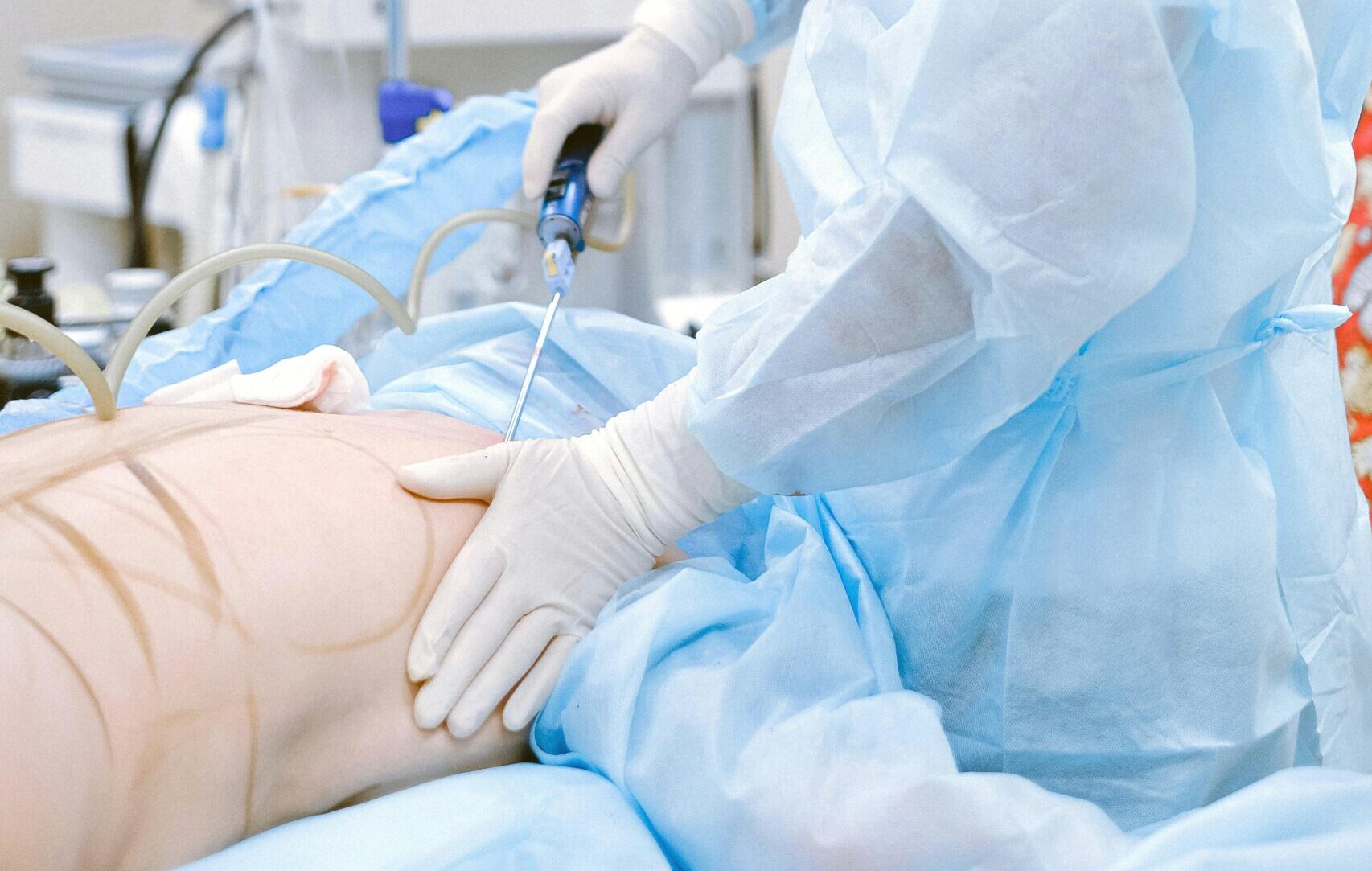
Representative image for embalming process and body preservation
Simple explanation: A freezer box slows decomposition through cooling. Embalming chemically preserves and sanitizes the body, which is why airlines require it for dead body transportation by flight.
Procedure Steps

Dead Body Embalming Process: What Usually Happens

The exact method can vary by hospital, medical college, mortuary, and body condition, but the overall process usually follows these steps.

StepWhat HappensWhy It Matters
1. Identification and document checkThe deceased person is identified and basic documents are checked before the procedure.Prevents errors and supports legal certificate preparation.
2. Body assessmentThe embalmer or medical team checks time since death, condition, injury, swelling, leakage, or decomposition signs.Helps decide the preservation method and fluid requirement.
3. DisinfectionThe body is cleaned and disinfected before chemical preservation.Improves hygiene and reduces biological risk during handling.
4. Arterial injectionPreservative fluid is injected through major arteries, commonly using a formaldehyde-based solution.Slows decomposition and supports tissue preservation.
5. Fluid drainage and cavity careBlood, fluid, and internal cavity concerns may be handled depending on the facility protocol.Reduces odor, leakage, and deterioration risk.
6. Preparation and certificationThe body is cleaned, dressed or prepared, and an embalming certificate is issued.The certificate is critical for air cargo, repatriation, and official transport acceptance.
Family note: Embalming should be done only through a professional facility. Do not accept informal preservation claims if the body has to be transported by flight.
Legal and Practical Need

When Is Embalming Legally Required in India?

Embalming is required or strongly expected whenever the body must be safely preserved for transport, official handling, or delayed rites. The most important case is air cargo transportation.

Domestic air cargo in India

For dead body transportation by flight within India, airlines usually require embalming before accepting human remains as cargo. The family must normally submit an embalming certificate along with coffin and death-related documents.

International repatriation

For international transportation, embalming is generally required along with coffin packing, consulate or embassy-related documents, cargo booking, and destination-country compliance.

Long-distance road shifting

For road transport, embalming may not be mandatory in every case, but it is preferred when travel exceeds 24 hours, the weather is hot, or cremation will not happen soon after arrival.

Waiting for NRI relatives

When family members are travelling from the USA, Canada, Australia, Europe, Gulf countries, or other locations, embalming helps preserve the body while final rites are delayed.

Delayed funeral or cremation rites

If cremation, burial, or rituals are delayed because of family gathering, paperwork, legal process, or priest availability, embalming can provide better preservation than cooling alone.

Extended mortuary preservation

When the body must be kept in a mortuary for longer, embalming plus refrigerated storage is often more effective than relying only on cooling.

Practical rule: If the body is going by flight, plan for embalming. If the body is going by road for a long time, discuss embalming based on distance, body condition, climate, and final-rites timing.
Flight Transportation

Is Embalming Mandatory for Flight in India?

Yes, families should assume embalming is mandatory for dead body transportation by flight in India. Airlines and airport cargo teams generally refuse unembalmed bodies because human remains may remain in transit for several hours and must be handled under strict hygiene and safety conditions.

For air cargo transportation, the body usually needs embalming, coffin packing, coffin certificate, medical death certificate, identity documents, and police documents in medico-legal cases. Airline requirements can vary slightly, but embalming and certification are central requirements in most cases.

Families arranging air transport should complete embalming only after basic death documentation is ready and before coffin sealing and cargo booking.

Read: Dead body transport by air in India documents, cost and process →

Read: How to prepare a deceased body for air travel →

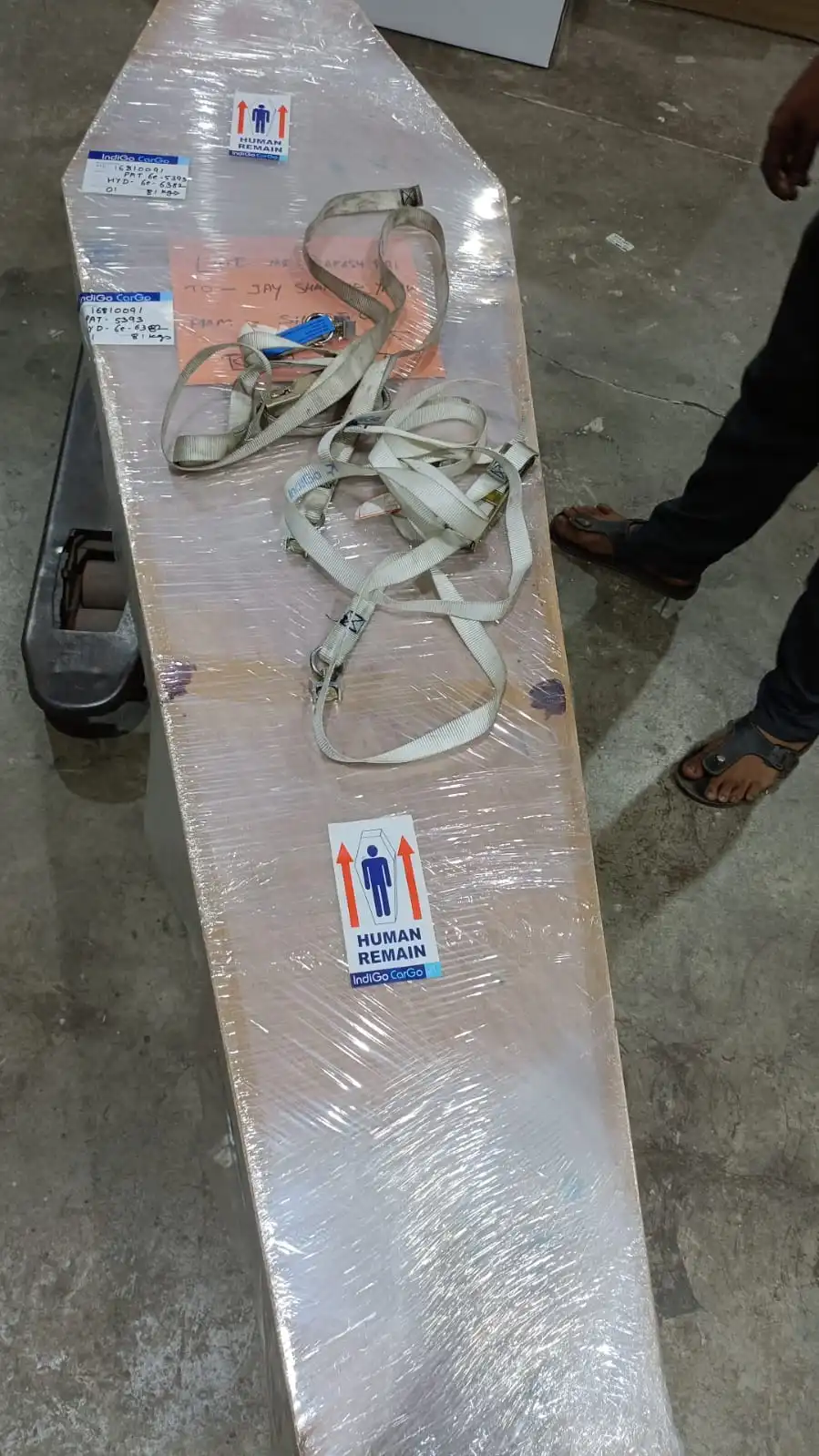
Coffin box ready for air cargo dead body transportation in India
Air cargo note: Freezer box preservation is not a replacement for embalming in flight cases. Airlines need proper embalming certification and coffin packing before cargo acceptance.
Road Transport

Embalming for Long-Distance Interstate Road Shifting

For road transportation, embalming is usually not mandatory in every short-distance case. A freezer ambulance may be enough when the journey is manageable and final rites will happen soon after arrival. But for long-distance interstate shifting, embalming is often a safer option.

Families should consider embalming for road transport when the journey may cross 24 hours, the body has already been kept for many hours, weather is hot or humid, the route involves multiple states, or cremation will be delayed after arrival.

In practical terms, embalming chemically preserves the body, while a freezer ambulance provides temperature-supported transport. For longer preservation, both may be used together depending on the case.

Read: Freezer ambulance for long-distance dead body transport →

Long distance vehicle support for deceased body road transport
Preservation Duration

Corpse Preservation Duration: How Long Can It Last?

No preservation method gives a fixed guaranteed duration because body condition, temperature, humidity, cause of death, time since death, and storage conditions all matter.

Preservation MethodTypical Practical UseImportant Limitation
No preservationOnly very short waiting period before final rites.Decomposition can start quickly, especially in Indian summer conditions.
Freezer boxUseful for home viewing and short-term preservation, commonly 1–5 days depending on conditions.Depends on electricity, lid discipline, room ventilation, and cooling performance.
Mortuary refrigerationUseful when the body must be kept at a hospital or mortuary facility.Preservation depends on temperature control and facility standards.
EmbalmingUseful for air transport, delayed rites, and longer preservation windows.Not permanent; effectiveness depends on body condition and quality of procedure.
Embalming + mortuary storageUsually the most effective option for longer waiting periods.Still requires professional monitoring and proper storage.
Planning guide: If relatives need several days to arrive, embalming with mortuary refrigeration is usually more effective than relying only on a freezer box. Read more on preservation duration →
Comparison

Embalming vs Mortuary Freezer Box Preservation

A freezer box and embalming are not the same. A freezer box slows decomposition through low temperature. Embalming uses chemical preservation and disinfection to delay decomposition from within the body.

Freezer boxes are useful when the body is kept at home for a short period before funeral rites. They are commonly rented for 24-hour periods and may cost around ₹5,000 to ₹7,000 per day depending on city, model, delivery distance, floor access, and service provider.

Embalming is more suitable when the body has to travel by air, be preserved for a longer period, or remain stable during extended transport or funeral delays.

Read: How long can a dead body be kept at home, mortuary or freezer box? →

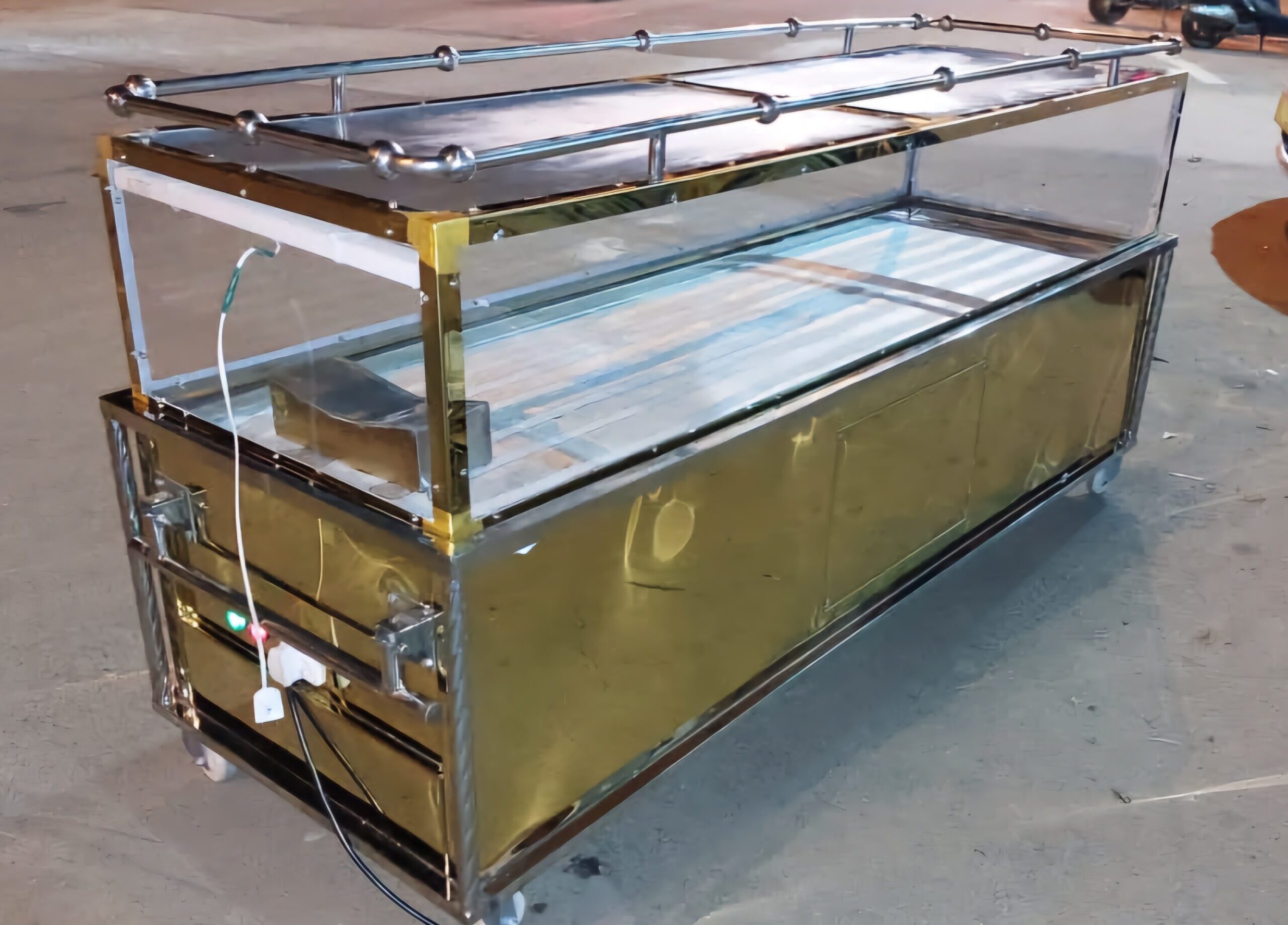
Gold freezer box for temporary deceased body preservation
Key difference: Freezer box preservation depends on temperature. Embalming chemically preserves and sanitizes the body, which makes it suitable for airline documentation and longer preservation needs.
FactorEmbalmingFreezer Box
Preservation methodChemical preservation and disinfection.Cooling-based preservation.
Air transportationGenerally mandatory with certificate.Not accepted as a substitute for embalming.
Long-distance road travelPreferred for very long delays or body condition concerns.Useful before travel or as freezer ambulance support during travel.
Home viewingPossible after procedure depending on body condition.Commonly used for home viewing.
Power dependencyDoes not depend on continuous power after procedure.Requires electricity and proper cooling.
Typical costApprox. ₹10,000–₹20,000 depending on location, facility and body condition.Approx. ₹5,000–₹7,000 per 24 hours depending on location and box type.
Cost Guide

Embalming Cost in India

Families often search for embalming charges in India during an emergency. There is no single fixed national rate because embalming costs vary by state, hospital, medical college, mortuary facility, timing, body condition, and documentation requirements. This page is intentionally written as a nationwide India guide, not as a city-specific service page.

₹10,000–₹20,000typical professional range

This is a practical working range across India. Local service pages can handle city-specific price and availability details separately. The final cost may be lower or higher depending on the city, hospital process, urgency, condition of the body, transport requirement, and whether coffin packing or air cargo support is also required.

For air transportation cases, families should ask for a complete quotation covering embalming, embalming certificate, coffin box, coffin certificate, local ambulance pickup, airport cargo coordination, and destination-side handover if needed.

Certification

Embalming Certificate: What Families Must Check

The embalming certificate is one of the most important documents for air transportation and official handling of human remains.

Certificate should usually include

  • Name of the deceased person.
  • Date and time of embalming.
  • Name of doctor, embalmer, hospital, or facility.
  • Medical registration details where applicable.
  • Signature, seal, and official contact details.
  • Statement confirming that embalming was completed.

Why it is important

Airline cargo teams use the embalming certificate as proof that the deceased person has been medically preserved before flight transport. Without this certificate, cargo acceptance may be delayed or refused.

Families should verify spelling, age, date, time, registration details, and seal before submitting documents to the cargo office.

Do not ignore small mistakes: A spelling mismatch between death certificate, ID proof, embalming certificate, and coffin certificate can create cargo or airport delays.
Misconceptions

Common Myths About Embalming

Embalming is often misunderstood because families usually hear about it only during an emergency.

Myth: Embalming permanently preserves the body

False. Embalming delays decomposition but does not stop it forever. Storage conditions still matter.

Myth: Freezer box and embalming are the same

False. Freezer boxes use cooling. Embalming uses chemical preservation and disinfection.

Myth: Flight transport can be done without embalming

Usually false. For practical airline cargo acceptance in India, embalming and certificate are generally required.

Myth: Embalming affects religious rites

False in most cases. Embalming is a preservation procedure and generally does not stop cremation or burial rites.

Myth: Only international transport needs embalming

False. Domestic air transportation in India also commonly requires embalming documentation.

Myth: Embalming is needed for every local cremation

False. If final rites are immediate and local, embalming may not be required.

Official Reference Points

Airline Rules Should Be Verified Before Booking

For air cargo movement, families should always verify the latest document checklist with the airline cargo office. Official airline pages commonly list embalming certificate, death certificate, police clearance and coffin or packaging requirements for transporting human remains.

IndiGo document reference

IndiGo’s published baggage/cargo guidance for mortal remains also mentions death certificate, embalming certificate and police permission for movement from a station within India.

View IndiGo baggage and cargo guidance →

Important: Airline requirements can change by route, airport, domestic/international sector, cause of death and cargo handling office. Treat this page as family guidance and confirm the active checklist before arranging air transport.
FAQs

Embalming in India: Questions Families Ask

Yes. For practical purposes, families should assume embalming is mandatory for domestic and international dead body transportation by flight in India. Airlines usually require an embalming certificate before accepting human remains as cargo. Families should verify the exact checklist with the airline cargo office before booking.

The process usually includes identification, body assessment, disinfection, arterial injection of preservative fluid, fluid drainage or cavity care where required, external preparation, and issuance of an embalming certificate.

Embalming cost in India commonly ranges from around ₹10,000 to ₹20,000 depending on the state, city, hospital, mortuary facility, body condition, urgency, documentation, and transport requirements.

It may not be legally required in every road transport case, but it is preferred for long-distance interstate shifting, journeys beyond 24 hours, hot weather, delayed cremation, or when the body condition needs stronger preservation support.

Both serve different purposes. A freezer box slows decomposition through cooling and is useful for home preservation. Embalming chemically preserves and disinfects the body and is required for air transportation and longer preservation needs.

Duration depends on body condition, quality of embalming, temperature, humidity, and storage. Embalming can preserve the body for several days to weeks in suitable conditions, and embalming with mortuary refrigeration is usually more effective for longer delays.

Common documents include medical death certificate or MCCD, embalming certificate, coffin certificate, deceased ID proof, family ID proof, cargo booking documents, and police or post-mortem documents in medico-legal cases.

Professional embalming is normally performed in a hospital, mortuary, medical college, or authorized facility. Families should avoid informal arrangements, especially if the body has to be transported by air.

Reviewed by Operations Manager

Rakshith G K Operations Manager

Rakshith G K reviews Swargayatraa’s funeral transport and preservation guides for practical accuracy, service clarity, and family usefulness. This guide focuses on embalming, air cargo documentation, coffin preparation, freezer box comparison, and long-distance body transport decision-making.

The purpose of this page is to help families understand when embalming is mandatory, when it is only preferred, and when a freezer box or mortuary storage may be enough.

Service focus:
Embalming coordination, air cargo body transport, coffin box preparation, freezer ambulance, and preservation guidance.

Coverage:
Nationwide support through major metro cities and verified professional partners.

Contact:
+91 89996 53202
24×7 Assistance

Need Embalming for Air Transportation or Preservation?

Call Swargayatraa before arranging air cargo or long-distance transport. We help families understand whether embalming is mandatory, what documents are needed, whether coffin packing is required, and how to coordinate hospital, mortuary, airport cargo, and destination-side support.

This is a soft guidance service for families who need immediate help with domestic air transportation, international repatriation, embalming certificate coordination, and extended preservation planning.

Important Medical and Legal Note

This page is an informational guide for families. Embalming requirements, airline cargo rules, certificate formats, police documentation, international repatriation rules, and local authority instructions can vary by city, facility, airline, airport, and destination country. Always follow instructions from the hospital, embalming facility, police, airline cargo office, airport authority, consulate, or local government office.

Verified by MonsterInsights