The 16th Sanskar (Antyesti): Meaning of Hindu Last Rites
What washing the body, lighting the funeral fire, breaking the water pot and offering Pindas signify—and what the Vedas, Bhagavad Gita and Garuda Purana actually say.
Explore the article
The final SanskarWhat scripture saysSequence of ritesMeaning of ritual symbolsDifferences in practiceQuestionsReferencesWhy is Antyesti the final Hindu Sanskar?
Antyesti (also written Antyeṣṭi, meaning “last offering” or “final sacrifice”) is the Hindu funeral rite that marks the end of embodied life. It is commonly described as the sixteenth and final samskara—a life-cycle sacrament—although the enumerations and funeral customs of Hindu communities are not identical.
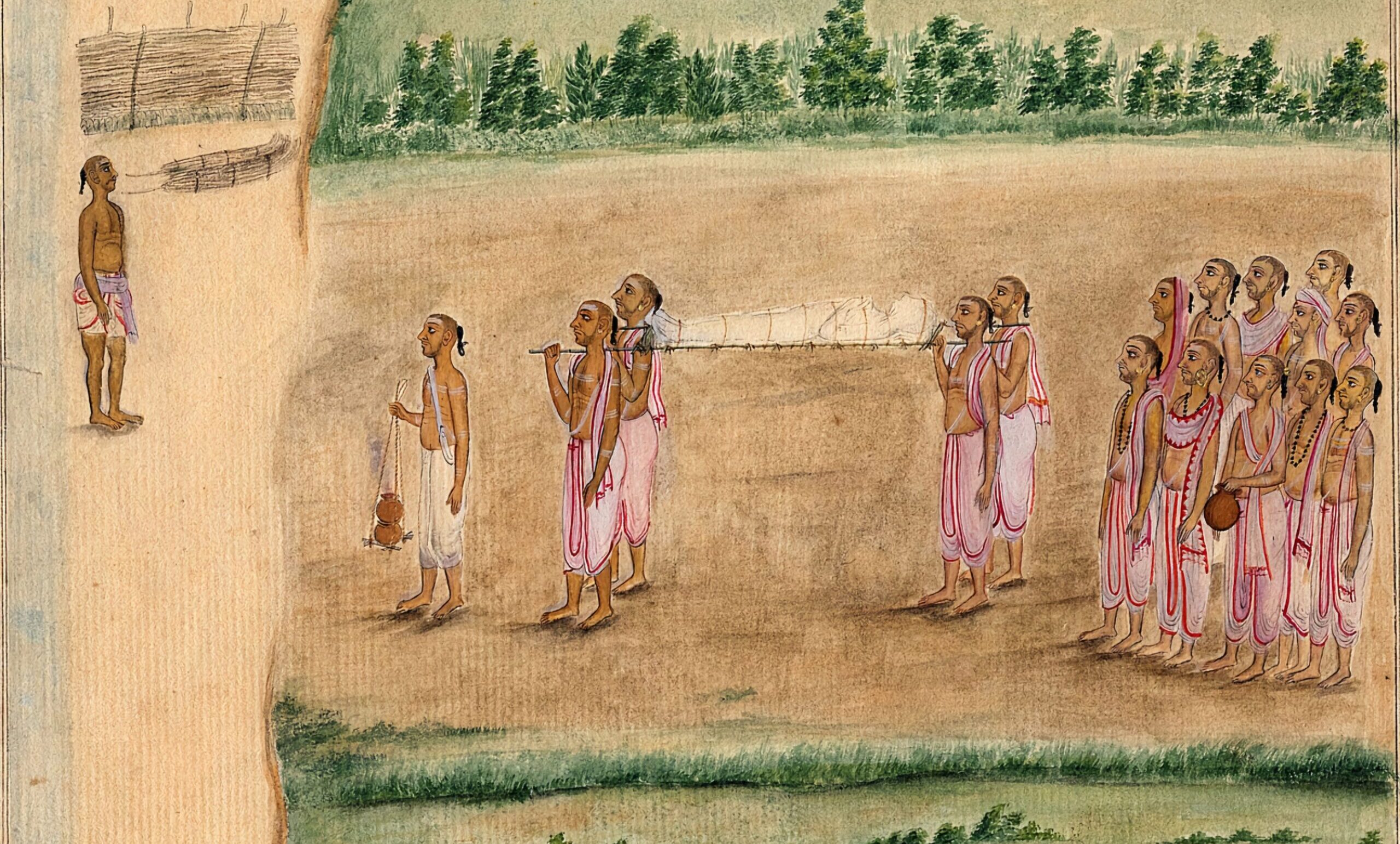
The ceremony treats the deceased with respect while marking a change in relationship: the body is entrusted to fire, earth or another customary method, and family members continue remembrance through offerings and prayers. Antyesti is therefore not just the lighting of a pyre. It includes preparation, farewell, the funeral itself and associated rites for the departed.
Body
Care for the physical remains through washing, clothing and a respectful farewell.
Fire
Agni is invoked as a witness and messenger in Vedic funeral hymns.
Ancestors
Piṇḍa and water offerings express continuing kinship and remembrance.
What the Vedas, Gita and Garuda Purana say
The texts address different aspects of death. The Vedic hymns contain prayers connected with the funeral fire. The Bhagavad Gita reflects on the self and the body. Later ritual literature, including the Garuda Purana, gives more developed accounts of offerings and duties to the departed. None should be presented as a single pan-India instruction manual for every local rite.
In the opening verse, Agni is addressed with a prayer to prepare the deceased and convey them toward the ancestors (Pitṛs). The passage establishes fire as a sacred intermediary; it does not list every later regional ceremony. Read the hymn [1]
Bhagavad Gita 2.20–22
Krishna describes the ātman as distinct from the perishable body, including the familiar comparison of the embodied self changing garments. These verses offer a philosophical account of bodily impermanence; they are not specific instructions to break pots or perform Kapala Kriya. Gita 2.20 [2] · 2.22 [3]
Garuda Purana, Preta Kalpa
In the cited translation, the text describes washing and dressing the deceased, rice-ball offerings, cremation, collecting remains and later ancestral rites. Its accounts are religious teachings within a particular textual tradition; local observance and interpretations vary. Funeral rites [5] · Sapindikarana [7]
How Hindu last rites generally unfold
The sequence below groups commonly encountered rites so the meaning is easier to follow. It is not a compulsory checklist for every Hindu family. The exact prayers, order, number of offerings and participation of relatives follow the family's traditions and the crematorium's practical rules.
Snana or Abhisheka — washing and preparing the body
After death has been medically confirmed and necessary arrangements are complete, relatives or trained attendants may wash the deceased, dress them in clean clothing and apply appropriate sacred marks, sandal paste or flowers. In some regions this washing is called snana; abhisheka may be used for ritual bathing or anointing in local usage.
There is no universal ingredient list. Personal hygiene and respectful professional handling come first, especially where hospital or medico-legal requirements apply.
Antim Darshan, Sankalpa and early Pinda offerings
Families may gather for final viewing (antim darshan), recite a prayer, make a sankalpa (statement of ritual intention) and offer water, sesame or small rice balls (piṇḍas). Some rites occur at the place of death, at the threshold or near the funeral pyre; these are described in certain Puranic funeral accounts but are not performed identically everywhere.

Kumbha Bhedana — breaking the earthen water pot
In several traditions, a relative carries an earthen vessel containing water near the funeral pyre. Water may be allowed to flow from the pot, and the vessel is broken at a prescribed point. The rite is also called Ghata Bhedana, Ghata Phodna or simply breaking the funeral pot. Some families do not observe it, and the number of circumambulations varies.
For the family, the gesture can mark a difficult but definite farewell. The rite should take place only where permitted by the crematorium and under the guidance of the officiating practitioner.
Mukhagni, Agni Sanskar and Kapala Kriya
Mukhagni is the ceremonial initiation of cremation, traditionally performed by the chief mourner in many wood-pyre practices. The rite is accompanied by prayers to Agni or according to the family's particular deity and lineage. In an enclosed electric or gas furnace, a symbolic prayer may be performed before an authorised operator starts the chamber.
Kapala Kriya is a separate skull-related rite observed in some traditions during open-pyre cremation. It has been interpreted as symbolising release of the remaining life principle. The Garuda Purana describes a skull-related procedure, and researchers document how its interpretation and performance vary. It is neither universal nor a reason for family members to enter or interfere with an active cremation area. Text [5] · Research [9]
Asthi Sanchayana, Asthi Visarjan, Tarpana and Shraddha
After the remains have cooled and are released by the crematorium, some families collect the cremated bone fragments (Asthi Sanchayana) and later immerse them at an appropriate water site (Asthi Visarjan), observing local permission and environmental rules.
Tarpana refers to water offerings; Pind Daan and Shraddha express ritual care, remembrance and duties to the ancestors. Pinda offerings may begin during the funeral and continue through subsequent days. Sapindikarana, where observed, marks the deceased's ritual association with the ancestors; its timing differs across traditions and textual systems.
What water, fire, rice and the pot represent
These four symbols recur across funeral traditions. Choose a symbol for a concise explanation, then read the ritual sections above for its specific context.
Ritual water appears in bathing the deceased, purification and offerings made in memory of the departed.
Why the exact last rites differ across India
Antyesti has a recognisable religious vocabulary, but an individual funeral is shaped by the family's sampradaya, region, language, caste/community customs, the age and role of the deceased, and available crematorium facilities. Scholarly research documents how funerals in different Indian communities have been modified and reinterpreted, including in response to changing conditions. Comparative research [8]
At the crematorium
- Wood-pyre and electric/gas cremation do not allow identical physical acts.
- Direct flame-related practices may be replaced by prayers at the ceremonial platform.
- Kapala Kriya or pot-breaking may be absent, adapted or restricted.
- The chosen family priest and crematorium operator can clarify what is possible.
During mourning
- Offerings and observances differ between 10-, 11-, 12- and 13-day traditions.
- Not all families use the same list of Pindas or annual Shraddha procedures.
- Many women and daughters take part in rites; roles should not be described as uniform.
- Renunciants, young children and certain communities have different funeral customs.
There is no single verse that requires every family to use a particular pot, number of rounds, ash-collection day or funeral package. Sacred texts provide important foundations, while living traditions shape the details. A family's choice can remain respectful even when a facility cannot accommodate a particular physical action.
Questions about Antyesti and its meaning
Why is Antyesti called the 16th Sanskar?
In commonly taught sets of sixteen Hindu samskaras, Antyesti is the final rite, performed after death. It marks the respectful completion of embodied life. The list and treatment of samskaras vary across texts and communities.
What is the difference between Antyesti and Shraddha?
Antyesti usually refers to the immediate funeral rites associated with the body and cremation or other customary disposition. Shraddha refers to offerings for the departed and ancestors, commonly performed after cremation and at later observances.
Why is the body washed before Hindu cremation?
Washing and dressing the deceased are acts of respect and ritual preparation. Families may call the washing snana or abhisheka in local usage. Sacred water, garments and sandal paste are used according to family tradition.
Why is an earthen water pot broken during Hindu last rites?
In communities that practise Kumbha Bhedana or Ghata Bhedana, the breaking of a water-filled vessel is commonly interpreted as acknowledging bodily impermanence and the ending of an earthly relationship. Its sequence and meaning vary; it is not required in every Hindu funeral.
What is Kapala Kriya, and must the family perform it?
Kapala Kriya is a skull-related rite associated with some traditional open-pyre cremations and interpretations of the release of life-breath. Many families do not perform it, and enclosed furnaces may not permit it. Only trained crematorium personnel should manage the pyre and safety restrictions.
When is Pind Daan performed in the funeral sequence?
Pinda offerings may occur at several points around the funeral and continue during post-cremation observances. The Garuda Purana describes both offerings around cremation and later offerings to the departed. The exact days, number and ingredients depend on custom.
Can the same rituals be performed during electric or gas cremation?
Many prayers, last-viewing rites, offerings and post-cremation observances can be arranged for electric or gas cremation. Direct pyre-lighting, pot breaking at the platform and Kapala Kriya may be adapted or restricted by the facility. Confirm arrangements with the priest and crematorium.
Do Hindu women or daughters have to stay away from Antyesti?
There is no single nationwide practice. Traditional roles vary across communities; in many families today daughters and other relatives take part in prayers or perform central rites. Decisions should be discussed with the family and its ritual adviser without portraying one local custom as universal.
Is the 13-day mourning period mandatory for every Hindu family?
No universal number applies to every community. Ten-, eleven-, twelve- and thirteen-day observances, as well as shorter customs, exist. Families should follow the tradition relevant to them and make appropriate practical arrangements.
Scriptural passages and research on Hindu last rites
The textual references below identify the works and passages discussed in this guide. Interpretations and translations differ; individual practices may follow family, regional or sampradaya traditions.
- Rig Veda 10.16 — funeral hymn to Agni
- Bhagavad Gita 2.20 — nature of the self (IIT Kanpur)
- Bhagavad Gita 2.22 — embodied self and changing garments (IIT Kanpur)
- Sixteen Samskaras: Antyesti (INFLIBNET academic module)
- Garuda Purana, Preta Kalpa, Chapter X — funerary preparation and bone collection
- Garuda Purana, Chapter XII — later Shraddha offerings
- Garuda Purana, Chapter XIII — Sapindikarana
- From Ritual Mourning to Solitary Grief — research on regional differences (PMC)
- At the Burning Ground — academic discussion of Kapala Kriya (Religions)
- Hindu funeral ethnography, Kapala Kriya and pot-breaking (Open Theology)
The religious interpretations here are not a substitute for the guidance of the priest or family tradition conducting a particular funeral. Local crematorium restrictions and safety requirements apply to all physical rites.