
Dead Body Transport by Air from Delhi to Mumbai
When a loved one passes away in Delhi and must be taken to Mumbai, the family usually needs more than a flight booking. They need pickup in Delhi, embalming and coffin packing guidance, airport-side coordination at Delhi IGI, and a clear receiving plan at Mumbai Airport (BOM / CSMIA) with onward movement to the final location in Mumbai, Navi Mumbai, Thane or nearby Maharashtra.
Send these 5 details first
In urgent cases, the fastest way to move forward is to send the route essentials first. That helps us align the Delhi dispatch side and the Mumbai receiving side without delay.
Share the details in Hindi or English. One coordinator can guide your family step by step.
What we check first
- Exact pickup point and urgency in Delhi
- Whether the case is hospital, home, mortuary or postmortem
- Document and packing readiness for air movement
- Who will receive at Mumbai cargo side and where the body must go after release
Why this route is chosen so often
Work, treatment and migration cases
Many families need this route when the deceased was living, working or receiving treatment in Delhi but the family base or final rites are in Mumbai or Maharashtra.
Faster than a long interstate road journey
Families often choose air movement when timing is important and they want a more controlled transfer than a long road journey.
Mumbai needs proper receiving planning
This route does not end at the airport. Receiver readiness, cargo release guidance and final city transfer all need to be planned before dispatch.
One coordinator reduces confusion
Families usually prefer one point of contact instead of separately handling hearse pickup, documents, packing, airline coordination and Mumbai receiving support.
Parent route hub
For the full Delhi-side process overview, visit our Delhi IGI air transport hub.
Delhi to Mumbai route reality families should understand early
The difficult part of this route is not only getting the body onto a flight. The difficult part is managing the full chain: pickup in Delhi, embalming and packing readiness, Delhi airport cargo-side process, Mumbai cargo-terminal release, and the final local movement inside one of India’s busiest urban regions.
Delhi dispatch and Mumbai release are separate control points
Families should not think that once the flight is booked, the route is solved. The receiving side in Mumbai still needs a named receiver, ID readiness and final destination clarity.
Mumbai release is not passenger-arrival collection
The body is not normally taken from the passenger baggage area. The release happens through the cargo-side process as directed by the airline and cargo handler.
Final-area distance changes practical timing
Andheri is not operationally the same as South Mumbai, Navi Mumbai or Thane. The last-mile movement can materially affect same-day funeral timing.
Written pricing matters in urgent situations
Families should know which amount is for service coordination and which portion is for airline cargo, instead of discovering that in the middle of an emergency.
Route Management & Coordination
Led by the Swargayatraa Dispatch Team
Our Delhi to Mumbai air cargo transfers are coordinated by an experienced operations team that handles
Delhi-side pickup planning, embalming and packing readiness, airline coordination, Sahar cargo-side
release guidance, and final handover planning across Mumbai, Navi Mumbai and Thane.
What this team manages on the route
- Delhi pickup, case review and cargo-side dispatch planning
- Airline-specific coordination for domestic human remains movement
- Named receiver guidance for Mumbai cargo release
- Final-area planning for Mumbai city, Navi Mumbai, Thane and nearby destinations
Why this matters in urgent cases
Families usually struggle not with one single step, but with the full chain. A dedicated route coordination team helps keep the Delhi dispatch side and Mumbai receiving side aligned from the first call onward.
Why families choose us for this route
- Single coordinator: From the first call in Delhi to the final handover in Mumbai, Navi Mumbai or Thane.
- Written quote before booking: Service and airline cargo charges are shown separately to avoid confusion.
- Support for different case types: Hospital, home, mortuary and postmortem cases can all be guided according to the actual requirement.
- Arrival-side continuity: If needed, support continues after BOM release for local transfer, freezer box planning, funeral support or cremation coordination.
What families usually want most
Clear next steps, one responsible contact, proper document guidance, and confidence that the family does not have to manage the airport-side process alone.
How the Delhi to Mumbai air transport process usually works
A practical route view from Delhi pickup to Mumbai cargo release and final handover.
Case Intake
Pickup point, urgency, case type and receiver details are checked first
Pickup in Delhi
From hospital, home, mortuary or lawful release point
Preparation
Embalming, preservation and coffin packing readiness
IGI Cargo Coordination
Airport-side reporting, acceptance handling and dispatch planning
Flight to Mumbai
Air movement from Delhi to BOM / CSMIA
BOM Release + City Handover
Cargo release guidance and onward transfer to the final Mumbai area
Delhi IGI to Mumbai BOM / CSMIA airport route understanding
This service covers movement from Indira Gandhi International Airport, Delhi (DEL / IGI) to Chhatrapati Shivaji Maharaj International Airport, Mumbai (BOM / CSMIA) with route-specific coordination support.
- DEL to BOM human remains transport
- Delhi IGI to Mumbai air cargo movement
- Dead body transport by air from Delhi to Mumbai
- Domestic human remains transport by air in India
Important route principle
Families should not plan this route like a normal passenger journey. Mortal remains move through the cargo-side process and need named-receiver planning at the arrival end.
Airport names, codes and route clarity
Delhi airport side
Indira Gandhi International Airport is the Delhi airport used for this route. Families may hear it called Delhi Airport, IGI Airport or DEL Airport.
Mumbai airport side
Chhatrapati Shivaji Maharaj International Airport is the receiving airport for this route. Families may hear it called Mumbai Airport, CSMIA or BOM Airport.
Passenger-terminal confusion
Families often check passenger arrival details first, but mortal remains move through the cargo-side workflow rather than ordinary baggage handling.
Receiver details matter
The receiver name, phone number and final handover location should be fixed before the body is dispatched from Delhi.
Operational realities of the Delhi to Mumbai air route
1. Sahar cargo release delays
Mumbai’s Chhatrapati Shivaji Maharaj International Airport processes domestic human remains through the Sahar cargo complex, not the passenger terminals. Families should usually plan for around 1.5 to 2 hours after landing for release formalities, depending on airline handling, document readiness and receiver availability.
2. Airline handling rules at BOM are not identical
This route is heavily served by IndiGo, Air India and Akasa Air, but the exact receiving terminal and release logic at Mumbai depends on the airline and the day’s handling conditions. The family should be guided to the correct cargo shed instead of assuming one common terminal flow.
3. Delhi IGI cut-off pressure is real
To catch a flight to Mumbai, the embalmed and packed body usually needs to reach the Delhi domestic cargo-side process around 3 to 4 hours before departure for screening, documentation review and Air Waybill handling.
4. Mumbai traffic bottlenecks affect final timing
The Western Express Highway, JVLR and Eastern Express Highway can materially affect same-day funeral timing after release, especially when the final destination is South Mumbai, Navi Mumbai or Thane.
5. Same-day rites need a practical city buffer
The airport release is only one stage. The family should still keep a realistic buffer for local transfer, building access, prayer gathering or cremation-related timing after release in Mumbai.
6. Final-area planning should be done before dispatch
Families should decide early whether the body is going to a residence, mortuary, freezer box location, prayer venue or directly toward final rites. That reduces confusion after arrival.
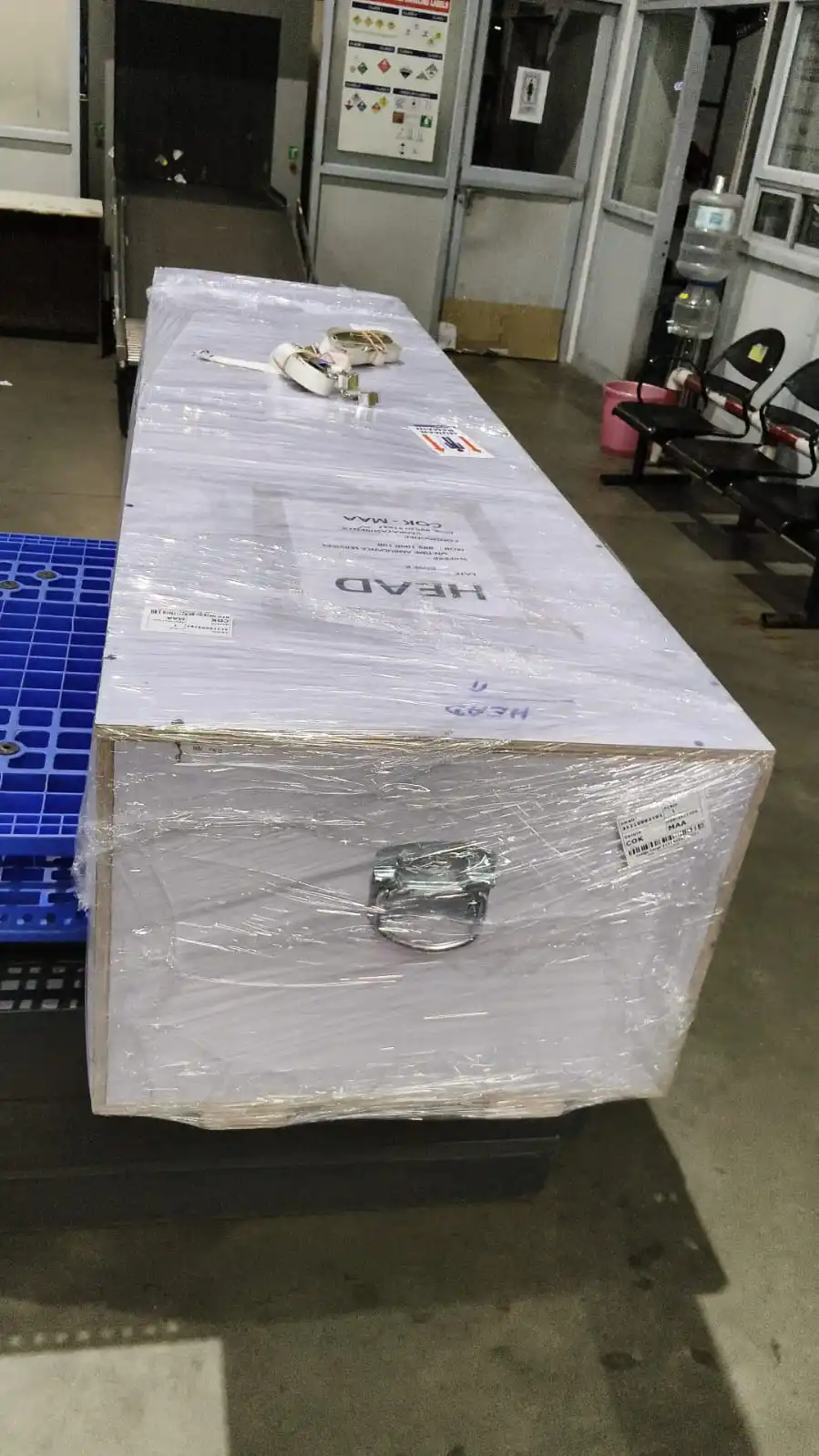
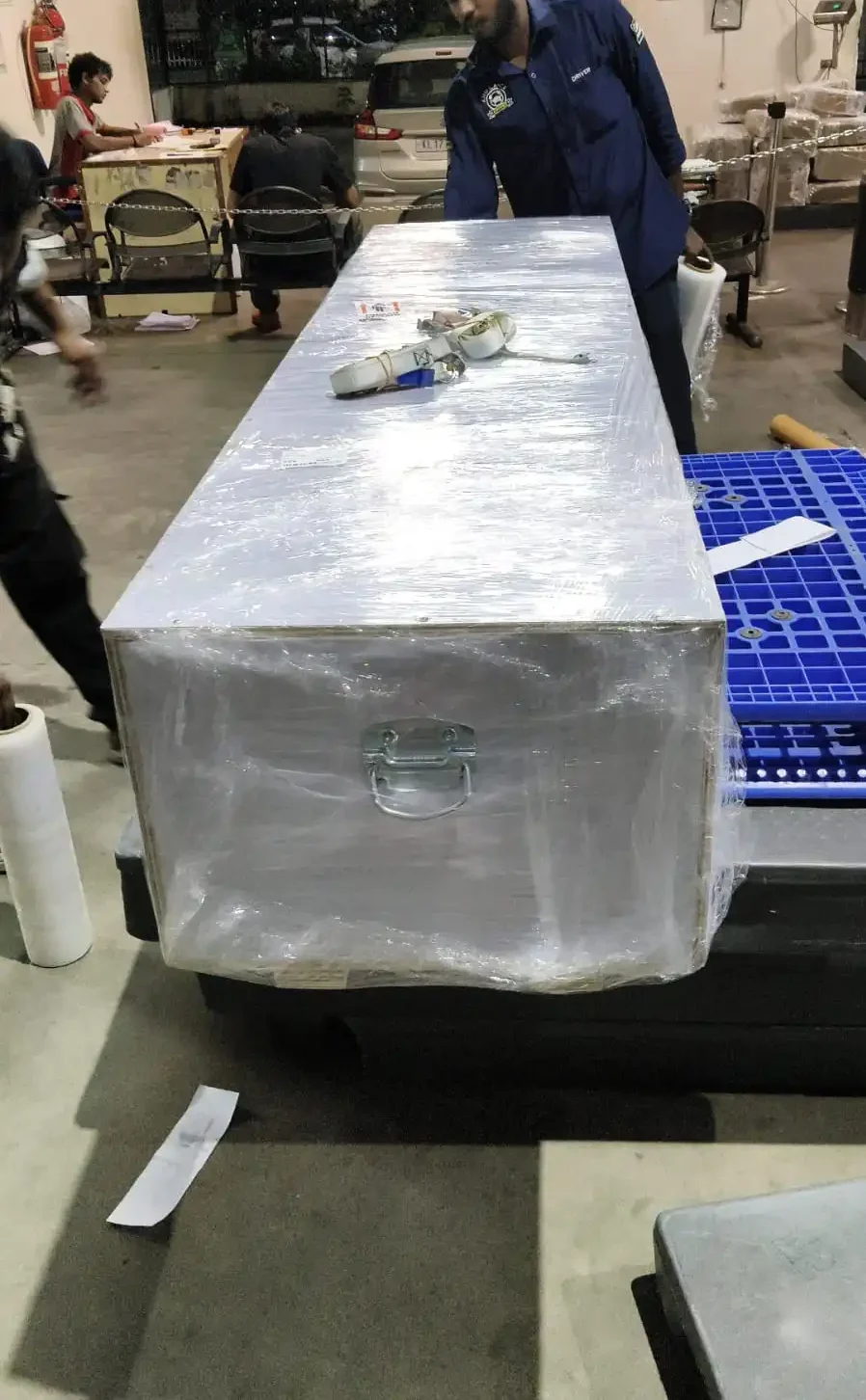
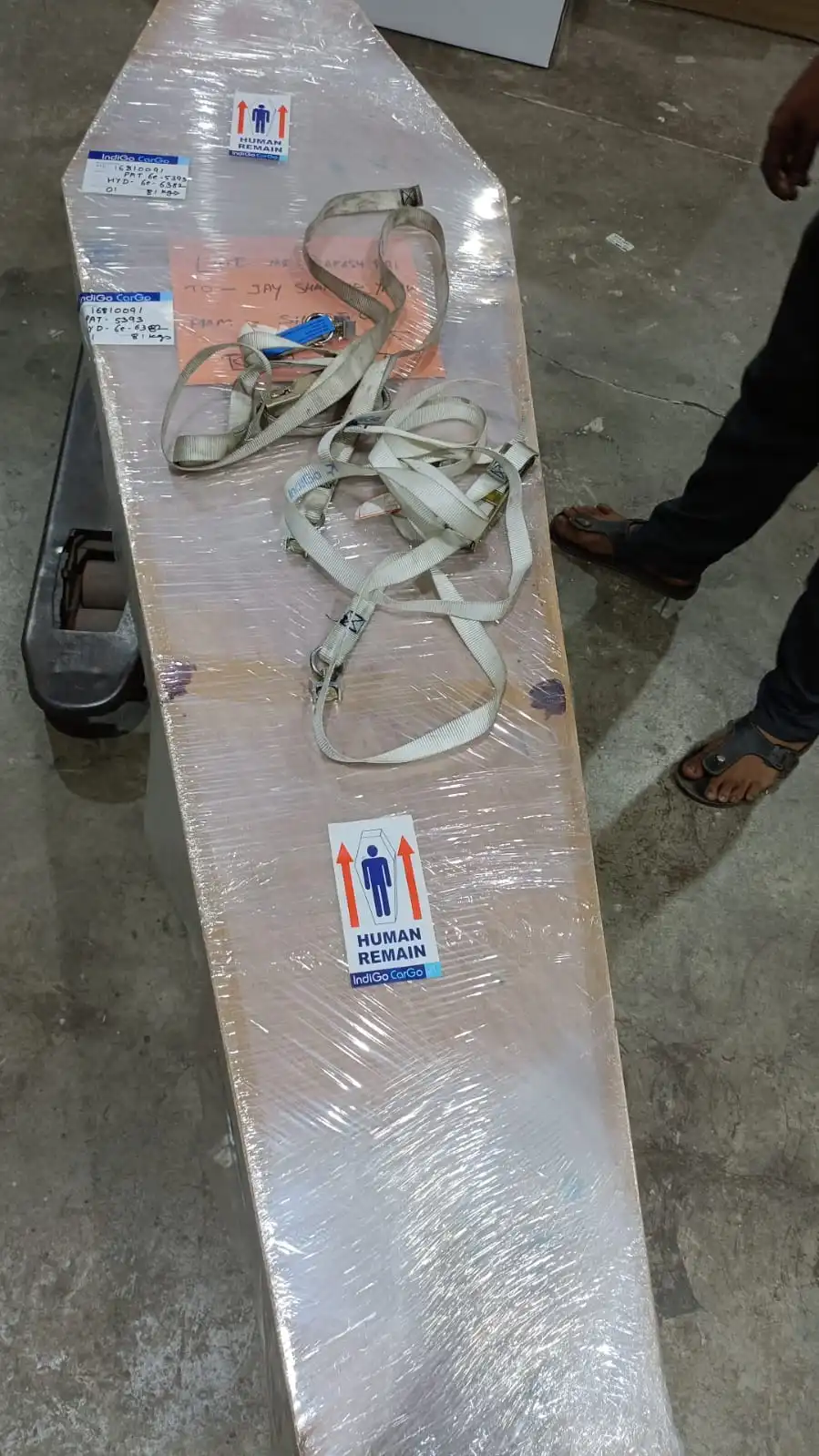
Verified route handling
Why we show our actual process
Families trust real packing, weighing and cargo-handling visuals more than generic graphics. These visuals help explain that the route is managed through a structured cargo process rather than guesswork.
What your family should keep ready before dispatch
Every case is different, but these details help reduce confusion when the body must move by air from Delhi to Mumbai.
Pickup clarity
Share the exact Delhi location, landmark and whether the case is at a hospital, home, mortuary or postmortem facility.
Receiver contact
Keep the name and active phone number of the receiving family member in Mumbai, Navi Mumbai or Thane ready.
Final area
Tell us whether the body is going only to the airport release point or onward to Andheri, Dadar, South Mumbai, Navi Mumbai, Thane or another area.
One decision maker
Keep one responsible family contact available so route decisions, costs and next steps are not delayed by fragmented communication.
Documents and preparation usually required
| Document / Item | Why it is needed |
|---|---|
| Death / medical documentation | Used to begin the transport process correctly |
| Embalming certificate | Commonly required for commercial air movement handling |
| Coffin / packing readiness | Required before cargo-side acceptance and dispatch |
| ID proof of family representative | Used for declarations and case handling |
| Police clearance / NOC | May be required depending on the case and circumstances |
| Postmortem certificate | Needed if the case involves postmortem or medico-legal formalities |
| Receiver details in Mumbai | Needed for cargo release guidance and final handover planning |
Best next step
Instead of guessing the paperwork on your own, send the case details first and get route-specific guidance based on the actual case type.
What happens after landing in Mumbai
Once the body reaches Mumbai Airport (BOM / CSMIA), the receiving side should already know who will take over, what identification is needed and where the body will go next.
The receiving family should keep these ready
- Authorized receiver name and active phone number
- Government ID of the receiving person
- Any authorization details shared during booking
- Vehicle or onward handover arrangement if the body is not stopping at the airport
Important Mumbai-side reality
Cargo release and the final handover inside Mumbai should be treated as two separate operational stages, not one single step.
Airport release only or onward city handover
Airport-to-airport level support
Best when the family already has a named receiver and local vehicle arrangement ready at the Mumbai cargo side.
Airport-to-final-point support
Best when the body has to be taken onward to home, mortuary, freezer box location, prayer venue or final rites point after cargo formalities are completed.
What families should understand about this stage
- The body moves through cargo-side handling, not ordinary passenger baggage flow
- The named receiver should remain reachable around the release stage
- The final city destination should already be confirmed before the cargo release stage begins
Service scope for Delhi to Mumbai air transport
Families may need only one stage or the full route. The service scope can be planned accordingly.
Core route coordination
- Case review and first-call guidance
- Pickup coordination in Delhi
- Embalming and preservation guidance
- Coffin packing readiness
- Delhi IGI cargo-side coordination
- Flight-side route planning
- Mumbai cargo release guidance
Optional continuation after arrival
- Final handover planning in Mumbai region
- Road transfer after airport release
- Freezer box support if timing gap exists
- Funeral support if needed
- Cremation coordination if required
- Multi-location family coordination support
Delhi to Mumbai dead body air transport cost
Service coordination starts from ₹25,000. Airline air cargo charges are separate and depend on airline terms, route conditions, acceptance rules and weight category. A written quote is shared before booking.
Starts from ₹25,000* for service coordination
What can change the final amount
- Airline cargo tariff for the route
- Weight category and airline handling rules
- Embalming, preservation and packing requirements
- Pickup complexity and timing window
- Whether local Mumbai receiving, freezer box or final support is needed
Why written pricing matters
Families should not be left guessing whether the amount includes only route coordination or the airline cargo portion as well. A written quote avoids misunderstanding at an already difficult time.
Clear quote, clearer decisions
- Service coordination shown separately
- Airline cargo charges stated separately
- Optional local support explained clearly
- Route flow understood before confirming booking
Price and route planning go together
The sooner the family shares complete pickup and receiving details, the easier it is to guide the case without avoidable back-and-forth.
Receiving support across Mumbai region
The practical final leg after Mumbai airport release depends heavily on the destination area. Western suburbs, central city zones, South Mumbai, Navi Mumbai and Thane all behave differently in time and movement planning.
Important for final handover planning
The final route after release can materially affect same-day rites planning, especially when the destination is far from the airport corridor or in a dense city zone.
Mumbai receiving operational matrix
| Receiving Area | Operational impact after BOM release | What family should confirm early |
|---|---|---|
| Western Suburbs: Andheri / Vile Parle / Santacruz / Bandra | ~5–15 km. Usually the simplest city handover zone after release because it remains close to the Sahar cargo side. In smoother conditions, final transfer may remain comparatively manageable for same-day rites. | Confirm whether the body goes directly home, to a prayer venue, or to a nearby mortuary / freezer box point. |
| Central Mumbai: Dadar / Sion / Matunga / Parel | ~15–20 km. Transfer via the Western Express Highway and central corridors is workable but timing-sensitive. Families should usually plan around 1 to 1.5 hours depending on traffic and local access. | Keep building access, parking and local family coordination ready in advance, especially in dense residential pockets. |
| South Mumbai: Marine Lines / Colaba / Walkeshwar | ~25–35 km. This usually needs a longer and more tightly timed movement after release. Families should keep a realistic 1.5 to 2-hour city buffer before fixing prayer or cremation timing. | Do not over-tighten same-day rites timing. Confirm whether the body goes home first or directly toward the final rites location. |
| Eastern Suburbs: Powai / Ghatkopar / Chembur | ~10–20 km. Operationally moderate, but traversing JVLR, SCLR or related city connectors can add delay during peak hours. | Share the exact landmark and whether the final stop is a residence, mortuary, freezer box location or direct rites venue. |
| Navi Mumbai & Thane: Vashi / Nerul / Kharghar / Panvel / Thane | ~30–45+ km. This is a major secondary transfer, not a quick local handover. Depending on release timing and road conditions, the onward movement can take 1.5 to 2.5 hours. | Share the exact final node early and consider freezer box support for late-evening or night arrivals where immediate final rites are not practical. |
Frequently asked questions about this route
Need immediate help with dispatch?
Send the pickup location, urgency, case type, receiver contact and final receiving area. We will guide you on the next steps and share a written quote.
💬 WhatsApp (Written Quote) 📞 Call +91 8999653202Two details that prevent confusion
- Who is the named receiver at Mumbai cargo release?
- What is the exact final destination after release?