
Dead Body Transport by Air from Delhi to Pune & PCMC
When a loved one has to be moved from Delhi to Pune, the real destination is often not “Pune city” in a simple sense. Families may actually be receiving in Pimpri, Chinchwad, Bhosari, Nigdi, Wakad, Ravet, Chakan or another part of the Pune–PCMC belt. That is why this route needs more than a flight booking. It usually needs pickup support in Delhi, embalming guidance, coffin packing readiness, Delhi IGI cargo-side coordination, Pune airport release guidance and a practical plan for the final road movement after landing.
Why Delhi to Pune & PCMC needs special handling
A generic metro-to-metro page misses the real operational issue on this route. The body may land at Pune Airport, but the family may actually be waiting in PCMC or another outer corridor rather than near the airport. That changes how same-day rites, home-first viewing, freezer box planning and the final handover should be discussed.
PNQ is the arrival point, not always the true final point
The body can land in Pune while the final destination is still 30 to 90+ minutes away depending on the receiving area and traffic conditions.
PCMC handover is not one single geography
Pimpri, Chinchwad, Bhosari, Nigdi, Wakad, Ravet, Moshi and Chakan do not behave the same way after airport release.
Late arrival can change the family’s best decision
Depending on arrival timing and final destination, it may be better to go home first, use freezer box support or plan final rites the next morning.
Landing does not mean the route is finished
The Pune-side release and last road movement still need to be handled correctly after the flight reaches PNQ.
How families usually think through this route
Go home first
Usually chosen when the family wants darshan, relatives are gathering, and there is enough time after release to move calmly.
Go directly for final rites
Usually considered when timing is tighter, the destination is workable, and the family has already aligned the receiving side.
Use freezer box support
Often the better choice when the body reaches later, relatives are still travelling, or final rites are intentionally planned for the next day.
Hold at a temporary point
Sometimes needed where the final location is farther into PCMC or where apartment access and family readiness create a timing gap.
Main uniqueness angle
The hard part of this route is not only Delhi dispatch. It is the PNQ release to Pune/PCMC handover stage, which is exactly where generic location-swap pages become weak.
Useful route tools for families receiving in Pune or PCMC
These links are here to make the page more useful in a real situation. They do not replace airline or cargo-side instructions, but they help families think through the arrival side more clearly.
Official Pune Airport information
Helpful for airport contact context and general airport reference.
Open Official PNQ PageAirport to Pimpri / Chinchwad route view
Useful when the body will be received in core PCMC rather than Pune city.
View Airport → PimpriAirport to Bhosari / Chakan route view
Useful when the family is in the industrial and outer corridor side of PCMC.
View Airport → ChakanHow to use these properly
Use these links to understand the receiving corridor, not to guess the release process. The named receiver and actual arrival-side instructions still matter more than map distance alone.
Send these 5 details first
The fastest way to start this route properly is to send the exact information that affects both the Delhi dispatch side and the Pune / PCMC arrival side.
What these 5 details solve immediately
Pickup realism
The Delhi pickup point affects how the first stage is coordinated and what preparation steps are usually needed first.
Case-type clarity
Hospital, home, mortuary and postmortem cases do not always move under the exact same document path.
Receiver readiness
The named receiver should be reachable because arrival-side confusion causes avoidable delay.
Final-area planning
“Pune” is not enough. Pune city and PCMC-side destinations need different post-release planning logic.
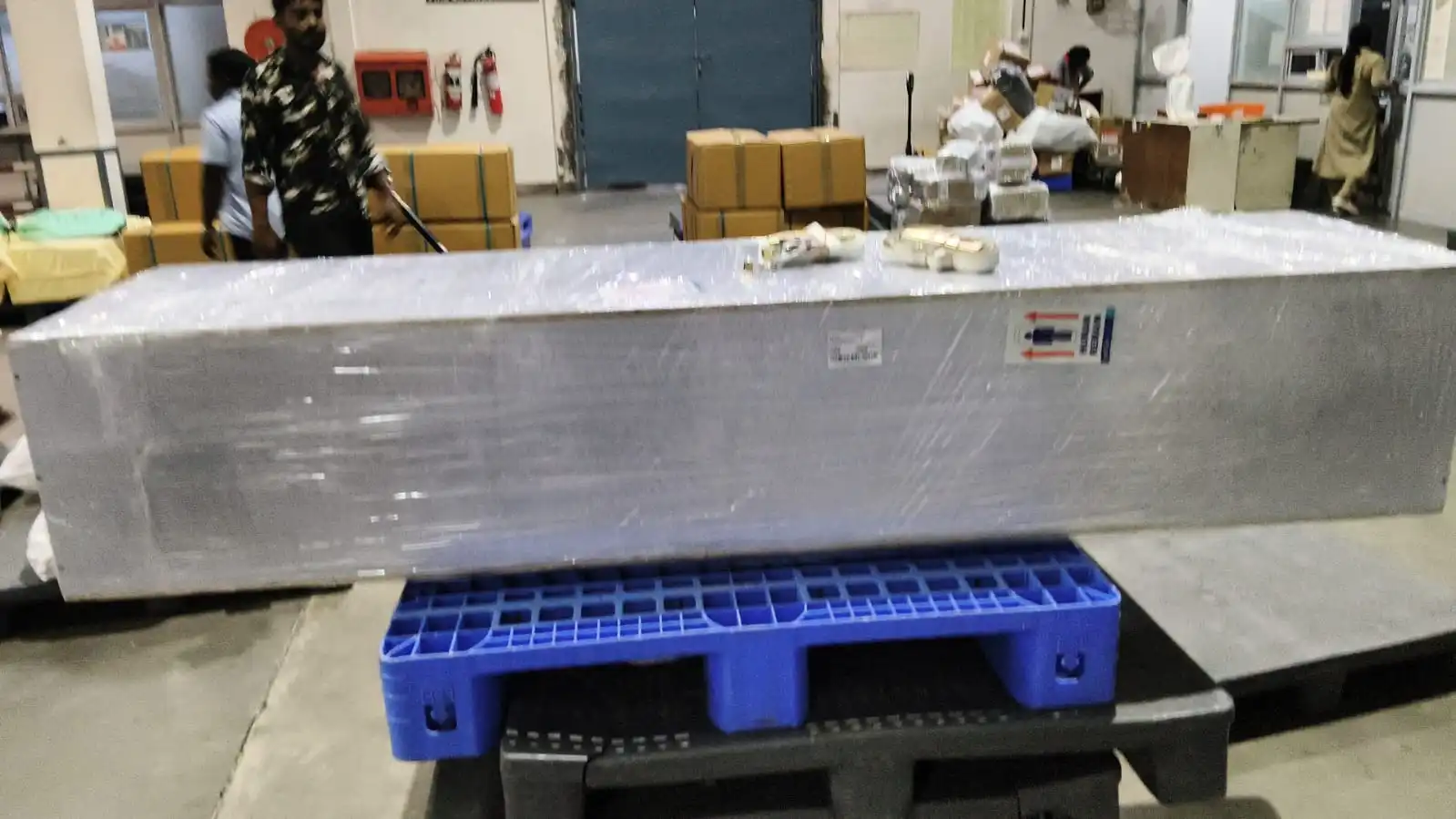
This is a cargo-side process, not a passenger baggage process
Families should not expect to receive the body from a normal passenger baggage area. Human remains are usually handled through the airline’s cargo-side process, with release guidance based on the case and airline requirements.
- Delhi departure is planned around the cargo-side workflow at Indira Gandhi International Airport (DEL / IGI).
- Pune arrival is planned around the release stage at Pune Airport (PNQ), not ordinary passenger collection.
- The receiving person should be identifiable and reachable around the arrival window.
- The final location after release should be fixed before the body leaves Delhi wherever possible.
Why this matters for Pune specifically
Many families are not stopping in east Pune near the airport. They are heading farther into Pune city or into PCMC, so the arrival side must be treated as its own stage.
Pune-side route references families commonly ask about
Families often describe the destination using a hospital, medical college, residential cluster or industrial corridor rather than a simple city label.
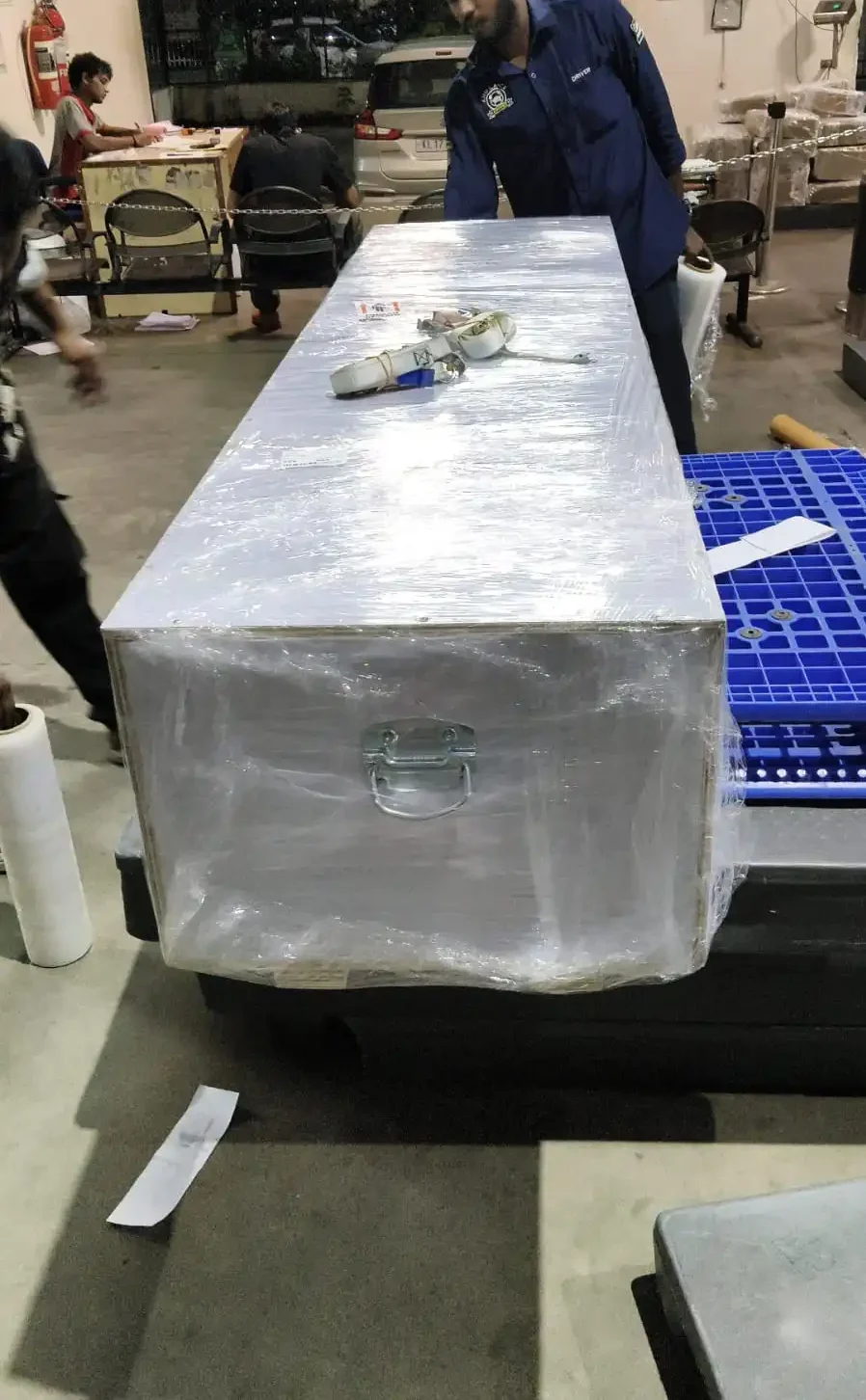
Responsible route management, not generic reassurance
Handled by the Swargayatraa Dispatch Team
This route is coordinated as a complete chain: Delhi pickup planning, case review, embalming guidance, coffin packing readiness,
airline cargo coordination at IGI, release guidance at Pune and onward decision support based on whether the body is going into Pune city or farther into PCMC.
What the Swargayatraa Dispatch Team keeps aligned
- Pickup and preparation readiness before airport reporting
- Case handling logic subject to hospital, home, mortuary or postmortem status
- Named receiver clarity at the Pune side
- Final-area planning based on where the family will actually receive after PNQ release
Why this is important in a YMYL route
Families usually do not get stuck because of one single step. They get stuck because all steps happen at once. Good route management keeps the Delhi side and Pune side connected from the first call onward.
Experience signals without exaggeration
Strong pages in this category should sound like an operations coordinator, not like a generic marketer. That means clear process language, route-specific decision logic and visible honesty about what still depends on airline, timing and case type.
Written quote before booking
Families should know what portion is for service coordination and what portion is for airline cargo before they commit.
Practical route language
Near-airport Pune, central Pune and outer PCMC are not treated as interchangeable receiving situations.
Visible next steps
The page should tell the family what to send now, what to keep ready and what to decide before dispatch.
Calm wording
The page should avoid false urgency claims, fake route counts and unsupported promises about exact timelines.
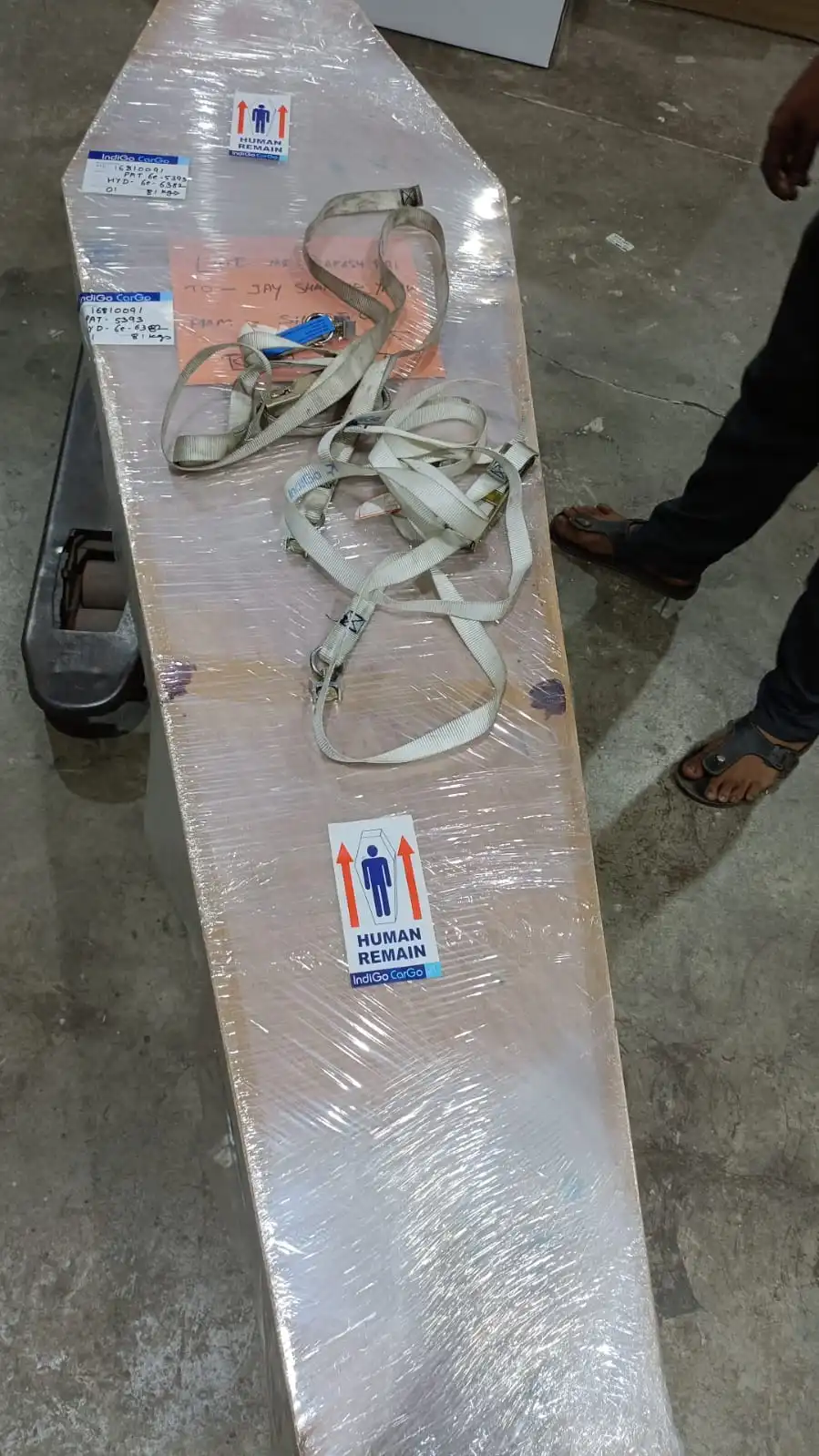
How Delhi to Pune / PCMC dead body air transport usually works
This step-by-step view is here to reduce confusion. It is not a fixed time promise; actual timing depends on hospital release, preparation, airline movement, arrival timing and the final destination after PNQ release.
Case Intake
Pickup location, urgency, case type, receiver details and final receiving area are checked first
Pickup in Delhi
From hospital, home, mortuary or another lawful release point
Preparation
Embalming guidance, preservation steps and coffin packing readiness are aligned
IGI Cargo Coordination
Airport-side reporting, document alignment and dispatch planning from Delhi
Flight to Pune
Air movement from DEL / IGI to PNQ under airline cargo handling
PNQ Release + Handover
Arrival-side release guidance and final movement into Pune city or PCMC
Planning rhythm families usually face on this route
- Delhi ground stage: lawful release, preparation, packing readiness and movement toward airport-side handling.
- Aviation stage: airline acceptance timing, dispatch and flight movement to Pune.
- Arrival stage: PNQ release guidance for the named receiver.
- Final road stage: movement from airport side into Pune city, Pimpri-Chinchwad or another receiving corridor depending on the family’s location.
Typical Delhi pickup references families mention
Families often describe the Delhi side by the hospital or release point rather than by a neighborhood alone. Clear naming helps the route start more smoothly.
- AIIMS and Safdarjung side releases
- RML and LNJP side releases
- Apollo / Fortis / Max side private hospital releases
- Mortuary-to-airport movement after documentation is ready
- Home pickups across Delhi NCR where lawful release is already complete
Why origin naming matters
The origin affects the first stage of timing more than the flight itself. A page that ignores this usually feels generic and less trustworthy.
Typical Pune / PCMC receiving references families mention
On the arrival side, families often describe the destination through a hospital area, residential belt or industrial corridor rather than saying only “Pune”.
- YCM / Pimpri side receiving
- Aditya Birla / Chinchwad side receiving
- DY Patil side receiving
- Ruby Hall / Sahyadri / central Pune side receiving
- Direct-to-home movement into Bhosari, Wakad, Nigdi, Moshi, Ravet or Chakan
Best practice
Ask the family for the exact society, landmark or hospital-side area at the receiving end. That gives a much more useful plan than a broad “Pune” label.
Real operational challenges on the Delhi to Pune / PCMC route
1. “Pune” may still hide a long final road leg
The airport is in Pune, but the family may actually be in Pimpri-Chinchwad or farther outward, which changes final timing materially.
2. Receiver confusion at arrival
If the family is not clearly told that this is a cargo-side process, they may assume a passenger-style collection and lose time.
3. Late arrival compresses decisions
A later release can turn a same-day rites plan into a home-first or next-morning plan depending on family readiness.
4. PCMC is not one uniform destination
Pimpri-Chinchwad core, Bhosari-MIDC, Nigdi-Ravet and Chakan-Talegaon should not be treated as identical from a planning standpoint.
5. Apartment access and gathering time matter
Even after release, building access, lift realities, relative gathering and timing of darshan can change the best next step.
6. Case type still drives part of the paperwork path
Hospital, home, mortuary and postmortem cases should not be described as if they always move under one identical checklist.
Why this section matters
It tells the family what can actually become difficult on this route instead of repeating generic SEO filler that could fit any city.
Visual route-readiness signals
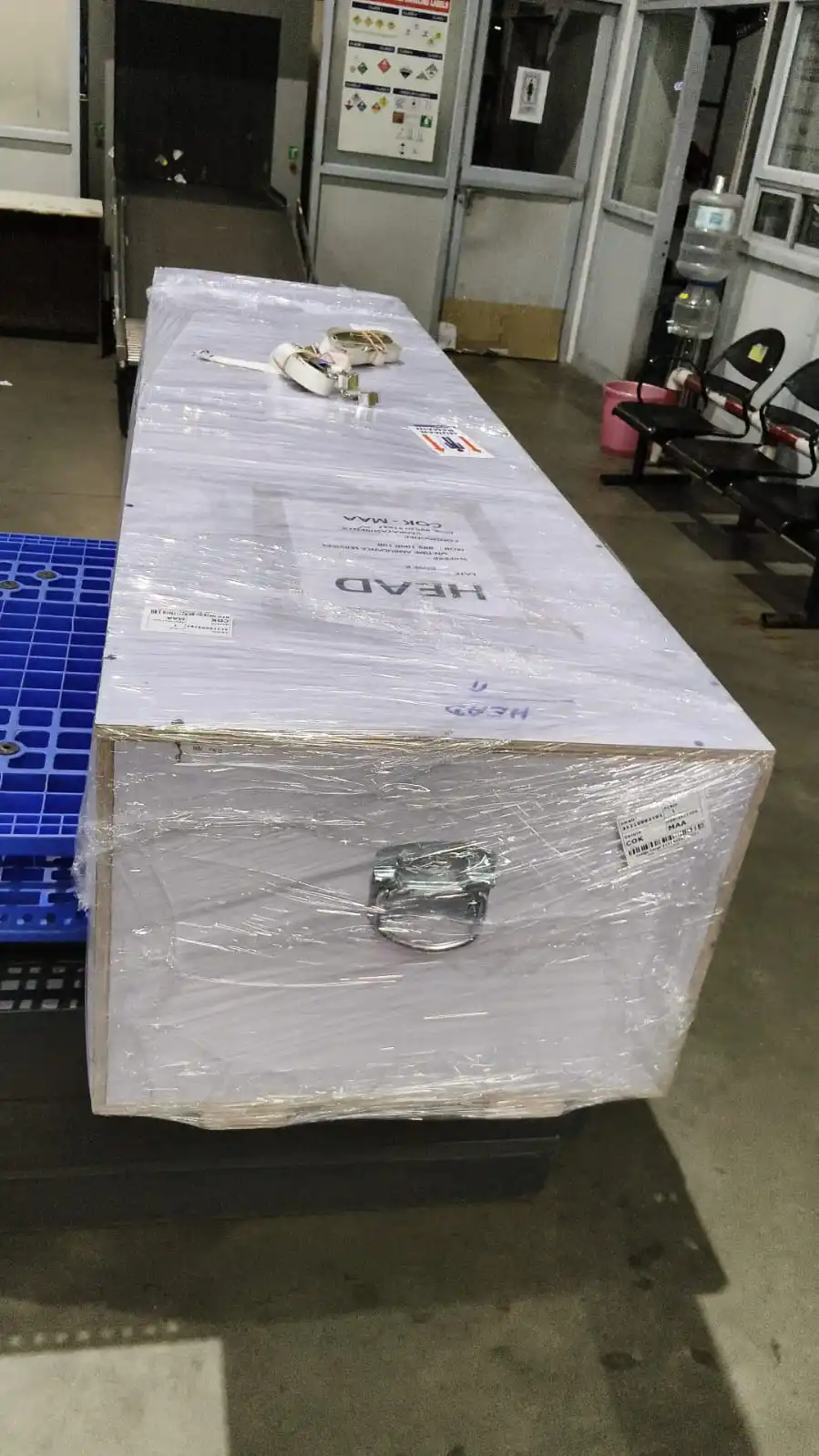
Why these images help
They show a real logistics process, which is stronger for trust than stock-style emotional filler on a high-stakes route page.
What to keep ready before the body is moved from Delhi
Exact pickup point
Hospital name, home landmark, mortuary point or other lawful release point should be shared clearly.
One family decision-maker
Keeping one primary contact avoids conflicting instructions during an already stressful process.
Named receiver in Pune / PCMC
The receiving person should be decided early and remain reachable around the release stage.
Final receiving area
The family should specify whether the body is going to Pune city, Pimpri, Chinchwad, Bhosari, Wakad, Chakan or another area.
Documents and preparation usually required
| Document / Item | Why it is usually needed |
|---|---|
| Relevant death / medical documentation | Used to begin the transport process correctly based on case origin and case type. |
| Embalming certificate | Typically required for air movement of non-cremated human remains, depending on airline and case requirements. |
| Coffin / packing readiness | Required before cargo-side acceptance and dispatch handling. |
| ID proof of family representative | Usually needed for declarations, coordination and release-side clarity. |
| Police clearance / NOC | May be required subject to case type, especially where medico-legal handling applies. |
| Postmortem-related paperwork | Needed where postmortem or medico-legal procedure applies. |
| Receiver details in Pune / PCMC | Needed for release guidance and final handover planning. |
Important
The exact paperwork path depends on the actual case. Families should send the case details first instead of assuming one universal list fits every situation.
After the flight lands in Pune, the process is still not complete
Landing is only the point where the arrival-side work begins. The body still has to be released correctly and moved onward into the final receiving location.
Near-airport Pune handover
Usually the simplest onward stage if the final location is around east Pune or the airport-side corridor.
Central Pune movement
Still manageable, but the family should keep a city buffer for traffic and local access before fixing tight timing.
PCMC-side transfer
This is a genuine second-stage road movement after airport release, not a minor add-on.
Outer corridor receiving
Chakan, Talegaon, Moshi and similar areas usually need a more realistic buffer than a near-airport Pune handover.
When freezer box support becomes the better decision
Families often ask this too late. It is usually better to think about it before dispatch if any of the following apply.
- Arrival is expected later in the day or evening
- Relatives are still coming from other cities
- The family wants home darshan and not a rushed transfer
- The final location is deep into PCMC or another outer corridor
- The rites are more practical the next morning
Calmer planning usually performs better than rushed planning
The right decision is not always the fastest decision. Sometimes the dignified option is to receive properly, preserve correctly and complete the rites when the family is actually ready.
Service scope for Delhi to Pune & PCMC air transport
Some families need only route dispatch. Others need the route plus arrival-side continuation. The page should show both clearly.
Core route coordination
- Case review and first-call guidance
- Pickup coordination in Delhi
- Embalming guidance and preservation support
- Coffin packing readiness
- Delhi IGI cargo-side coordination
- Flight-side dispatch planning to Pune
- Pune release guidance at arrival
Optional continuation after arrival
- Final handover planning in Pune city
- Road transfer after airport release into PCMC or nearby areas
- Freezer box support if timing gap exists before final rites
- Funeral support if required
- Cremation coordination if required
- Support for hospital / home / mortuary / postmortem cases subject to case type
Pune / PCMC receiving operational matrix
This matrix is here to help the family understand what usually becomes easier and what usually needs more buffer after PNQ release.
| Receiving cluster | What usually changes after PNQ release | What the family should confirm early |
|---|---|---|
| Near-airport east Pune Viman Nagar, Kalyani Nagar, Yerawada, Kharadi side |
Usually the simplest onward stage because the body remains closer to the airport-side corridor. | Whether the body is going home first, to a prayer space or straight toward final rites. |
| Central / west Pune Shivajinagar, Camp, Deccan, Kothrud side |
Still manageable, but a city buffer is usually needed for traffic, apartment access and family gathering. | Whether same-day rites are genuinely practical or whether the family wants a calmer next step. |
| South / southeast Pune Hadapsar, Magarpatta side, Kondhwa, Katraj corridor |
This usually becomes a fuller city transfer after release, so tight timing should be avoided where possible. | Whether the body is stopping at home first or moving directly toward final rites. |
| PCMC core Pimpri, Chinchwad, Akurdi, Nigdi, Thergaon, Rahatani, Wakad |
This is a clear second-stage road movement after release into the Pimpri-Chinchwad belt. | Exact society / landmark, who is receiving, and whether darshan at home is planned first. |
| Outer PCMC / industrial corridor Bhosari, Moshi, Ravet, Chakan, Talegaon side |
Usually needs the most realistic buffer. Airport landing does not automatically mean quick final handover. | Whether a same-night plan is truly practical or whether freezer support / next-morning rites are more dignified. |
Area clusters this route should actually speak to
Why the matrix is valuable
It helps a family see that PNQ arrival, Pune-city handover and PCMC-side handover are not the same operational situation even though all of them may be casually called “Pune.”
Best message to send
“Body is landing at Pune. Final destination is ___ . Family wants home-first / direct rites / freezer box support.” That gives the route team something immediately actionable.
Delhi to Pune / PCMC dead body air transport cost
Service coordination starts from ₹25,000. Airline cargo charges are separate and usually depend on airline, route, weight, handling conditions and case requirements. A written quote is shared before booking.
Starts from ₹25,000* for service coordination
Usually included
Route coordination, case guidance, pickup planning, preparation coordination and arrival-side guidance.
Usually separate
Airline cargo charges, route weight effects and additional optional local support after arrival.
Why transparent pricing matters on this route
A family should not discover halfway through an emergency that one amount covered only coordination while another amount covered the airline portion. Clean separation is part of trust.
What a clean quote should show
- Service coordination as a separate line
- Airline cargo charges as a separate line
- Whether local continuation after Pune release is included
- Whether freezer box or final-support services are additional
Important price input
The clearer the final receiving area is, the cleaner the quote usually becomes. “Pune” and “outer PCMC” should not be treated as the same arrival-side situation.
Frequently asked questions about Delhi to Pune & PCMC air transport
These are the questions families usually ask on this route when they are trying to make the next correct decision, not just collect generic SEO information.
Need immediate route guidance?
Send the pickup location in Delhi, urgency, case type, receiver details and exact Pune / PCMC destination. That is enough to begin a proper route plan.
💬 WhatsApp (Written Quote) 📞 Call +91 8999653202Two things that save the most time
- Exact final location after PNQ release
- Whether the family wants home-first, direct rites or freezer box support