Doctor declaration
Confirms death medically and records the cause on the correct MCCD form.
When a loved one passes away, the first official step is not cremation or municipal registration. The first step is medical confirmation of death and the correct certificate from the doctor.
Declaring death and registering death are two different steps. First, a doctor examines the body and confirms death. Then the doctor issues the Medical Certificate of Cause of Death, commonly called MCCD.
Confirms death medically and records the cause on the correct MCCD form.
The local registrar or municipal authority later issues the official death certificate.
Both are Medical Certificate of Cause of Death forms. The form depends mainly on where the death occurred.
| Document | Where it applies | Who issues it | Family check before accepting |
|---|---|---|---|
| Form 4 | Hospital or institutional death | Treating hospital doctor / medical attendant | Name, age, sex, date/time, doctor signature, registration details and clear medical cause. |
| Form 4A | Home death or non-institutional death | Registered medical practitioner who attended the deceased during the last illness | Name as per government ID, address, date/time, doctor signature and clear medical cause. |
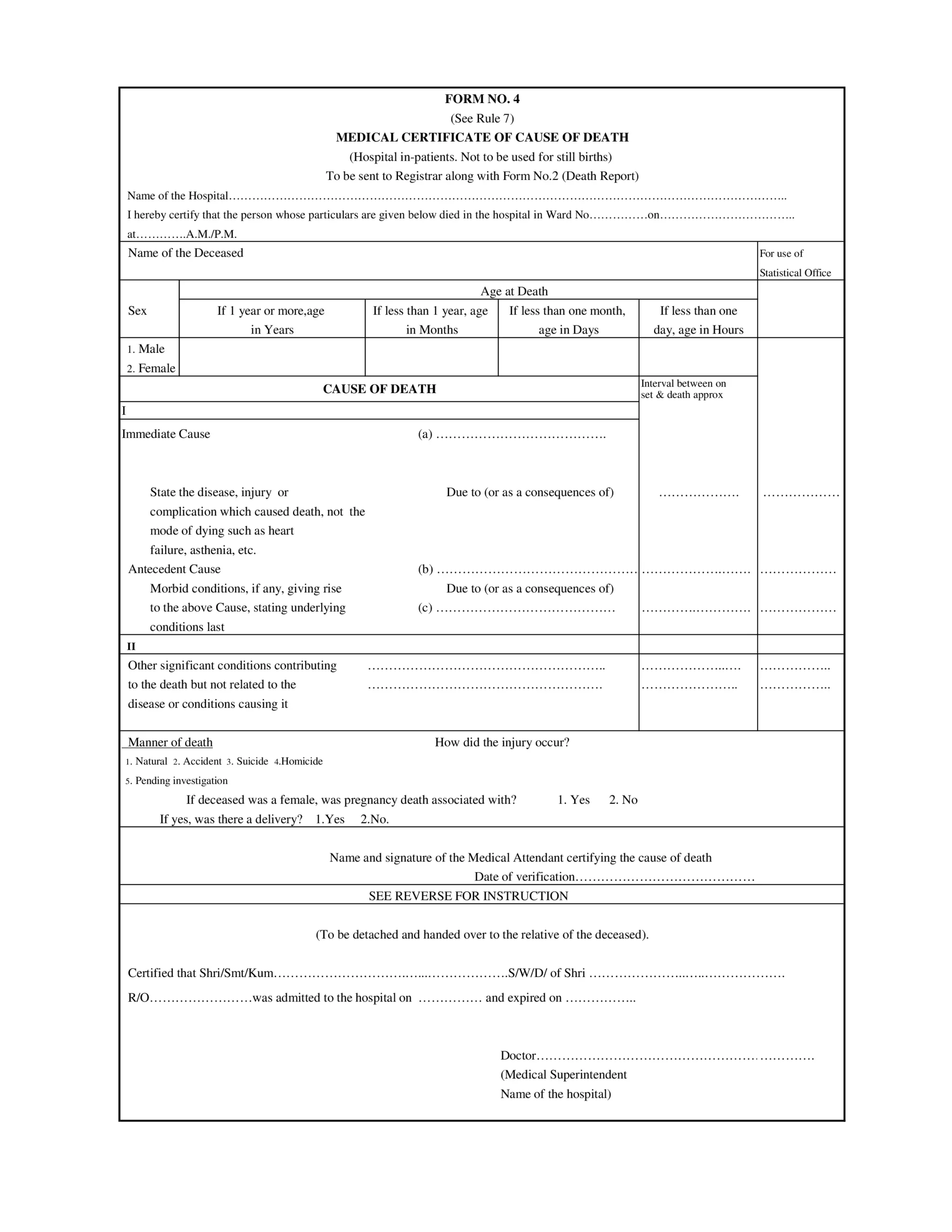
Used for institutional deaths such as hospital in-patient deaths. A copy is provided to the nearest relative and the certificate is used for registration.
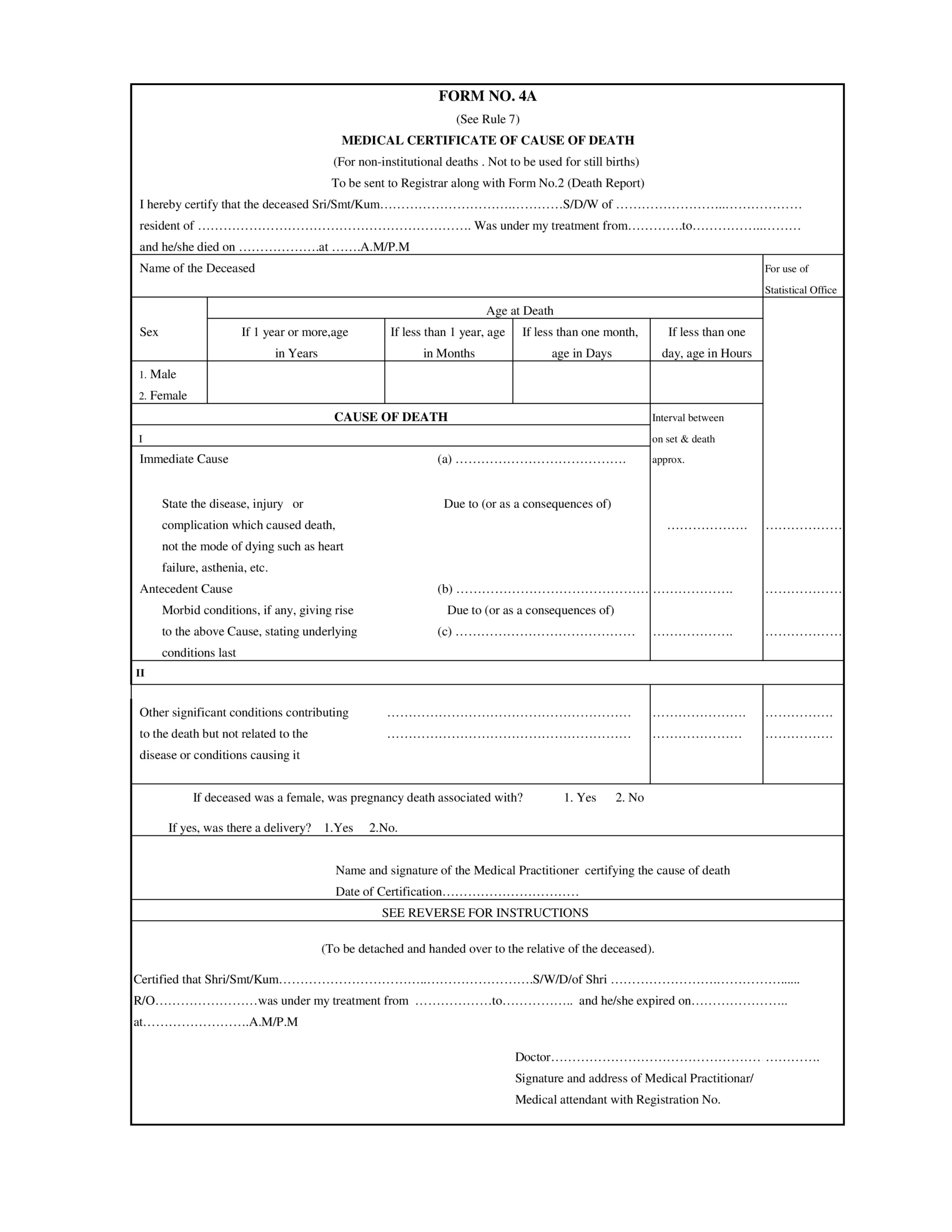
Used for non-institutional deaths such as home deaths where a registered medical practitioner can certify the cause of death.
The family’s next step depends on whether the death was expected and natural, or sudden and unclear.

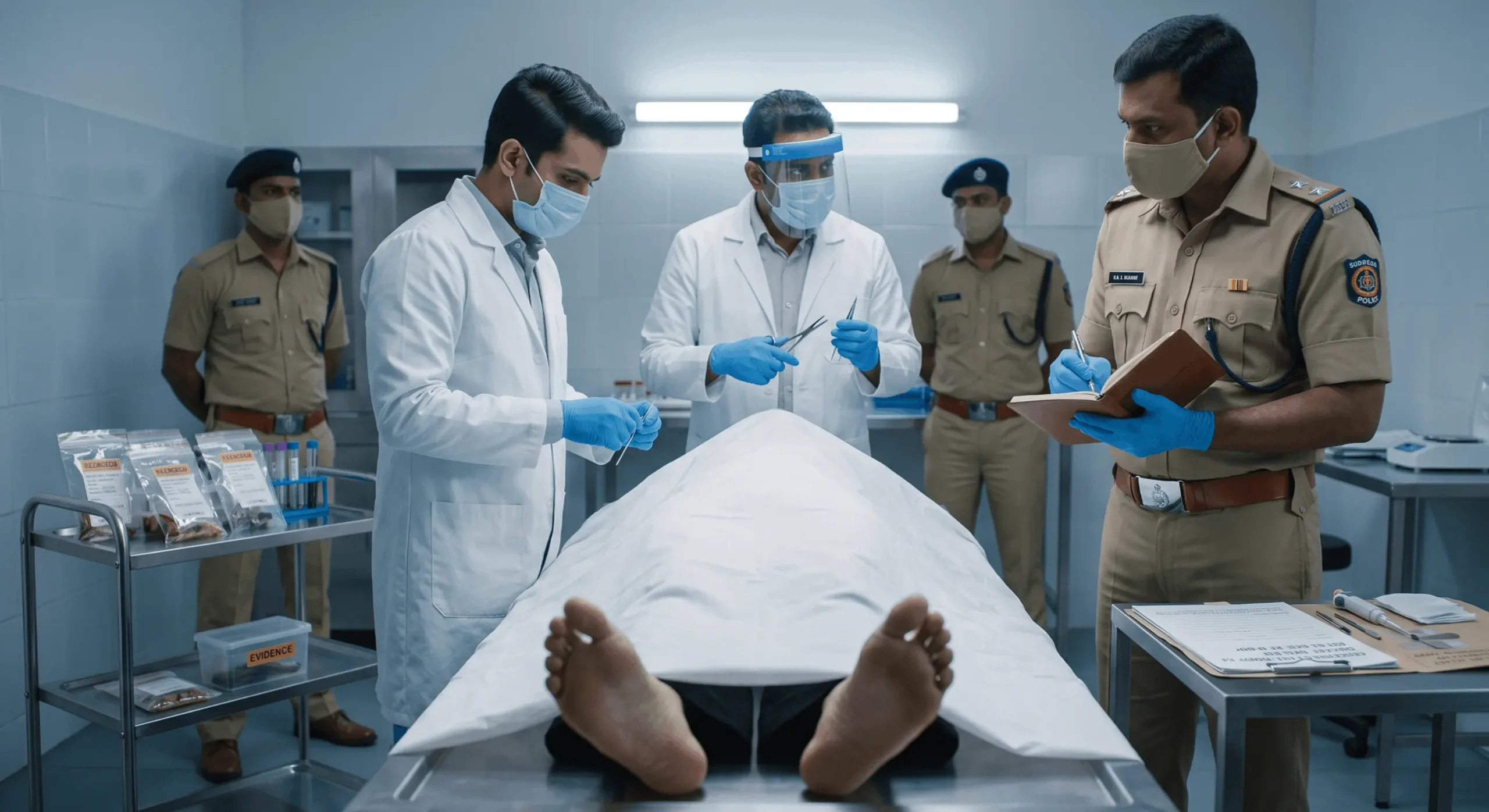
If death occurs during hospital treatment, the hospital normally handles medical confirmation, Form 4 and body release. If the person is brought after death, the hospital may record the case as “brought dead” and start a medico-legal process depending on the circumstances.
Families do not need complex medical language. The practical point is whether revival is medically possible and whether the doctor has completed the required paperwork.
Breathing and heartbeat have stopped. In emergency settings, doctors may still attempt CPR or resuscitation if revival is medically possible.
The body has reached an irreversible stage where life cannot be restored. Funeral steps move forward only after medical confirmation and documents.
Follow the order below before moving the body, booking final rites or arranging long-distance transport.
Wait for a doctor to examine the body and issue Form 4A, or wait for police instruction if the death is sudden or unexpected.
Check doctor signature, registration details, date/time and clear cause of death. Match the deceased person’s name with government ID.
After documents or release instruction is clear, arrange freezer box, hearse ambulance, freezer ambulance or hospital-to-home transport as needed.
Most facilities ask for the doctor’s certificate, deceased person’s ID and family member’s ID before confirming the slot.
Use the medical certificate and local authority process to obtain the official municipal death certificate later.
The doctor’s MCCD is used for funeral and registration steps. The final government death certificate used for banks, pension, property and insurance is issued by the local registrar or municipal authority after registration.
Standard reporting and registration process.
Late registration with prescribed late fee.
Written permission, prescribed fee and affidavit may be required.
Registration requires an order from the competent Magistrate.
Exact requirements vary by hospital, city, crematorium and case type, but these are the documents families are commonly asked for.
Form 4 or Form 4A depending on place of death.
Aadhaar or other government ID proof.
ID proof of the person handling formalities.
Death summary, discharge summary or brought-dead record if applicable.
NOC, intimation, post-mortem or release order in MLC cases.
Extra documents may be needed for air cargo or interstate movement.
Booking confirmation and final rites details.
Useful later but not the same as the official death certificate.
During the first few frantic hours, families are often unsure which paper is needed first. Swargayatraa helps with the logistics after the required doctor, hospital or police process is clear.

Use these pages when the family needs transport, preservation, cremation or air cargo guidance.
The first important document is usually the Medical Certificate of Cause of Death issued by a doctor. For hospital deaths it is usually Form 4. For eligible home deaths it is usually Form 4A.
No. A doctor may issue Form 4A only when the doctor can certify the medical cause of death. Sudden, suspicious, accidental or unattended deaths may require police involvement and medico-legal process.
A brought-dead case means the person was brought to the hospital after death or without signs of life. The hospital may mark it as a medico-legal case depending on the facts and may inform police.
For natural hospital or expected home deaths, police clearance is usually not required. For accident, suicide, poisoning, injury, fall, assault, burns, drowning or suspicious death, police clearance or post-mortem process may be required before body release.
Basic planning can begin, but final crematorium booking, body transport or long-distance movement should happen only after the necessary doctor certificate or police/hospital release is clear.
No. The MCCD is the medical certificate used for registration and funeral documentation. The official death certificate is issued later by the local registrar or municipal authority after registration.
Check the deceased person’s full name, age, sex, address, date and time of death, medical cause of death, doctor’s signature, seal and registration details. The name should match government ID as far as possible.
Death should normally be reported for registration within 21 days. Delayed reporting can require late fee, written permission, affidavit or Magistrate order depending on the delay period.
These links support the document names and registration sequence used in this guide.