Natural vs Unnatural Death in India: Procedure, Rules and Documents
A clear guide for families on doctor certification, MCCD Form 4/Form 4A, police involvement, post-mortem, body release, cremation documents and death registration.
Operationally reviewed by Rakshith G K
Swargayatraa Funeral Services
Last updated: 7 July 2026
Quick answer: Natural death usually needs doctor certification and normal death registration. Unnatural death usually needs police intimation, medico-legal process, post-mortem where required, and official body release before cremation, burial or transport.
Form 4Form 4AMLC CasePost-Mortem21-Day Registration
Basic Meaning
The difference changes documents, police process and funeral timing
A natural death follows a medical certification route. An unnatural death becomes a medico-legal case when the cause involves accident, injury, suicide, violence, poisoning, burns, drowning or suspicion.
What is a natural death?
A death caused by illness, old age or a known medical condition. There is no accident, violence, poisoning, outside injury or suspicious circumstance.
Old age or natural organ decline
Heart attack or stroke
Cancer, kidney failure or liver disease
Long-term illness
Death during normal hospital treatment
What is an unnatural death?
A death caused by an external factor or an unclear situation. The police must be informed and the case may require post-mortem before body release.
Road, rail or industrial accident
Suicide or suspected murder
Poisoning or drug overdose
Electrocution, drowning or burns
Fall from height or suspicious death
Quick Comparison
Natural Death vs Unnatural Death
This table gives the practical difference families need at the time of documentation and final rites.
Point
Natural Death
Unnatural Death
Primary cause
Illness, old age or known medical condition.
Accident, suicide, injury, violence, poisoning, burns, drowning or suspicious cause.
First contact
Family doctor, treating doctor or hospital staff.
Police, emergency service or hospital MLC desk.
Police involvement
Usually not required.
Usually required.
Main document
Medical Certificate of Cause of Death — Form 4 or Form 4A.
Police papers, post-mortem document and body release order where applicable.
Post-mortem
Usually not required.
Usually required based on police and medical decision.
Funeral timing
Can proceed after doctor certification and crematorium requirements.
Can proceed only after official body release.
Death registration
Done using the medical certificate and required ID details.
Done using medical, police and post-mortem documents as applicable.
Important: Do not announce the final cremation or burial time in an unnatural death until hospital or police release is confirmed.
Natural Death
What families should do after a natural death
If the death happens in hospital, staff will guide the certificate and release process. If it happens at home, call the treating doctor or a registered medical practitioner.
1
Call the doctor
Ask the treating doctor or hospital to confirm the death.
2
Collect MCCD
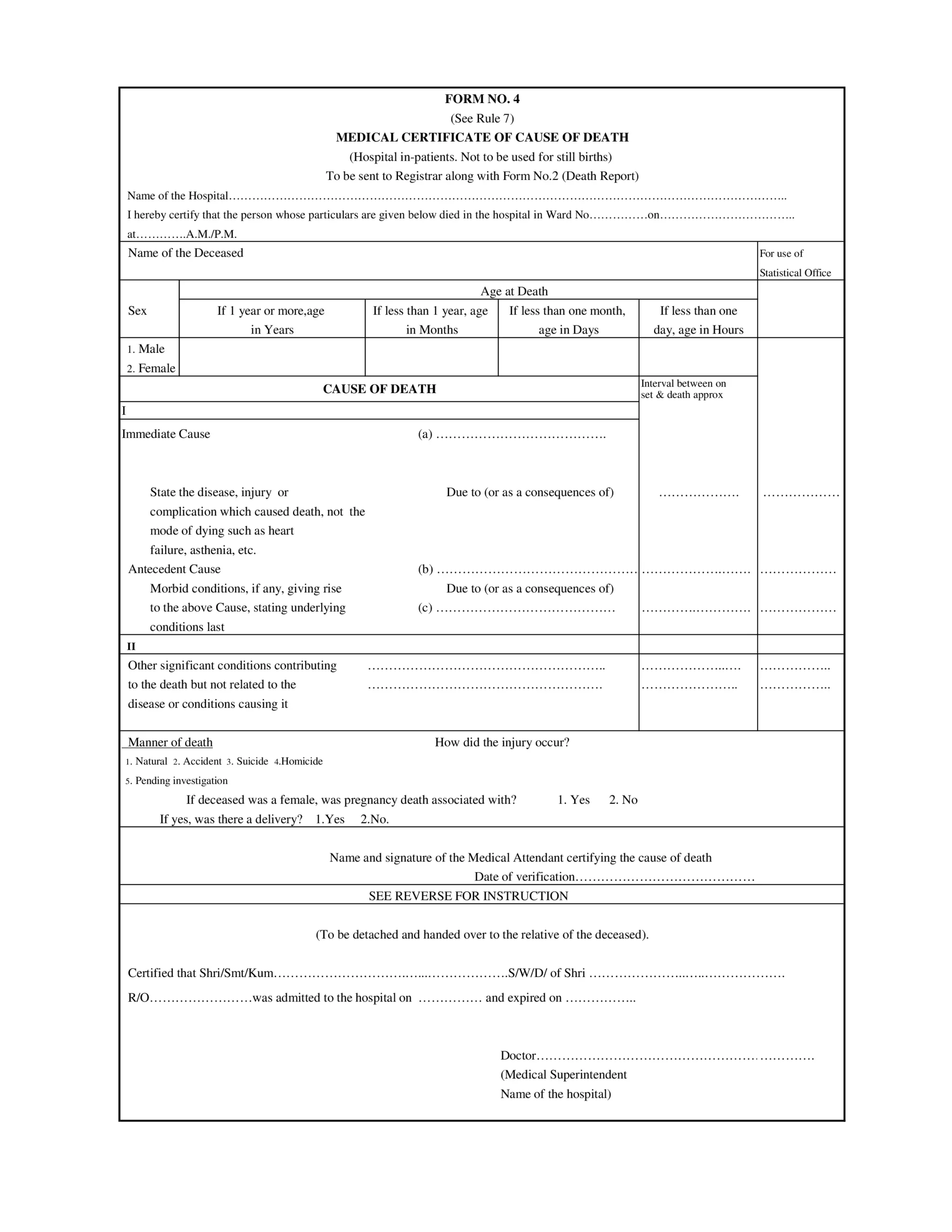
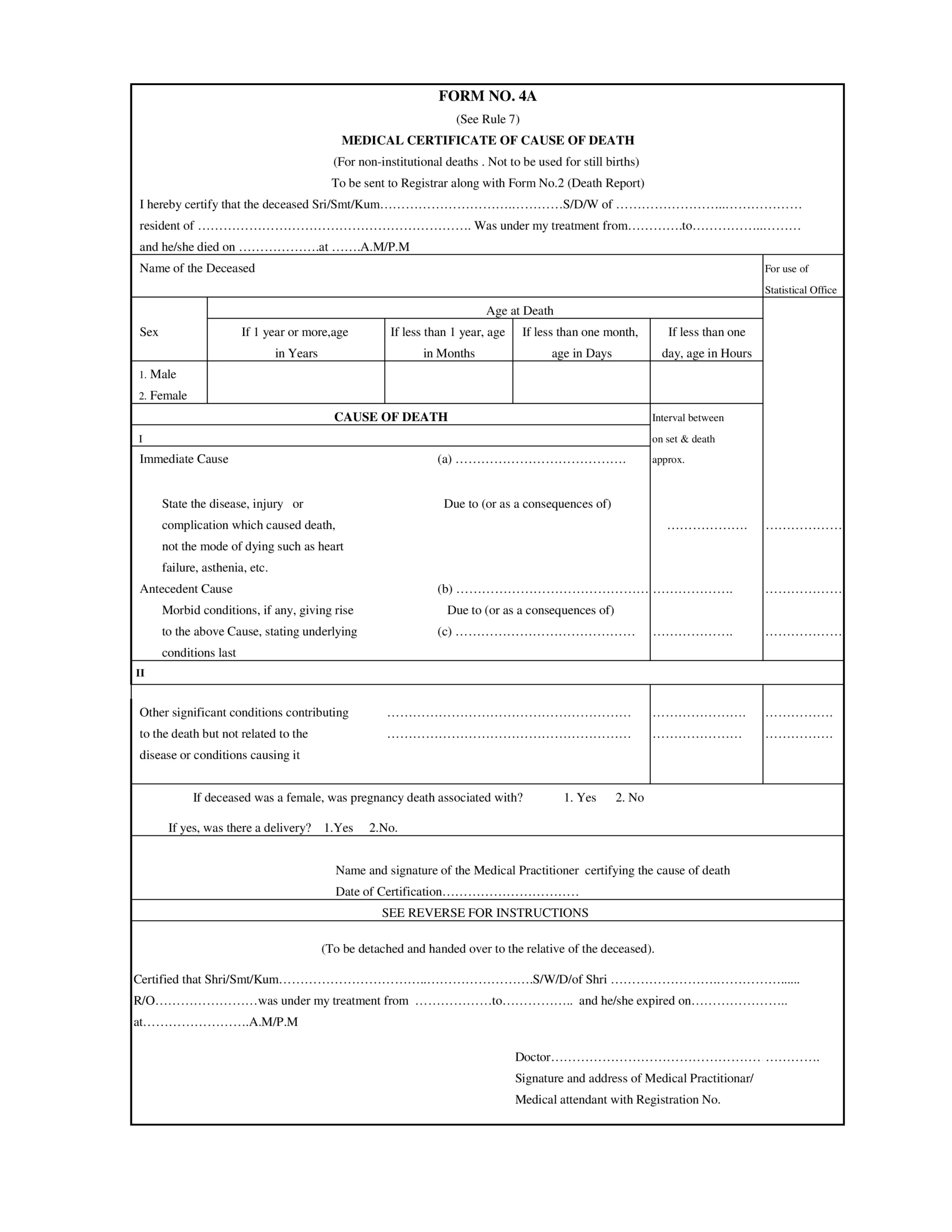
Get Form 4 for hospital death or Form 4A for death outside hospital.
3
Keep IDs ready
Carry deceased person’s ID and one family member’s ID.
4
Book final rites
Arrange cremation or burial after required documents are ready.
5
Register death
Submit required details to the local registrar or municipal authority.
6
Collect certificate
Use the official death certificate for banks, pension, insurance and legal work.
Natural death: doctor certificate → funeral → registration
Unnatural death: police process → release → funeral or transport
Unnatural Death
What families should do after an unnatural death
Do not move the body unless emergency medical help is needed. Inform police immediately. The body can be cremated, buried or transported only after the required release process is complete.
1
Inform police
Call 112 or the local police station.
2
Follow MLC process
Police and hospital prepare required papers.
3
Post-mortem
Done if required by police and medical authorities.
4
Collect release papers
Ask for body release order or handover document.
5
Plan final rites
Fix cremation or burial only after release is confirmed.
6
Transport if needed
Intercity or air transport may need extra police clearance.
Document List
Documents required for cremation, burial and death registration
Exact requirements can vary by city, hospital, crematorium and case type. Keep these documents ready first.
Natural death documents
Aadhaar card or ID proof of the deceased
Aadhaar card or ID proof of the family member
Medical Certificate of Cause of Death
Hospital death summary, if applicable
Address details of the deceased
Crematorium or burial booking details, if applicable
Unnatural death documents
ID proof of the deceased
ID proof of the family member
Police intimation or police papers
Post-mortem document, where applicable
Hospital MLC record, if applicable
Body release order or handover document
Police NOC or clearance, if required
Death registration: A death should normally be reported for registration within 21 days. Delayed registration can require additional documents, late fee or local authority approval.
MCCD Forms
Form 4 and Form 4A
These are medical cause-of-death certificates. They are used for death registration. They are not the final government death certificate.
Form 4
Form 4 — Hospital death
Generally used when the death happens in a hospital or institution. It records the medical cause of death certified by the doctor.
Form 4A
Form 4A — Death outside hospital
Generally used when the death happens outside a hospital, such as at home, and a registered doctor certifies the medical cause.
Do not confuse: A cremation slip only proves final rites were completed. The official death certificate is issued by the local registrar or municipal authority after death registration.
Swargayatraa Support
How Swargayatraa helps after documents are clear
Swargayatraa helps families with practical funeral arrangements after the required medical, hospital or police process is clear.
Crematorium booking guidance
Hearse ambulance arrangement
Freezer box arrangement
Dead body transport by road or air
Cremation and funeral coordination
Pandit and ritual support
Documentation guidance for cremation and transport
Transport and final rites coordination
Useful Guides
Related Swargayatraa guides
These pages help families understand transport, preservation and cremation-related next steps.
Natural and unnatural death questions families ask
Usually no. Recognised crematoriums require proper death documents. For natural death, a doctor certificate is usually required. For unnatural death, police and post-mortem clearance may be required.
Usually no. If the death is due to illness, old age or a known medical condition, police involvement is generally not required.
Yes, in most cases. Accident, suicide, poisoning, assault, burns, drowning and suspicious deaths usually require police involvement.
Post-mortem is usually required in accident, suicide, injury, poisoning, burns, drowning, assault or suspicious cases. The final decision is taken by police and medical authorities.
No. A cremation slip only proves that final rites were completed. The official death certificate is issued by the local registrar or municipal authority after death registration.
A death should normally be reported for registration within 21 days. Late registration can require extra formalities depending on local rules.
No. Funeral can be arranged only after the body is officially released by police and hospital authorities.
Family Guidance
Need help with funeral arrangements after body release?
Swargayatraa can guide the family on cremation booking, hearse ambulance, freezer box, road transport, air cargo and final rites coordination after the required process is complete.
Important note: This is a family information guide. Hospital release process, MLC handling, police documents, post-mortem requirements, crematorium permissions and death registration steps may vary by city, state, hospital and case type. Always follow the instructions of the doctor, hospital, police, registrar and local authority.