Pitru Paksha 2026 Dates
The dates below agree in the linked calendars for Mathura and Bengaluru, India (IST). Select the place of performance when checking the ritual time.
| Date | Observance |
|---|---|
| 26 September | Full moon · Bhadrapada Purnima — before the fortnight |
| 27 September | Day 1 · Pratipada |
| 28 September | Day 2 · Dwitiya |
| 29 September | Day 3 · Tritiya · Maha Bharani |
| 30 September | Days 4 & 5 · Chaturthi and Panchami |
| 1 October | Day 6 · Shashthi |
| 2 October | Day 7 · Saptami |
| 3 October | Day 8 · Ashtami |
| 4 October | Day 9 · Navami · Matri Navami |
| 5 October | Day 10 · Dashami |
| 6 October | Day 11 · Ekadashi |
| 7 October | Day 12 · Dwadashi · Magha Shraddha |
| 8 October | Day 13 · Trayodashi |
| 9 October | Day 14 · Chaturdashi |
| 10 October | New moon · Sarva Pitru Amavasya |
Calendar references: Drik Panchang — Mathura and OnlineJyotish — Bengaluru.
Why do some pages give 26 September and others 27 September?
26 September includes the preceding full-moon ceremony; 27 September begins the waning-fortnight sequence. The period from 26 September to 10 October covers 15 calendar dates but 16 named lunar-day observances, because the fourth and fifth share 30 September. A lunar day does not always last 24 hours.
Does the fortnight change between North and South India?
North and South Indian lunar calendars may use different month names for the same fortnight. The local almanac and the family’s timing rule determine the observance when a lunar day overlaps dates.
What Is Pitru Paksha?
Pitru Paksha means “fortnight of the ancestors”. It is also called Shraddha Paksha or Mahalaya Paksha, and Kanagat in parts of North India.
It falls during the waning half of the lunar month: fifteen lunar days from the first day after the full moon to the new moon. Calendars often list the preceding full-moon ceremony alongside them, giving the familiar count of sixteen observances.
The same fortnight is called Bhadrapada Krishna Paksha in calendars whose months end at the new moon, and Ashvina Krishna Paksha in calendars whose months end at the full moon. The month names differ; this alone does not indicate different observance dates.
Check a local Hindu almanac, or Panchang, for the ceremony’s date and time.
Which Ancestors Are Remembered?
The ancestors remembered in these ceremonies include departed parents, grandparents and earlier generations. The relatives named in a formal ceremony depend on the family and ritual tradition.
The three-generation pattern
Many procedures give special attention to three generations, such as the father, grandfather and great-grandfather. Some invocations associate these generations with the traditional categories Vasu, Rudra and Aditya.
The maternal line is also recognised. The priest can explain which departed relatives are included in the form of ceremony being performed.
The Origins of Hindu Ancestral Rites
Ancestral offerings are recorded in Vedic hymns, centuries before the later stories commonly associated with Pitru Paksha.
Vedic foundations
Rig Veda 10.14 and 10.15 address Yama and the ancestors, invoking the Fathers and their participation in offerings.
Atharva Veda Book 18 also preserves important funerary and ancestral material.
From Vedic domestic rites to detailed Shraddha systems
Grihya Sutras and Dharma literature increasingly systematised household rites, death-related observances and ancestral offerings.
Later Dharmashastra and Smriti literature—including the traditions of Manu and Yajnavalkya—contains extensive Shraddha discussions.
The Mahabharata, particularly portions of the Anushasana Parva, also contains substantial material concerning ancestral rites, gifts, food and religious duty.
Puranic traditions and still later ritual digests such as Dharma Sindhu and Nirnaya Sindhu became important for calendrical and practical ritual decisions in different communities.
Ancestral Offerings in Bhagavad Gita 1.42
Bhagavad Gita 1.42 mentions food and water offerings to ancestors during Arjuna’s explanation of why he fears the destruction of family duties.
Arjuna fears that the breakdown of family duties will interrupt the food and water offerings made to ancestors.
Read the original Sanskrit verse
पतन्ति पितरो ह्येषां लुप्तपिण्डोदकक्रियाः ॥ १.४२ ॥
patanti pitaro hy eṣāṃ luptapiṇḍodakakriyāḥ.
The passage belongs to Arjuna’s opening argument. It records the importance of ancestral offerings but does not give a procedure for the Pitru Paksha ceremony.
Read Bhagavad Gita 1.42. The English explanation summarises the reference to ancestral offerings, rather than translating the full verse.
Why Do Hindus Observe Pitru Paksha?
Gratitude
Our bodies, family histories, languages, culture and many opportunities come through earlier generations. Pitru Paksha ritualises acknowledgement of that inheritance.
Duty towards ancestors
Hindu traditions speak of obligations toward the ancestral line. Shraddha expresses that duty through remembrance, continuity and ritual giving.
Continuity between generations
The performer stands between those who came before, those living now and those who will follow.
Remembering the forgotten
Not every ancestor leaves photographs, records or even a surviving name. Pitru Paksha allows the family to remember a wider ancestral lineage.
Charity and food offerings
Traditional ancestral observance converts private remembrance into hospitality, charity and generosity toward living beings.
The older idea of the “three debts”
An early Vedic formulation in Taittiriya Samhita 6.3.10.5, within the ritual-social setting of that text, speaks of obligations toward the sages, deities and ancestors. The ancestral obligation is particularly connected there with continuation of descendants.
Later Hindu traditions express ancestral responsibility through lineage duties, Shraddha and related offerings.
The Story of Karna and Pitru Paksha
A widely circulated devotional tradition associates Pitru Paksha with Karna, the famous Mahabharata warrior.
According to this later popular account, Karna received gold and jewels in the ancestral realm but no food because he had generously donated wealth in life without knowingly making food offerings to his ancestors. He was then allowed an opportunity to make food and water offerings.
The story communicates the importance of food donation and ancestral remembrance.
When Should Shraddha Be Performed?
During Pitru Paksha, the ceremony is usually held on the numbered lunar day associated with the death. For example, the fifth lunar day is generally relevant for someone who died on that lunar day, whether during the waxing or waning half of a month. Special circumstances and family rules can change this choice.
The annual death-anniversary ceremony is separate. Its date depends on the lunar month, half of the month and lunar day of death. Observing Pitru Paksha does not automatically replace it.
Why the sunrise date may not be enough
For many ancestral ceremonies, the afternoon period called Aparahna helps determine the correct date. If one lunar day overlaps two calendar dates, the day selected may depend on its presence during the prescribed afternoon period.
Almanacs also list the Kutup and Rohina periods used for these ceremonies. Their clock times depend on the place of performance.
Does every family need sixteen ceremonies?
No. Most families hold the main ceremony on the relevant ancestral lunar day. Some also make daily water offerings or observe additional dates according to their tradition.
Who Is Remembered on Each Lunar Day?
Full moon — Purnima
Drik Panchang distinguishes this preceding full-moon rite from Pitru Paksha remembrance for full-moon deaths, which it assigns to the final new-moon day. Confirm your family’s practice.
Day 1 — Pratipada
For ancestors whose death occurred on lunar day 1, subject to the family’s ritual tradition.
Day 2 — Dwitiya
For ancestors whose death occurred on lunar day 2, subject to the family’s ritual tradition.
Day 3 — Tritiya
For ancestors whose death occurred on lunar day 3, subject to the family’s ritual tradition.
Day 4 — Chaturthi
Generally for deaths on the fourth lunar day. Bharani is a separate lunar-star observance; it does not always fall on day four.
Day 5 — Panchami
Generally for deaths on the fifth lunar day. Any additional observance depends on community practice.
Day 6 — Shashthi
For ancestors whose death occurred on lunar day 6, subject to the family’s ritual tradition.
Day 7 — Saptami
For ancestors whose death occurred on lunar day 7, subject to the family’s ritual tradition.
Day 8 — Ashtami
Generally for deaths on the eighth lunar day. Some traditions give this middle part of the fortnight additional significance.
Day 9 — Navami
Also known as Matri Navami in many traditions. Some communities give this date special importance for departed women, particularly women whose husbands were living at the time of death.
It remains relevant for deaths on the ninth lunar day, subject to family practice.
Day 10 — Dashami
For ancestors whose death occurred on lunar day 10, subject to the family’s ritual tradition.
Day 11 — Ekadashi
Generally for deaths on the eleventh lunar day. Ask how the family’s fasting and ceremony food rules apply together.
Day 12 — Dwadashi
Generally for deaths on the twelfth lunar day. Some traditions also associate this date with renunciants, whose rites can differ from ordinary household ceremonies.
Day 13 — Trayodashi
Generally for deaths on the thirteenth lunar day. Magha is a separate lunar-star observance and is not permanently tied to this date.
Day 14 — Chaturdashi
Several traditions reserve this date for people who died through violence, weapons, battle, accidents or certain other untimely circumstances.
A natural death on the fourteenth lunar day may be observed differently. Confirm the relevant date with the priest.
New moon — Sarva Pitru Amavasya
The final day is used for wider ancestral remembrance, including cases where the death’s lunar day is unknown or an earlier observance was missed, according to family tradition.
Special Dates Within the Fortnight
Bharani observance
Bharani is a lunar-star division used in the Hindu calendar. Its occurrence during Pitru Paksha has special importance in some traditions. It is not permanently tied to one numbered lunar day.
Magha observance
Magha is another lunar-star division traditionally associated with ancestors. Some families observe it during the fortnight, following their almanac and priest’s guidance.
Rare calendar combinations
Later ritual traditions recognise combinations such as Gajachhaya. Their calculation is technical; use a reliable almanac to establish whether and when a particular combination occurs.
How Are Rites After a Recent Death Different?
The ceremonies immediately after a death are different from the annual remembrance of established ancestors.
Many traditions prescribe a series of post-death rites before the departed person is ritually included in the ancestral line. This incorporation ceremony is called Sapindikarana. Its timing and procedure vary.
If the death was recent, tell the priest which rites have already been completed before arranging the Pitru Paksha observance.
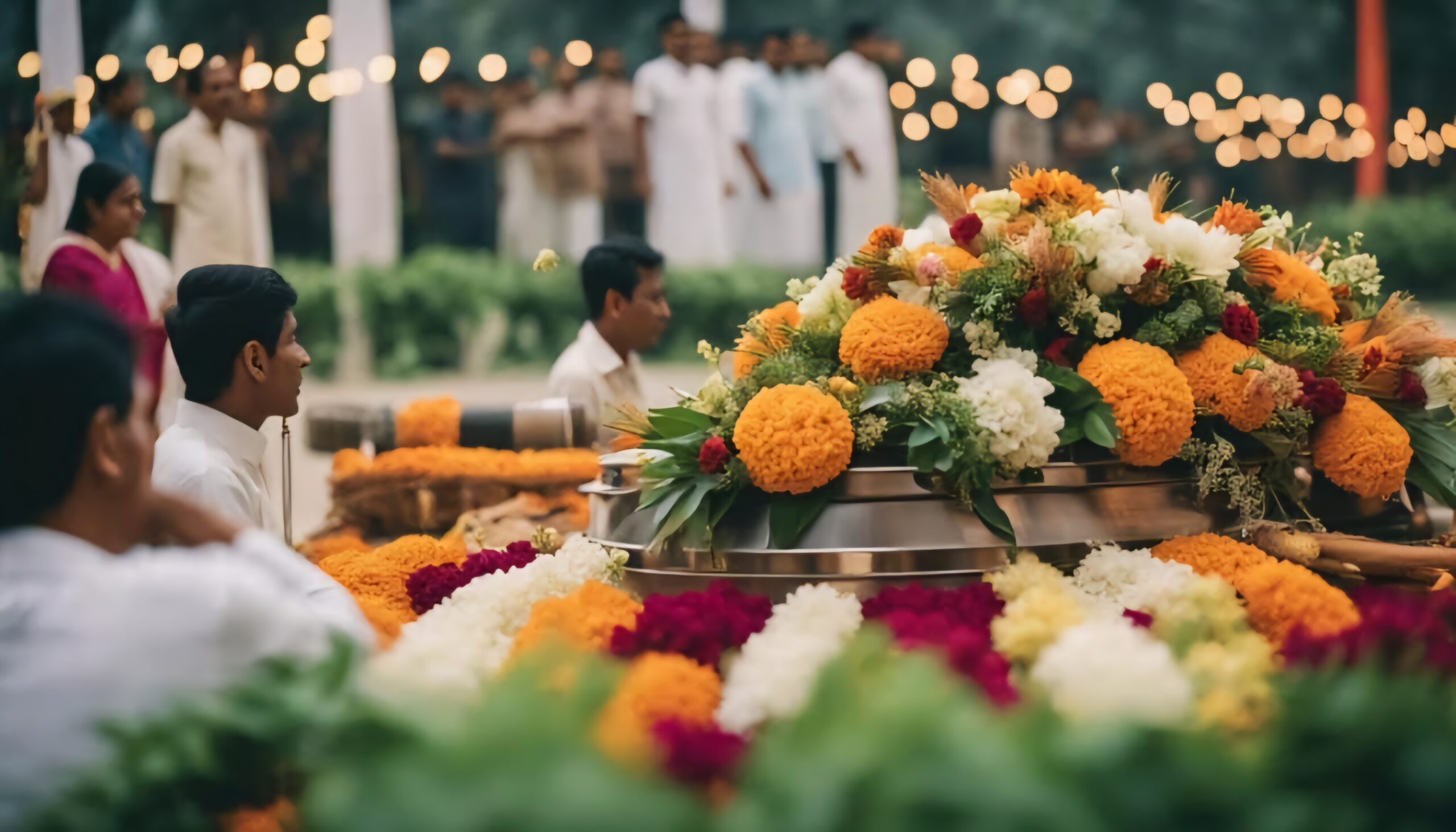
Different Ancestral Ceremonies
Rite for one departed person
A ceremony directed towards one departed person, used in relevant post-death or remembrance procedures.
Rite for the ancestral group
A ceremony for the established ancestral group on prescribed occasions, according to the family’s tradition.
Annual death-anniversary ceremony
The yearly death-anniversary observance, determined by the lunar month, half of the month and lunar day.
Incorporation into the ancestral line
The ceremony called Sapindikarana includes the departed person in the established ancestral group, according to the applicable tradition.
Remembrance during Pitru Paksha
Ancestral ceremonies held during the Pitru Paksha fortnight.
The Rituals and What They Mean
There is no single ceremony performed identically in every Hindu household. Procedure depends upon Vedic school, religious tradition, region, family custom, relationship to the deceased, ritual type and place of performance.
Choose the performer and confirm the date
Confirm who will perform the ceremony, which relatives will be remembered and the relevant lunar day. The priest may also need the family lineage, known as gotra.
Bathing and preparation
Bathing, clean clothes and prescribed acts of purification prepare the performer for the ceremony. The procedure differs by tradition.
State the intention
The formal declaration, called Sankalpa, identifies the purpose of the ceremony. It may name the place, time, family lineage and departed relatives.
Sacred grass
Darbha or kusha grass may be used for ritual seating, placing offerings or making a ceremonial finger ring. The priest determines its arrangement.
Facing south
The south is traditionally associated with Yama and the ancestors. Some acts are performed facing south, but this does not mean everyone faces that direction throughout the ceremony.
Position of the sacred thread
Performers who wear a sacred thread may change its position during ancestral rites. Follow the procedure taught within the family’s tradition.
Invocation of deities
Some formal ceremonies include offerings to a group of deities known as the Vishvedevas, alongside the ancestral rites.
Sesame and water
Water mixed with sesame, often black sesame, is used in many ancestral offerings. Its use is established in ritual tradition.
Water offerings — Tarpan
Water is offered while the ancestors are named or remembered. The hand position, direction, number of offerings and recitation depend on the procedure being followed.
Food offerings — Pind Daan
Ritual food portions, often prepared from cooked grain with other prescribed ingredients, are offered to the departed. The form and number depend on the ceremony.
Food prepared for the ceremony
Follow the family’s food rules. Many present-day households prepare vegetarian food and avoid onion, garlic and alcohol. Historical texts describe varied food practices, so there is no single menu shared by every tradition and period.
Feeding the invited priests
In many formal ceremonies, a meal is offered to Brahmin recipients selected according to the ritual tradition. The food and hospitality form part of the offering.
Offerings to the priest and charity
Give the agreed or prescribed offering to the priest, commonly called dakshina. Additional food, clothing or other useful donations may be made in remembrance of the departed.
Food for birds and animals
Some communities set aside food for crows, cows, dogs or other beings. The custom varies. A crow failing to arrive does not prove that an ancestor has rejected the offering.
Completion prayers
The ceremony may close with prayers for the ancestors and family, requests for forgiveness of mistakes, and the prescribed conclusion to the invocations.
What to Confirm and Prepare
Before buying ritual materials or arranging travel, confirm the rite, performer and lunar day with the priest who will conduct it.
Family details
- Names of the departed and relationships to the performer.
- Family lineage, if known and required; do not invent it.
- Recorded date, time and place of death if the lunar day is unknown.
- Any recent death, unfinished post-death rites or established family practice.
Arrangements
- Place, date, ritual time and who will perform the rite.
- Priest’s language and familiarity with the family tradition.
- Food preparation, recipients, quantities and dietary requirements.
- Priest fee, ritual offerings, materials and any venue charges agreed separately.
Materials to check with the priest
Common items include clean water, black sesame, sacred grass, vessels, a seat or mat and ingredients for the food offerings. Rice, barley, ghee, milk, honey, flowers or leaves may be requested. Confirm the list with the priest before purchasing materials.
Food and offerings after the rite
Confirm who receives the prepared food and how remaining offerings should be handled. Follow the ghat or venue’s disposal rules. Keep plastic, foil and packaging out of rivers; do not leave ritual waste on the bank.
At home or at a ghat
Arrange seating, shade and access for older relatives. A river visit is not required for every observance. If travel is difficult, ask which rites can be performed at home or locally.
What Can Be Done During Pitru Paksha?
A family does not necessarily perform a complete formal Shraddha every day. Depending upon tradition, the fortnight may include:
- remembering departed relatives;
- daily water offerings where prescribed;
- ordinary daily deity worship;
- prayer or sacred-text recitation;
- food donation and other charity;
- simplicity of food and conduct;
- avoidance of needless conflict or excess.
Does daily Puja stop?
Daily worship and prescribed daily prayers generally continue according to the family’s tradition.
Why are weddings often postponed?
Many Hindu communities reserve the period for ancestral duty and therefore postpone major celebratory life-cycle ceremonies. This is better understood as ritual focus than as a belief that the ancestors are unlucky.
Can new clothes, vehicles or property be purchased?
Many families postpone nonessential celebratory purchases. The extent of this custom varies; it does not establish a common rule against every necessary purchase.
Haircutting, shaving and grooming
Some families avoid these activities on the Shraddha day or throughout Pitru Paksha; others do not. A ritual performer performing a formal rite may have additional discipline.
Does everyone have to fast?
No. Fasting rules vary. A compulsory sixteen-day fast is not a universal Pitru Paksha requirement.
Special Family Circumstances
Can women perform Shraddha?
What if the exact death lunar day is unknown?
What if only the calendar date of death is known?
What if there is no priest available?
What if you live outside India?
What if a death occurred recently?
What if the death occurred through accident, violence or suicide?
Can maternal ancestors be remembered?
Can Shraddha be performed when one or both parents are alive?
Is Asthi Visarjan the same as Pind Daan?
Does performing Pind Daan at Gaya end all future Shraddha duties?
Does charity replace formal Shraddha?
Important Places for Shraddha, Tarpan and Pind Daan
Gaya
Gaya in Bihar is among India's foremost Pind Daan centres. Gaya Shraddha has its own extensive local ritual tradition and multiple sacred sites.
Prayagraj
The Triveni Sangam gives Prayagraj longstanding importance for sacred bathing, Tarpan and ancestral rites.
Varanasi
Varanasi's associations with the Ganga, Shiva, death and liberation make it an important centre for ancestral observances.
Haridwar
Families make water offerings and perform ancestral rites along the Ganga. Traditional genealogical pandas have also preserved family records for generations.
Brahma Kapal · Badrinath
Brahma Kapal has a significant tradition of Pind Daan and ancestral rites.
Rameswaram
A major South Indian pilgrimage place associated with sacred bathing, water offerings and ancestral ritual.
Gokarna
Gokarna in Karnataka is an important centre for several rites connected with departed ancestors.
Siddhpur
Bindu Sarovar at Siddhpur has a notable association with maternal ancestral rites and the tradition popularly connected with Matru Gaya.
Travel to a famous pilgrimage place is not compulsory for every ancestral remembrance. Families unable to travel because of age, finances, health or distance can perform appropriate observances locally according to their tradition.
Why Food, Sesame and Water Are Offered
Why is sesame important?
Black sesame is used in many ancestral water and food offerings. Its importance comes from the ritual tradition followed by the family.
Why is water important?
The term Tarpan carries the sense of satisfying or refreshing. Offering water is an act of remembrance and reverence for the departed.
What do the food portions represent?
The food portions connect nourishment with the body and the continuity of the ancestral line. Their specific significance depends on the ceremony.
Common Pitru Paksha Misconceptions
“Everyone must perform sixteen complete Shraddhas.”
No. Pitru Paksha proper comprises fifteen Krishna Paksha lunar days, with Purnima often included in popular sixteen-Shraddha counting. The required formal rites depend upon lunar day and tradition.
“If the crow does not eat, the ancestor rejected the offering.”
A crow’s absence does not establish that an offering was rejected.
“All Puja must stop.”
Daily worship and ordinary devotional practice generally continue.
“Pitru Paksha began with Karna.”
The Karna account is an important popular devotional explanation, but ancestral rites have much older Vedic roots.
“Only an expensive Shraddha is effective.”
Ritual correctness matters within formal practice, but Shraddha should not become competitive display or commercial fear.
“Pitru Paksha means Pitru Dosha.”
No. Pitru Paksha is an annual ancestral observance. “Pitru Dosha” belongs principally to astrological and popular religious vocabulary and is a separate subject.
“Every custom found online is scriptural.”
No. A custom may come from scripture, a later ritual manual, a regional tradition or a family practice. These sources can differ.
Keep the Lunar Date and Family Details Together
After the observance, record the confirmed lunar day, lunar month, waxing or waning half, names and family lineage where applicable. Keep the priest’s instructions with these details so that another family member can arrange future rites without starting again.
Photographs, family stories, letters and the names of earlier generations can be kept alongside the ritual record.
Scriptural and Calendar References
These texts and calendars address different parts of ancestral observance. A Vedic hymn, a later ritual rule and a family custom need not prescribe the same procedure.
Arrange Shraddha or Pind Daan
Share the location, preferred language and family details with Swargayatraa. Confirm the priest, materials, timing and total charges before arranging the rite.