Using a Portable Freezer Box at Home: Power, Cooling, Condensation & Hygiene
A family guide to safe placement, the right electrical socket, power backup in apartments, fogging on the viewing glass and what to ask the freezer-box operator.
Pan-India technical guidance · Equipment specifications vary by model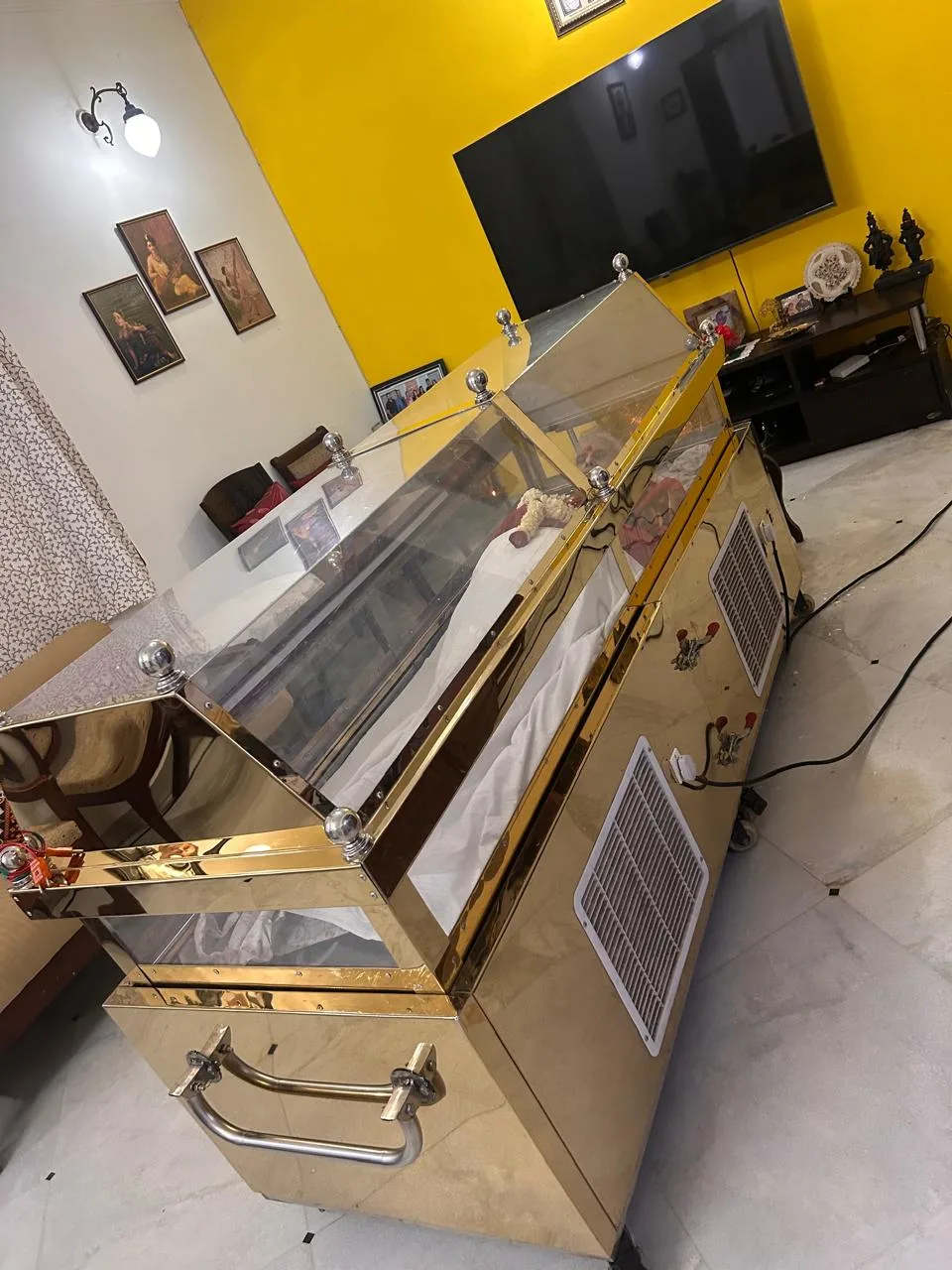
On this page
What does a freezer box need to work safely at home?
A portable mortuary freezer box needs a stable, correctly rated electrical supply, protective earthing, unobstructed ventilation around its cooling unit and regular checks by the service operator. The socket and backup arrangement must match the actual freezer model, not a blanket “15A rule”.
A 15/16A outlet is common for some equipment, not a substitute for the manufacturer’s rating.
Agree in advance how a power cut or equipment alarm will be handled.
Wipe accessible external glass only as instructed. Do not open or clean inside a loaded unit.
Six checks when the freezer box is installed
Confirm the release and placement
For a hospital or medico-legal death, complete the required release formalities before moving the deceased. The service team should transfer and position the body; the family should not handle the refrigeration chamber.
Choose a dry, level space
Keep the unit stable on a level surface. Avoid pooled water, direct afternoon sunlight, rain, incense flames and congested corners. Leave the clearance specified for the compressor and condenser.
Check the power connection
The operator should inspect the unit’s plug and nameplate and verify a suitable earthed outlet. Avoid loose adapters, multi-plug extensions or makeshift wiring.
Confirm the cooling status
Ask which temperature is monitored, how long the unit may need to stabilise and what alarm or indicator shows a problem. Do not impose a universal temperature setting on unfamiliar equipment.
Agree on backup and support
Ask whether the selected socket receives society generator power and who will switch supply if electricity fails. Save the operator’s phone number and escalation instructions.
Keep viewing and rituals practical
Keep the access route open. Flowers and cloth should not obstruct seals, vents, the control panel or heat-dissipating parts. Ask the operator before placing anything on the unit.
Electrical load: is a 15A socket compulsory?
No single socket rating fits every portable mortuary freezer box. Some are supplied with a larger grounded plug; others use different configurations. The safe requirement is a correctly rated, undamaged plug and socket matched to the actual unit. In Indian homes the common higher-current outlet is often described as 15A or 16A.
How to interpret the nameplate
A rating label may state voltage (V), frequency (Hz), running current (A), input power (W) and sometimes maximum input or compressor characteristics. The running current is not the same as the short compressor starting demand, which may be higher.
Understand running watts and amps
*W ÷ 230 V assumes a power factor of 1; real compressor current can be higher. A unit may cycle on and off, and starting current can be several times its operating current. These examples cannot determine socket, circuit, inverter or generator suitability.
With an older building, loose socket, warm plug, recurring breaker trips or water near a connection, stop using the circuit and request professional inspection. A high-current receptacle alone does not establish that the wiring is safe.
Generator backup in apartment societies
Many housing societies run a diesel generator (DG) for selected essential loads, but that does not mean every apartment socket is on backup. Confirm with maintenance which specific outlet is supported and how supply is transferred safely.
Mains or society DG
Approved changeover
Supported outlet → box
Ask society maintenance
- Does the chosen outlet receive DG power?
- Is the supply transferred automatically or by authorised staff?
- Can the circuit and generator support compressor startup?
- Who should be called if the DG trips?
Never improvise the connection
- Do not connect a generator using a double-ended plug.
- Do not backfeed apartment wiring from a portable DG.
- Do not operate fuel generators in enclosed rooms or balconies.
- Let authorised electricians handle switching and connection.
Why does the freezer-box glass fog in humid weather?
Condensation forms when humid room air meets a glass surface cooler than its dew point. This can be common during monsoon weather, near open doors or in rooms crowded with visitors. External droplets do not, by themselves, prove that cooling has stopped.
See why the glass can look misty
In humid air, cool glass may fall below the dew point. Tiny droplets form outside and scatter light.
Safe ways to manage fogging
Do
- Ask the operator which glass surfaces may be wiped.
- Gently dry accessible outer glass with a clean, soft cloth.
- Use safe room ventilation or AC dehumidification if practical.
- Keep water from reaching outlets, plugs and control panels.
- Tell the operator if fogging appears between layers or inside.
Do not
- Open the refrigerated enclosure solely to clear fog.
- Pour warm water or use a hairdryer or heater on the glass.
- Apply detergent, anti-fog spray or alcohol without approval.
- Direct water at seals, vents or electrical components.
- Interpret fogging as a substitute for checking temperature.
Hygiene, cleaning and respectful handling
The provider should supply a clean unit, place the deceased appropriately and manage final cleaning and disinfection after use. Families can keep the nearby floor dry, avoid unnecessary contact and follow hand hygiene after contact with the deceased or contaminated materials.
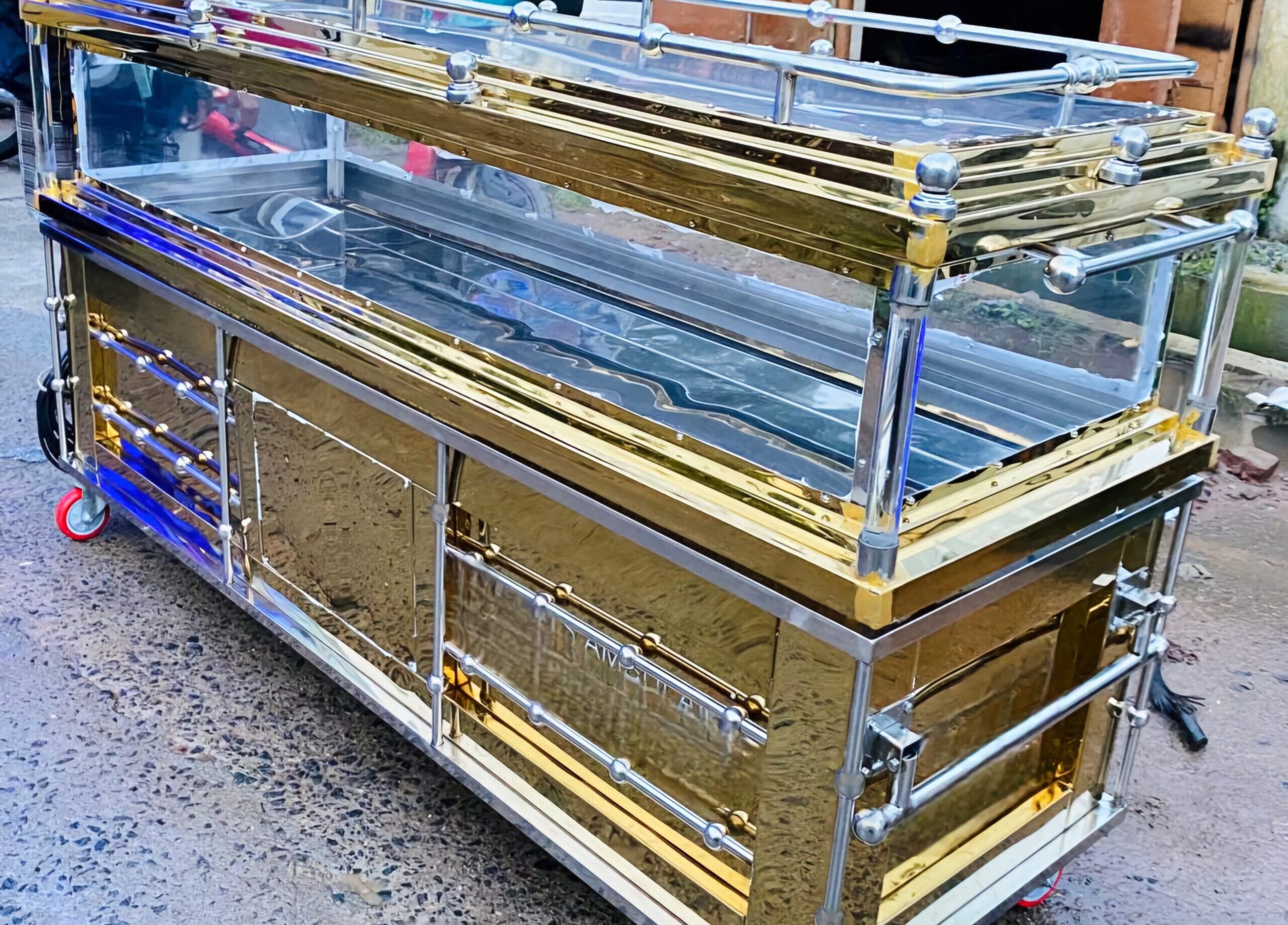
Glass viewing enclosure and stainless-steel exterior
Clear external glass helps relatives view the deceased without opening the enclosure repeatedly. Keep the glass, handles, wheels and compressor area free from spilled water or ritual materials.
The pictured equipment is a Swargayatraa image; construction and cleaning instructions depend on the actual unit.
Before handling
Staff use appropriate protective equipment and follow the applicable infection-control protocol. Inform them if the hospital has given special precautions.
Cleaning sequence
After the unit is emptied and electrically isolated by the provider: remove visible soil, clean, then disinfect compatible surfaces with the product's required contact time.
After cleaning
Use clean cloths, dry surfaces fully, check seals and electrical areas, and keep service records where applicable. Never mix cleaning chemicals.
Routine deaths are not automatically a source of epidemics. Risks are higher with some infectious causes of death or exposure to body fluids, so the operator should follow medical guidance rather than indiscriminately spraying the deceased or the equipment. WHO guidance.
Common problems and what to do
| What you notice | What it might mean | Safer next step |
|---|---|---|
| Outer glass looks foggy | Humidity condensing on a cold surface | Ask whether external wiping is permitted; check the unit's actual cooling status with the operator. |
| Plug feels hot or sparks | Damaged/overloaded connection | Keep clear; isolate only if safe, and call operator and electrician urgently. Do not retry. |
| Breaker repeatedly trips | Circuit fault, overload or start-up problem | Stop resetting the breaker. Call the operator and an electrician. |
| Unusual sound or alarm | Possible compressor or control issue | Record the indicator/alarm and contact the provider immediately. |
| Power has stopped | Electricity or circuit failure | Note interruption time, avoid opening, and call the provider for backup/alternative. |
| Water reaches the power point | Shock hazard | Do not touch wet plug or socket. Arrange safe isolation by a qualified person. |
| Odour, leakage or condensation inside the cover | Possible containment, seal or cooling issue | Keep the enclosure closed and request immediate operator assessment. |
Checklist before the family gathering
0 of 7 checks complete
This checklist is a family handover aid, not a certificate of electrical, medical or equipment safety.
Questions families commonly ask
Does every dead-body freezer box need a 15A or 16A socket?
No. The required outlet and wiring depend on the actual model's rated supply, plug, compressor and starting demand. Ask the operator to check the equipment label and the circuit; do not use an improvised adapter.
Can a freezer box run from my apartment society's DG backup?
It may, if the specific outlet is connected to the building's approved backup circuit and the installation can support the compressor start-up load. Society maintenance and the provider should confirm this. Never backfeed or connect the generator yourself.
Why is the top glass wet during monsoon weather?
Humid room air can condense into droplets when it touches cooler glass. Exterior fogging alone does not prove equipment failure. Verify cooling through the operator's temperature indicator or check.
Can I wipe the glass while the freezer is operating?
Only wipe an accessible outer surface if the provider permits it. Use a clean, soft, dry cloth, avoid wet electrical areas and never open the chamber simply to clear mist.
What if the freezer-box power goes out at night?
Record the time, keep the enclosure closed as instructed and contact the operator immediately. Ask about supported backup power or replacement refrigeration. No universally safe unpowered duration can be assumed.
What temperature should a portable freezer box maintain?
There is no single temperature applicable to all portable mortuary boxes. Units differ in cooling technology, temperature measurement and operating instructions. Confirm the target and actual readings with the provider; a set-point alone does not prove the body is at that temperature.
Who should clean and disinfect the box after use?
The service provider should arrange cleaning and disinfection by trained staff using products compatible with the unit and following their labelled wet contact times. Families should not spray chemicals inside or around electrical parts.
Is a freezer box the same as embalming or a hospital mortuary?
No. Temporary portable refrigeration is not embalming and is not a substitute for hospital mortuary storage, medico-legal custody or specialist infection-control arrangements. Ask the doctor and provider what is appropriate to the case.
Technical and public-health references
The equipment manufacturer’s operating instructions take priority for its electrical connection, clearances, temperatures and cleaning compatibility. The references below support the general principles used in this article.
Official CEA 2023 regulations and notification. Check current amendments and local electrical requirements.
WHO public-health questions and answers. Distinguishes routine risk from special infectious circumstances.
CDC cleaning and disinfecting guidance. Surface compatibility, disinfectant labels and contact times.
Condensation and dew point explanation. Explains why humid air forms droplets on cool surfaces.
2022 district and sub-district hospital infrastructure guidance. Describes dedicated mortuary storage, separate from temporary home equipment.
Arranging a freezer box for use at home?
Before delivery, confirm the model, power socket, DG backup plan and operator contact. Swargayatraa can discuss available funeral-support arrangements through its existing service channels.
