Asthi · Science & sacred collection
Why bones remain after cremationUnderstanding Asthi Sanchayana
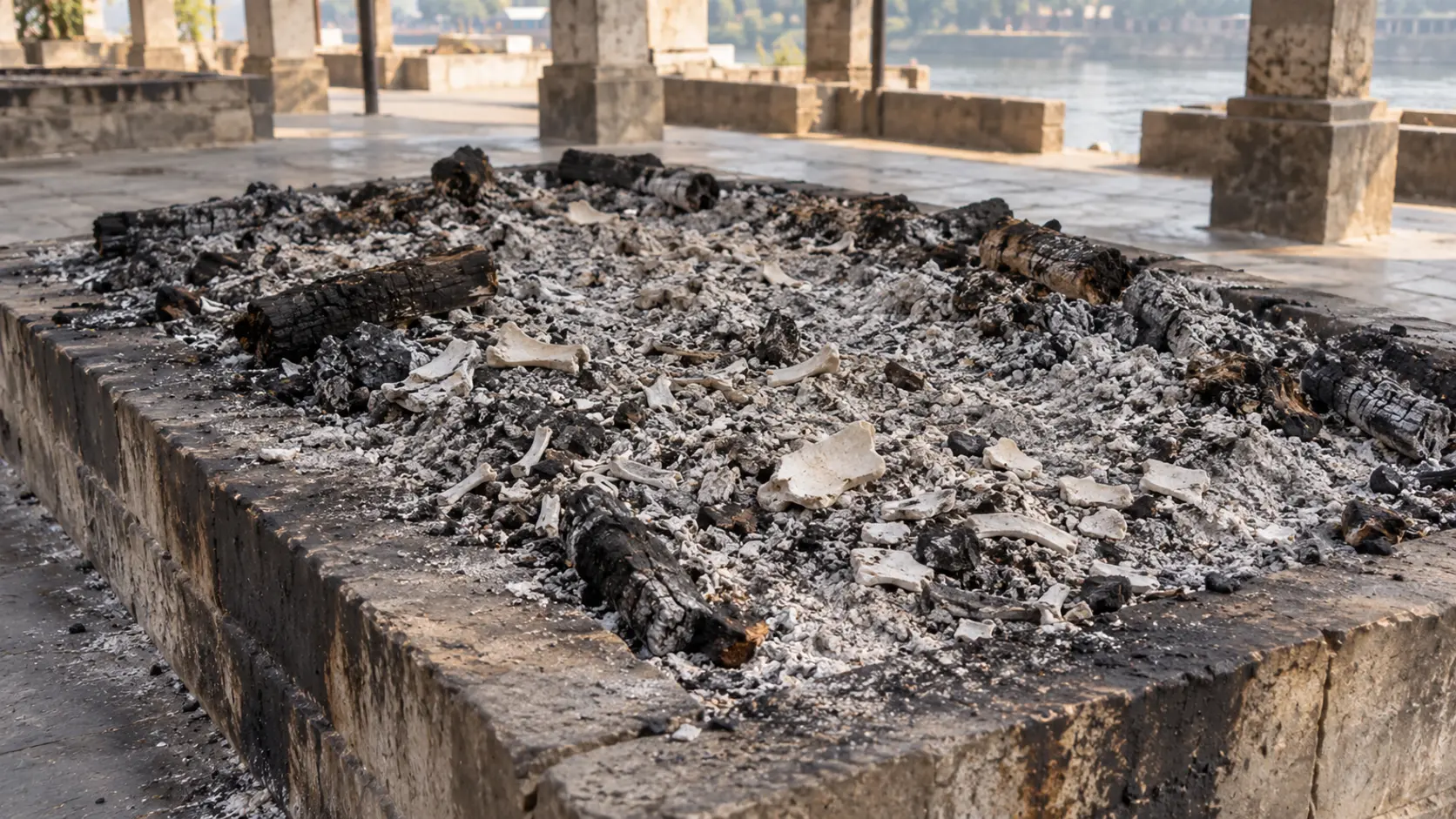
Bones contain a calcium-phosphate mineral framework. During cremation, water is lost and organic material burns away, while heat-altered mineral can remain as brittle fragments. These remains are collected as Asthi. Both wood and electric cremation can leave bone fragments; their presence alone does not mean cremation was incomplete.
01 / What survives the heat
The mineral remains; the bone changes
Living bone combines water, collagen and mineral. Collagen provides toughness; calcium-phosphate mineral provides hardness. The principal mineral is biological apatite, commonly described as hydroxyapatite.
Strong heating removes water and breaks down organic material. The mineral’s structure also changes. Bone can crack, shrink and become brittle, leaving fragments rather than an intact skeleton.
“Calcined” describes strongly heat-altered material. “Calcified” refers to mineral deposition in tissue. Not every fragment recovered from a pyre has experienced identical heating.
Water is lost
Moisture leaves the tissue as it heats.
Organic material breaks down
Collagen and other organic components decompose and burn as conditions permit.
Mineral fragments remain
The altered mineral becomes brittle and can break into smaller pieces.
02 / Two methods, the same distinction
Bone fragments are different from wood ash
| After cremation | Wood pyre | Electric cremation |
|---|---|---|
| Bone mineral | Remains as heat-altered fragments and finer particles. | Also remains as heat-altered fragments and finer particles. |
| Fuel residue | Wood ash and charcoal may be mixed with skeletal remains. | No firewood ash from the electric heat source itself. |
| Collection | Requires separating remains from mixed pyre residue. | Follows the facility’s cooling and recovery procedure. |
Wood ash comes from burned timber; Asthi comes from skeletal tissue. Both may contain calcium, but they have different origins and mineral compositions.
What can a forensic examination establish?
03 / After the cremation
How Asthi Sanchayana is arranged
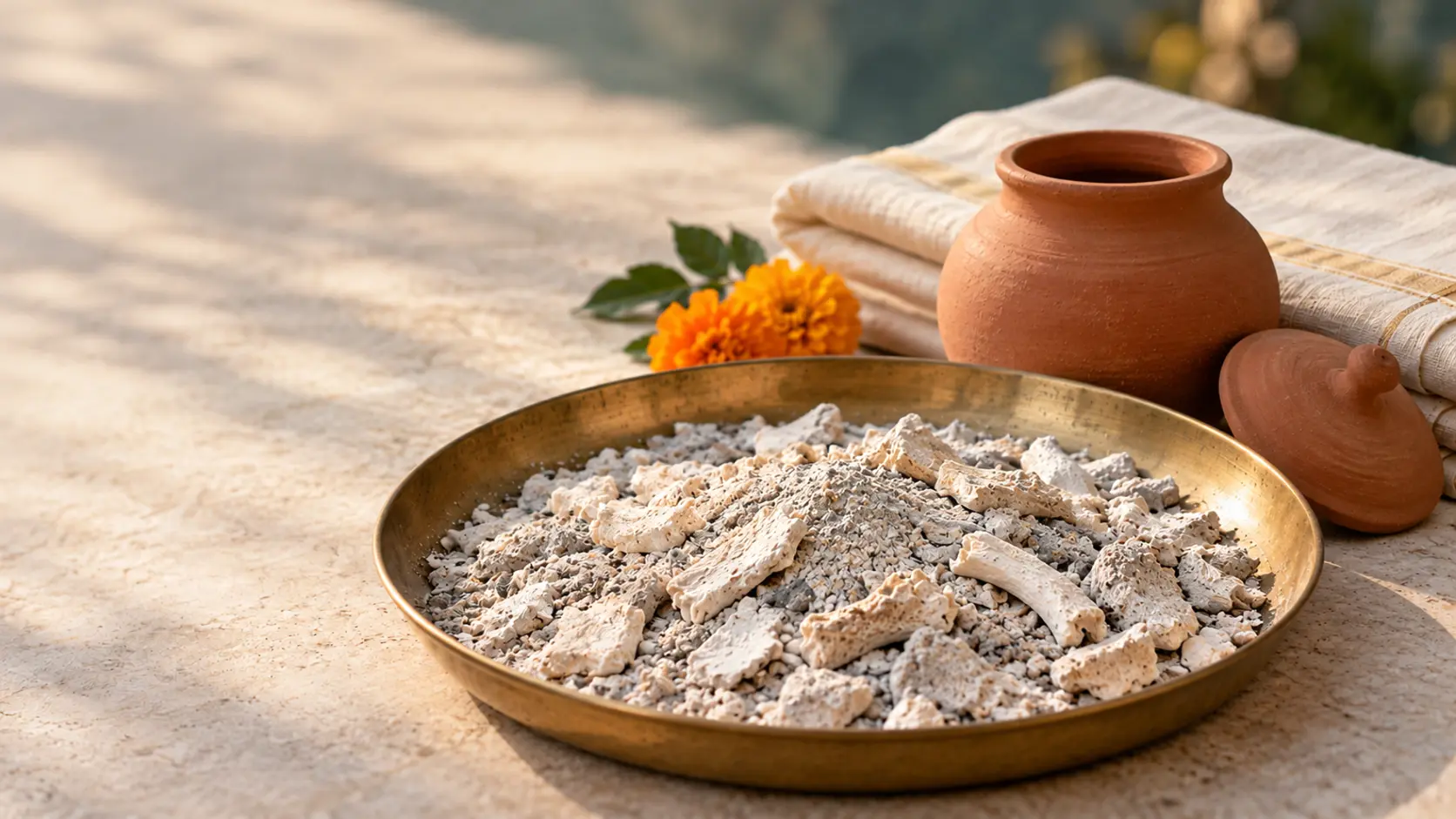
Visarjan: subsequent immersion.
Which ritual details vary?
- Confirm the collection time.Ask when the crematorium will release the cooled remains and who should attend. Do not enter the pyre area or handle remains until staff confirm it is safe.
- Agree on the family’s rites.Consult the family priest or elder about participation, prayers and materials before returning. This is a general sequence, not a prescribed ritual manual.
- Collect with the facility’s assistance.Confirm the identification and handover process. Follow staff directions for gathering or receiving the remains; do not rely on colour alone to select fragments.
- Complete the prescribed observances.Carry out prayers and any tradition-specific cleansing or offerings as guided. Place the collected remains in the agreed vessel and secure it for transport.
- Plan immersion separately.Confirm the chosen location, timing and arrangements for Asthi Visarjan. Follow the site’s instructions for containers, flowers and other materials.
04 / Common questions
