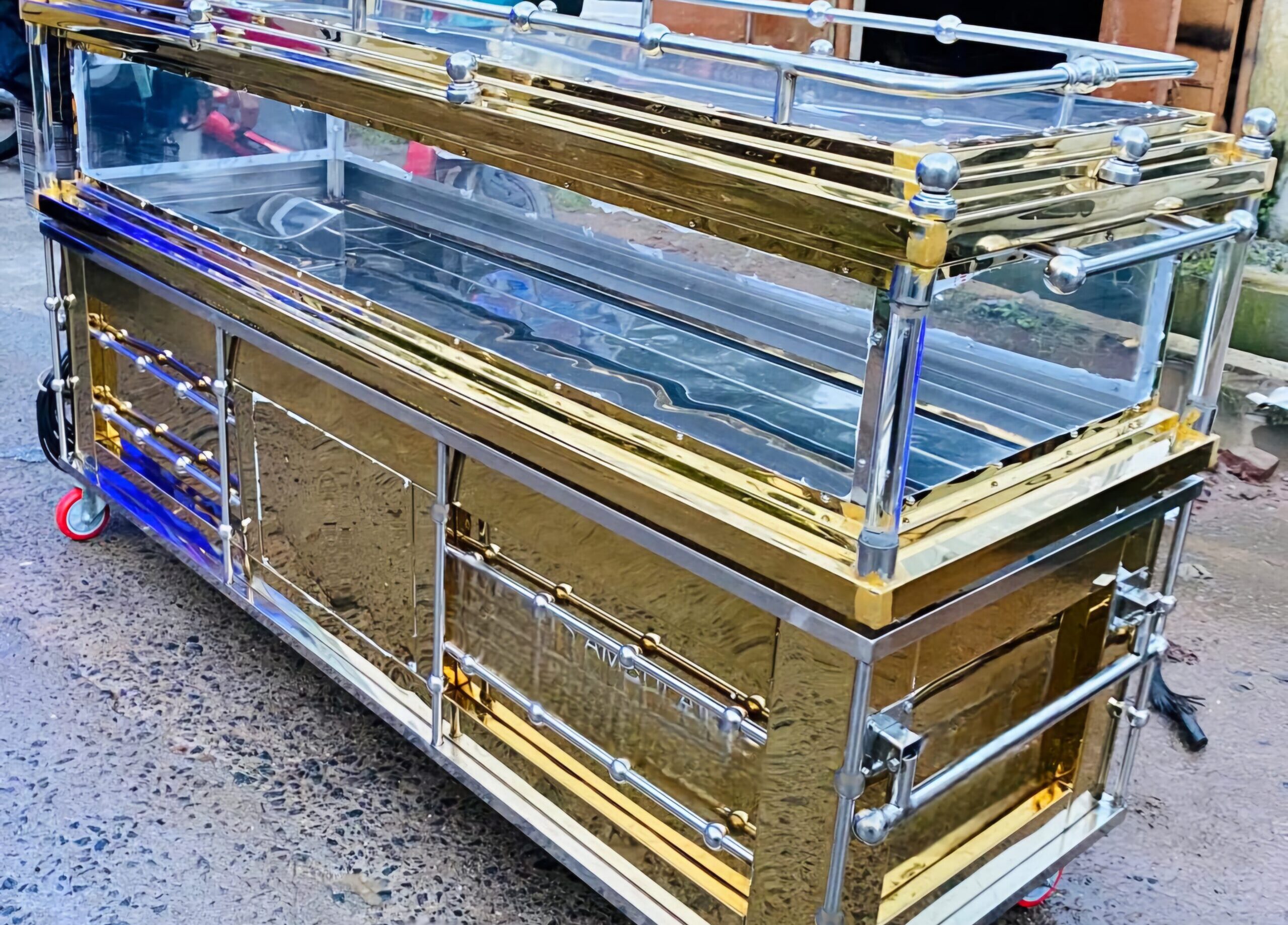
Long-Distance Freezer Ambulance Guide

Freezer Ambulance for Long-Distance Dead Body Transport: Cost, Use and When It Is Required

A practical guide for families arranging long-distance freezer ambulance support to take a deceased person to a hometown, native place, district, village or another city by road.

Quick answer: A freezer ambulance is usually required when the road journey is long, the body has to travel overnight, cremation is delayed, relatives are waiting, or the deceased person has already been kept for several hours after death. Freezer ambulance pricing generally starts around ₹25–₹28/km, depending on route, city, distance, tolls, permits and vehicle availability.
Freezer ambulanceLong-distance body transportNative place transfer₹25–₹28/km with freezerMajor cities & district routes
Opening Answer

When Families Usually Need a Freezer Ambulance

A freezer ambulance is usually required when a deceased person has to be taken by road for many hours, especially to a hometown, native place, district, village or another city. It helps with preservation during long travel when cremation is delayed, relatives are waiting, weather is hot, or the body has already been kept for several hours after death.

Families often get confused between a normal hearse, AC ambulance, freezer ambulance and separate freezer box. This guide explains when each option is required, how the cost is calculated, what documents are needed, and how to avoid booking the wrong vehicle during a stressful time.

Swargayatraa supports long-distance deceased body transport through its fleet in major metro cities and verified professional partners across district routes. Cremation service support is also available in major metro cities including Delhi, Mumbai, Pune, Hyderabad, Kolkata and more.

Freezer box and cooling support for deceased body preservation before long-distance transport
Cost note: The prices mentioned in this guide are approximate working ranges for long-distance road transport. Final charges can vary based on current fuel prices, route, state permits, tolls, vehicle availability, waiting time, manpower, city, district access and destination-side requirements.
Article Navigation

Freezer Ambulance Decision Guide for Families

Use these sections to quickly understand whether you need a normal hearse, AC ambulance, freezer ambulance or separate freezer box before the road journey.

What It Means

What Is a Freezer Ambulance for Dead Body Transport?

A freezer ambulance is a mortuary transport vehicle arranged after death to carry the deceased person by road with cooling support. It is mainly used for long-distance body transfer to another city, district, state, hometown or native place.

It is different from an emergency ambulance. A medical ambulance is used for living patients. A freezer ambulance is used after death for respectful and temperature-supported movement of the body.

The right choice depends on the full timeline, not just the distance. Families should consider time since death, hospital release time, travel duration, weather, body condition and when final rites will actually happen.

Hearse van and mortuary ambulance for deceased body transport
Vehicle Comparison

Normal Hearse vs AC Ambulance vs Freezer Ambulance

Families usually ask one practical question: should we book a normal vehicle, AC ambulance or freezer ambulance to take the body to our native place?

Vehicle / ArrangementMain UseCooling SupportBest Situation
Normal hearseLocal crematorium or short-distance transferNo coolingImmediate cremation or short local movement
AC ambulanceMedium-distance road travelAir-conditioned cabinSame-day journey with limited delay
Freezer ambulanceLong-distance mortuary transportBetter preservation supportLong journey, hot weather, delayed final rites, overnight travel
Separate freezer boxKeeping body at home before journeyStationary coolingWaiting at home before road journey starts
Simple rule: A normal hearse is mainly for short local movement. An AC ambulance is better when the body must travel some distance but final rites will happen the same day. A freezer ambulance is more suitable for long road journeys, night travel, delayed cremation, hot weather, or hometown transfer.
When Required

When Is a Freezer Ambulance Required?

A freezer ambulance is generally recommended when the body has to remain in transit for many hours or when there is a delay before cremation, burial or final rites.

Long-distance road transport to native place

If the deceased person has to be taken to a native place, hometown, family village, district town or another state, freezer support may be safer than a normal vehicle. This is common for intercity and outstation mortuary transport where the journey continues for several hours.

Travel time is more than 6–8 hours

Even if the distance does not look very high on the map, real travel time can increase because of traffic, tolls, hospital release delay, route diversions, ghat sections, bad roads or destination-side village access.

Cremation is delayed until next day

If the body will reach the destination at night and cremation is planned the next morning, freezer support is often a safer option. This is especially important when family members need time to gather at the hometown.

Hot weather or humid conditions

In hot weather, the body should not be kept for long without cooling. For summer travel, daytime highway movement, coastal routes or humid regions, a freezer ambulance or proper cooling arrangement should be discussed before dispatch.

Relatives are waiting before final rites

Many families delay cremation because close relatives are travelling from different places. If the body is being taken to the hometown and final rites will happen only after relatives arrive, freezer support is usually useful.

Hospital release or paperwork is taking time

If several hours have already passed because of billing clearance, death summary, MCCD, mortuary release, post-mortem or police NOC, it may be better to choose a freezer ambulance instead of a normal hearse.

No mortuary facility available? If death happened at home, in a small nursing home, clinic, lodge, workplace or place without mortuary support, the family may need a separate freezer box before transport or an AC freezer ambulance for the journey.
When Not Required

When Is a Freezer Ambulance Not Required?

A freezer ambulance is not required in every case. Booking one unnecessarily can increase cost without adding much practical value.

Short local transfer

If the body only has to be moved from a hospital to a nearby crematorium or burial ground, a normal hearse or mortuary van may be enough.

Immediate cremation

If the body will be taken directly for cremation and there is no long waiting period, freezer support may not be necessary.

Body is already in hospital mortuary

If the body is safely kept in a hospital mortuary until the ambulance arrives, and the road journey is not very long, an AC ambulance may be enough depending on the situation.

Air cargo transport

For air transport, freezer ambulance is not a substitute for embalming, coffin packing and airline cargo documentation. It may be used only for pickup, hospital-to-airport movement or airport-to-home transfer.

Short intercity travel with same-day final rites

If the route is short, weather is manageable, and final rites will happen immediately after arrival, an AC ambulance may be sufficient.

Full timeline decides

The best decision should be based on the full timeline: death time, release time, vehicle start time, road duration, arrival time and final-rites time.

Cost Guide

Freezer Ambulance Cost for Long-Distance Transport

Freezer ambulance cost is usually calculated based on distance, route, vehicle type, waiting time and additional requirements. For outstation body transport, the quote is often based on per-kilometre pricing.

₹25–₹28/kmapproximate freezer ambulance range

This is an approximate range for freezer ambulance or AC freezer support. The final quotation may change based on total distance, tolls, state permits, waiting time, extra manpower, destination access, route difficulty, city, district location and vehicle availability.

For long-distance routes, many providers calculate the cost on two-way distance because the ambulance has to return after dropping the body. Before confirming the booking, families should ask for a clear total estimate, including tolls, permits, waiting and manpower wherever applicable.

View full dead body transport cost guide →
Vehicle TypeApproximate Cost LogicBest For
Normal hearseLower cost than AC or freezer vehicles; final price depends on route and distance.Short local movement or immediate cremation.
AC ambulanceMedium cost; suitable when same-day final rites are planned and the route is not very long.Medium-distance deceased body transfer.
Freezer ambulance / AC freezer ambulanceApprox. ₹25–₹28/km depending on route, distance, permits, tolls, waiting, manpower and vehicle availability.Long-distance transport, overnight travel, delayed cremation and native-place transfer.
Route Examples

Example Cost Scenarios for Native Place Transport

The exact cost depends on distance and route conditions, but the examples below help families understand when freezer ambulance is useful.

Route TypeSuitable VehiclePractical Cost Logic
Metro city to nearby districtAC ambulance; freezer if delayedDistance + waiting + final-rites timing
Metro city to hometown by highwayAC freezer ambulance often preferredLong highway travel + tolls + weather + return distance
Overnight intercity transportFreezer ambulance preferredLong route + preservation need + next-day cremation
Coastal or humid-region travelFreezer ambulance often saferLong duration + humidity + delayed rituals
Hilly, ghat or rural destination routeFreezer ambulance based on timingRoute difficulty + travel duration + destination access
Hospital release in city, final rites in villageFreezer ambulance if delay is expectedHospital paperwork + road travel + relatives waiting
Long-distance transfer across statesFreezer ambulance often preferredDistance + permits + tolls + body preservation requirement
Important: A family should not decide only by kilometre count. A shorter journey with next-day cremation may need freezer support, while a longer journey with immediate final rites may be planned differently.
Before Journey

Separate Freezer Box Before Journey: When Is It Needed?

A separate freezer box may be needed before the ambulance journey begins. This is different from a freezer ambulance.

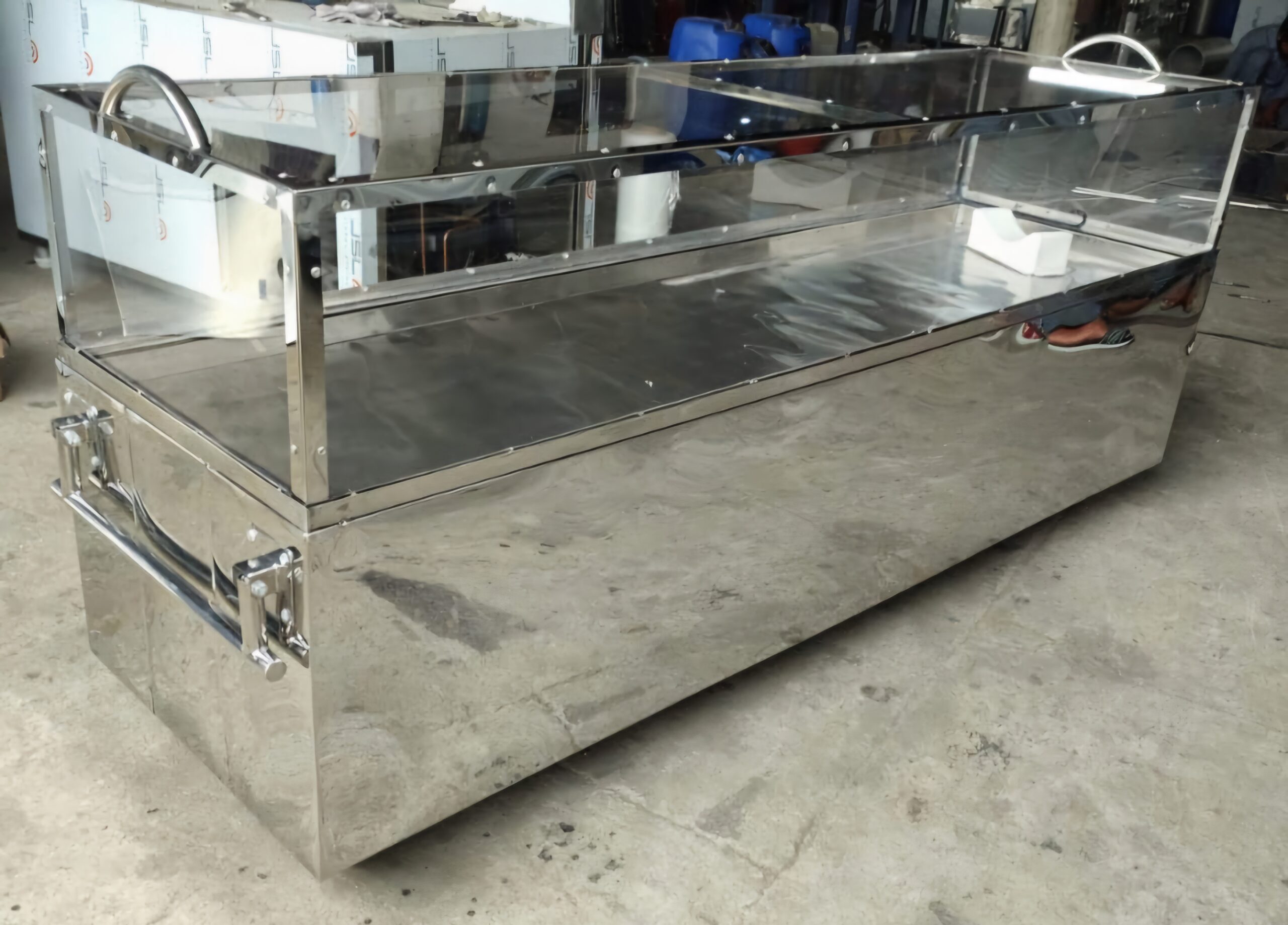
A freezer box is stationary. It is usually placed at home, hospital waiting area or another location to preserve the body while the family waits.

If the body is already preserved in a hospital mortuary, a separate freezer box may not be required before dispatch. But if the body is kept at home, especially in hot weather, cooling should be arranged quickly.

Freezer box on rent guide →

How long can a dead body be kept at home, mortuary or freezer box? →

VIP freezer box used before long-distance body transport
Before travel: A freezer box is useful when the body has to be kept at home or another location before the ambulance journey starts. It is not the same as freezer support inside the vehicle.
Freezer vs Embalming

Freezer Ambulance vs Embalming: Which Is Better?

Freezer ambulance and embalming serve different purposes. The right option depends on whether the body is travelling by road or by air, and how long final rites are delayed.

Freezer ambulance

A freezer ambulance helps preserve the body during road travel. It is mainly used when the body is being taken to another city, hometown or native place by road.

For many long-distance road journeys, freezer ambulance support may be enough if the final rites are planned within a practical timeline.

Embalming

Embalming is usually required for air cargo transportation because airlines need specific documentation, embalming certificate and coffin packing before accepting the body.

For road transport, embalming may not always be mandatory. It may be considered when there is a very long delay, very high distance, hot weather, body condition concern or destination-specific requirement.

For very long delays: the family may consider embalming along with freezer support. The right choice should be based on time since death, expected travel duration, condition of the body, destination rules and the family’s final-rites plan.
Documents

Documents Needed for Long-Distance Dead Body Transport by Road

For outstation mortuary transport, documents should be ready before the vehicle starts.

For natural death at home or hospital, the medical death certificate is usually the most important document. For medico-legal cases, police clearance is important before long-distance movement.

  • MCCD or medical death certificate from doctor or hospital.
  • ID proof of the deceased person.
  • ID proof of the accompanying family member or attendant.
  • Hospital release document, if applicable.
  • Post-mortem certificate, if applicable.
  • Police NOC for medico-legal, accident, suicide, suspicious or unnatural death cases.

Read MCCD Form 4 and 4A guide →

Death at home? If death happened at home, the family may first need a doctor’s certificate or MCCD guidance before the body is moved. Read: How to get a doctor’s certificate after death at home.

MCCD Form 4 Sample

This sample PDF may not preview on all mobile browsers.

Open Form 4 PDF →
MCCD note: A medical certificate of cause of death is usually issued by the hospital or doctor depending on where the death occurred. Keep the document ready before long-distance road movement.
Family Travel

Can Family Members Travel in a Freezer Ambulance?

In many long-distance cases, one or more family members can travel in the vehicle, depending on the ambulance model and seating arrangement.

Confirm seats

Ask how many attendants can travel and whether seats are separate from the body compartment.

Check night travel

For overnight routes, confirm driver rest stops, road timing and expected arrival time.

Ask about waiting

Confirm whether waiting time at hospital, home or destination is included in the quote.

Do not assume seating availability: For long routes, confirm seating, luggage space, route timing and stoppages before dispatch.
Vehicle Care & Backup

Vehicle Maintenance, Sanitization and Breakdown Backup

For long-distance outstation transport, the condition of the vehicle matters as much as the cost. Families should ask whether the vehicle is maintained, serviced and suitable for highway travel before confirming dispatch.

Maintained and serviced vehicles

Swargayatraa coordinates freezer ambulance and mortuary vehicles that are properly maintained and serviced for long-distance movement. Vehicle condition is checked before dispatch wherever possible.

Sanitized before and after trips

Vehicles are cleaned and sanitized before and after trips to maintain hygiene and dignity during transportation. This is especially important when the body is travelling for many hours.

Backup partner support

In an unforeseen vehicle breakdown, if the same vehicle cannot be repaired within 2–3 hours, a replacement vehicle will be arranged from Swargayatraa’s list of verified professional partners where route, timing and availability allow.

Practical note: Long-distance road transport can involve unexpected issues such as road blocks, mechanical trouble, weather delays, permit checks or route diversions. Families should keep one responsible contact reachable throughout the journey for coordination.
Before Booking

Practical Checklist Before Booking a Freezer Ambulance

This checklist helps families avoid last-minute disputes and wrong vehicle selection.

Vehicle and cost questions

  • Is the vehicle a normal hearse, AC ambulance or freezer ambulance?
  • Is freezer support inside the vehicle or is it a separate freezer box?
  • What is the per-kilometre rate?
  • Is the quotation based on one-way or two-way distance?
  • Are tolls, parking and state permits included?

Journey and document questions

  • Are waiting charges included?
  • How many family members can travel?
  • What documents are needed before starting?
  • What is the estimated travel time?
  • Will the vehicle be suitable if cremation is delayed after arrival?
Avoid These Mistakes

Mistakes Families Should Avoid During Long-Distance Body Transport

During a death emergency, decisions are made quickly. These are the common mistakes families should avoid.

Booking a normal vehicle for a 10–15 hour journey

A normal hearse may reduce cost, but it may not be the right choice for long road journeys or delayed cremation. If the body has to travel overnight or wait after arrival, freezer support should be considered.

Not checking whether freezer support is available

Not every mortuary van has freezer support. Ask clearly whether the vehicle is a normal hearse, AC ambulance, AC freezer ambulance or freezer box ambulance.

Not asking for a clear total estimate

A low per-kilometre rate may not include tolls, permits, waiting, parking or manpower. Always ask for the approximate total before dispatch.

Not arranging documents before the vehicle starts

Long-distance movement should not begin without the required documents. In medico-legal cases, post-mortem certificate and police NOC may be required.

Opening the freezer lid repeatedly

If a freezer box is used before travel, avoid opening the lid again and again. It reduces cooling efficiency and can affect preservation.

Keeping the body at home without cooling

If there is a delay before the ambulance arrives, do not keep the body at home for long without cooling, especially during summer or humid weather.

Destination timing matters: If cremation or burial is not ready at the destination, the body may need continued cooling after arrival. Plan the destination-side arrangements in advance.
Decision Guide

How to Choose the Right Vehicle for Native Place Transport

The cheapest vehicle is not always the safest option. At the same time, the costliest vehicle is not always required. The right choice depends on the body condition, distance, travel time, weather and final-rites schedule.

SituationBetter Option
Local crematorium drop within the same cityNormal hearse
Short outstation journey with immediate final ritesAC ambulance
Long-distance transfer to hometownFreezer ambulance
Overnight journeyFreezer ambulance
Body waiting at home before journeySeparate freezer box
Very long delay before final ritesFreezer box, freezer ambulance or embalming depending on condition
Air cargo transportEmbalming + coffin packing + air cargo process
Best practical approach: First calculate the total time until final rites. Then choose the vehicle. Do not decide only by distance or only by cost.
FAQs

Freezer Ambulance for Long-Distance Transport: Questions Families Ask

A freezer ambulance is usually recommended when the body has to travel for many hours by road, especially to a hometown, native place, another city or another state. It is useful when cremation is delayed, the journey is overnight, weather is hot, or relatives are waiting at the destination.

For long-distance road transport, freezer ambulance or AC freezer ambulance charges may be around ₹25–₹28/km. Final cost can vary based on distance, route, tolls, permits, waiting time, vehicle availability and whether two-way distance is calculated.

Yes, overnight road transport is possible when documents are ready and the right vehicle is arranged. For overnight travel, freezer ambulance is often preferred because the body may remain in transit for several hours before final rites.

A mortuary van is used to carry the deceased person. A freezer ambulance includes cooling support for better preservation during long-distance road travel. Not every mortuary van has freezer support, so families should confirm the vehicle type before booking.

Embalming may not always be mandatory for road transport. For many long-distance road journeys, freezer ambulance support may be sufficient. Embalming may be considered when there is a very long delay, high heat, long-distance movement, body condition concern or destination-specific requirement.

In many cases, one or more family members can travel, depending on seating availability and vehicle type. Families should confirm the number of seats, luggage space, route timing and waiting charges before dispatch.

Road transport is usually practical when the hometown is reachable by ambulance within a manageable time. Air transport may be better for very long distances, but it needs embalming, coffin packing, cargo booking and airline documentation. For road movement, freezer ambulance may be selected when preservation during travel is important.

Common documents include MCCD or medical death certificate, ID proof of the deceased, ID proof of the attendant, hospital release document if applicable, post-mortem certificate if applicable and police NOC for medico-legal, accident, suicide, suspicious or unnatural death cases.

Reviewed by Operations Manager

Rakshith G K Operations Manager

Rakshith G K reviews Swargayatraa’s long-distance body transport guides for practical accuracy, service clarity and family usefulness. This guide focuses on freezer ambulance selection, outstation road transport timing, document readiness, cost logic, city-to-district movement and vehicle fallback planning.

The purpose of this page is to help families choose the suitable vehicle, not simply the costliest one. If an AC ambulance is enough, the family should know that. If freezer support is safer, the reason should be explained clearly before booking.

Service focus:
Long-distance freezer ambulance, deceased body road transport and native-place transfer support.

Coverage:
Fleet support in major metro cities and verified partners across district routes.

Contact:
+91 89996 53202
24×7 Assistance

Need a Freezer Ambulance for Long-Distance Transport?

Call Swargayatraa before booking the vehicle. We help check the distance, travel time, document status, body condition, weather, route and final-rites timing before suggesting a normal hearse, AC ambulance or freezer ambulance.

Swargayatraa supports families through its own fleet in major metro cities and verified professional partners across district routes. Cremation services are also coordinated in major metro cities including Delhi, Mumbai, Pune, Hyderabad, Kolkata and more.

Important Service Note

Freezer ambulance availability, route timing, document requirements, state permits, tolls, waiting charges and final pricing can change based on the exact situation. This page gives practical guidance for families and does not replace instructions from hospital, police, crematorium, local authority or transport officials.

Verified by MonsterInsights