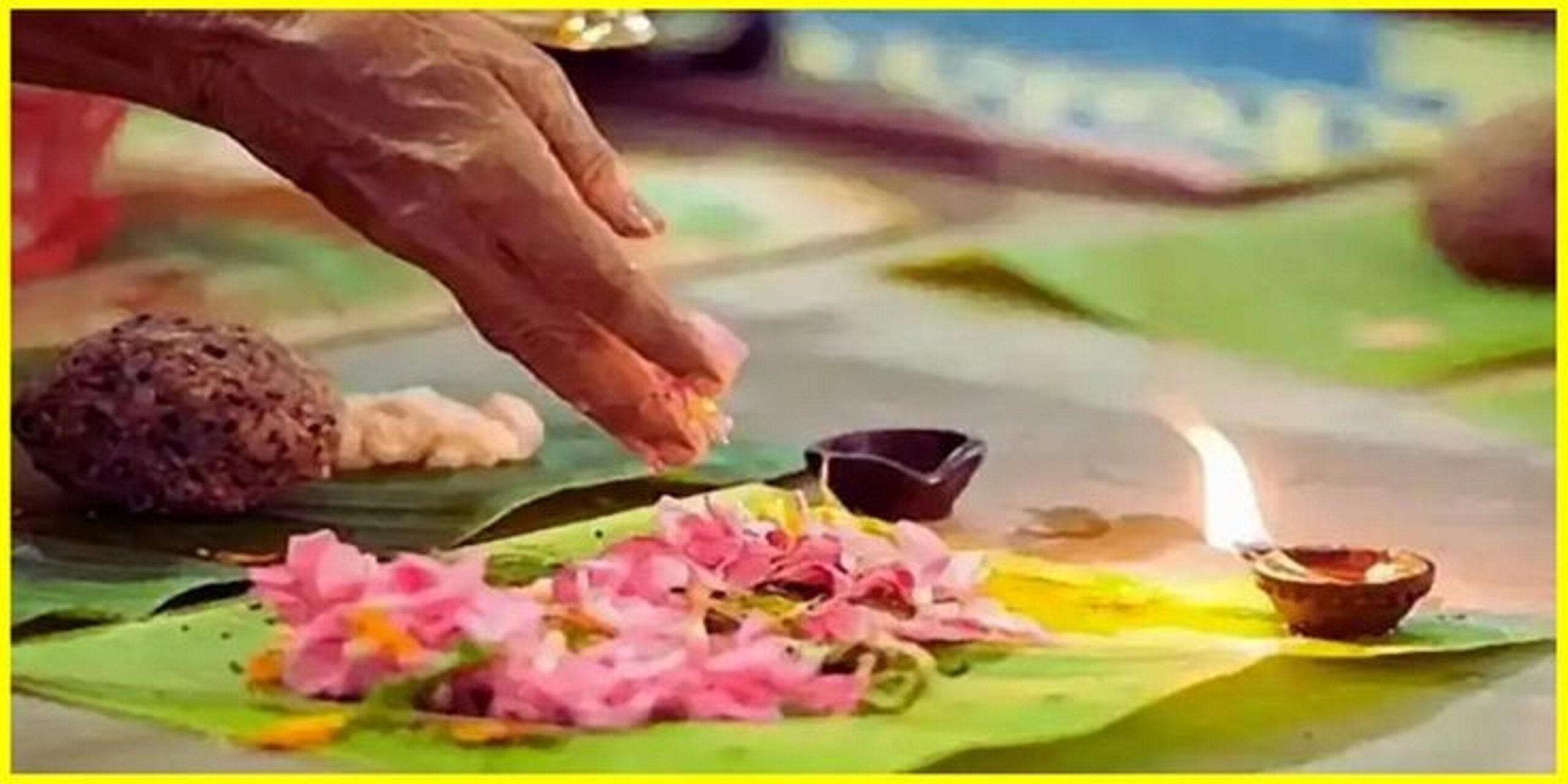
When is Mahalaya Amavasya in 2026?
The civil date tells you which day to plan for. The lunar day and the recommended ceremony period tell the priest when to conduct a particular rite. These are related, but they are not interchangeable.
Bengaluru timing example — Indian Standard Time
The Bengaluru calendar linked below gives the following periods. These are a location-specific reference; do not use this table as a timetable for every city or country.
| Calendar entry | Bengaluru, IST | How to read it |
|---|---|---|
| New-moon lunar day begins | 9 October, 9:36 pm | The lunar day starts the previous evening. |
| New-moon lunar day ends | 10 October, 9:20 pm | This is not a recommendation to hold the ceremony at night. |
| Kutupa period | 10 October, 11:42 am–12:30 pm | A traditional period used when scheduling ancestral ceremonies. |
| Rohina period | 10 October, 12:30–1:18 pm | The following traditional period. |
| Afternoon period | 10 October, 1:18–3:41 pm | Known as Aparahna in the calendar. |
Source: OnlineJyotish’s 2026 Bengaluru calendar. Almanacs may differ slightly in calculation or rounding.
Morning water offerings and a formal ceremony can have different timings
Some traditions observe water offerings after an early bath. Formal Shraddha may be scheduled around the late-morning or afternoon periods above. Ask which rite is being arranged and which local calendar applies before fixing your arrival time.
Why is this day called the day for all ancestors?
Mahalaya Amavasya brings the annual ancestral remembrance fortnight to a close. “Amavasya” means the new-moon day. Another familiar name is Sarva Pitru Amavasya, referring to remembrance of all ancestors.
The day has particular importance when a family does not know a relative’s death lunar day, could not observe the appropriate day earlier in the fortnight, or follows a collective ancestral observance. It also gives families a shared occasion to remember people whose individual records have been lost.
The purpose is expressed through gratitude, remembrance and religious duty. Within Hindu belief, offerings are made for the departed and their peace. A ceremony should not be presented as a guaranteed way to obtain money, cure illness or prevent misfortune.
Regional calendars may name the lunar month differently. Northern calendars commonly place the fortnight in Ashvina, while southern calendars may describe it as Bhadrapada. The different month names do not necessarily mean a different observance.
Which family members are included?
Known departed relatives
Bring their names and relationships, including the family branches you wish to remember. The formal ancestral lines and generations named in the ceremony depend on the ritual tradition.
Unknown names or dates
Tell the priest what is missing. Do not invent a name, lineage or lunar date. A collective remembrance can acknowledge ancestors whose details are no longer known.
Maternal and paternal families
Ask how both sides of the family are included in your tradition. Do not assume that one list automatically covers every relationship.
A day missed earlier
This final day is commonly used for remembrance when the relevant observance earlier in the fortnight was missed. Explain the circumstances when arranging the ceremony.
In the calendar tradition cited below, remembrance during this fortnight for someone who died on a full-moon lunar day is assigned to the final new-moon observance. Deaths involving particular circumstances can have separate rules. Confirm these details instead of moving every ceremony to the final day yourself.
After a recent death, ask separately. The rites immediately following a death and the first-year ceremonies are not automatically replaced by Mahalaya Amavasya.
Shraddha, Tarpan and Pind Daan: what is the difference?
| Term you may hear | Plain-English meaning | What to confirm |
|---|---|---|
| Shraddha | An ancestral ceremony that can include prayers, offerings and feeding invited recipients. | Which form your family follows and what is included. |
| Tarpan | A ritual offering of water in remembrance of the departed. | Its timing, materials and place within the ceremony. |
| Pind Daan | The offering of prepared ritual food portions, often rice-based. | Ingredients, number of portions and how they will be handled afterwards. |
| Charity or food donation | Giving food, useful items or support in someone’s memory. | Suitable recipients and what they can actually use. |
| Ash immersion | A separate rite involving cremated remains. | Whether it is needed at all; it is not another name for water offerings. |
These terms describe different actions. Booking “a puja” without discussing the details can leave the family unsure what will happen. Ask for a clear description of the ceremony, the materials, the language and the responsibilities of each person.
How should the family prepare?
Gather the information that matters
- Write down the names of departed relatives and their relationship to the person leading the rite.
- Bring any recorded death date, time and place. If the lunar day is already known, keep that record too.
- Share the family’s regional or ritual tradition and the language in which instructions will be easiest to understand.
- Say whether a parent is living, whether the death was recent, and whether first-year rites are still ongoing.
- Mention mobility needs, difficulty sitting on the floor, travel limits and who will attend.
Confirm the arrangement before purchasing materials
Ask who supplies the vessels, food ingredients, cloth, flowers and ritual items. Confirm whether food must be cooked on site or can be prepared at home. Agree on the location, reporting time, expected duration, priest’s fee and any separate venue or material charges.
Common materials to ask about
Clean water, suitable vessels, sesame seeds, ritual grass, rice or other prescribed food ingredients, flowers, a clean cloth or seat, and meal ingredients may be required. This is a planning list, not a compulsory shopping list for every family.
Practical items for comfort
Carry drinking water, a towel, suitable footwear, a change of clothes if required, essential personal items and a bag for collecting waste. Arrange a chair or accessible route in advance if needed.
Keep the family information on one sheet so it can be checked calmly. Decide who will lead, who will help with the offerings and who will look after children or older relatives. Let the priest know if this is your first time participating.
What happens during the ceremony?
The following parts explain what you may encounter in a priest-guided ceremony. The numbering is a reading guide, not a universal order of performance. Some traditions combine, omit or rearrange these elements. The priest determines the actual order, prayers, quantities and timing.
Begin with bathing and clean clothing
What happens: Many families begin with a bath and clean clothes as a way of preparing for the observance. The emphasis is on approaching the ceremony attentively and respectfully.
What the family should do: Ask whether your tradition requires a particular garment. A river bath is not a universal requirement. If bathing at a public location, confirm the facilities before travelling.
Prepare the place and arrange the materials
What happens: The working area is cleaned and the seat, vessels and offerings are placed where they can be reached without interrupting the ceremony. A home, temple or permitted riverside venue may be used.
What the family should do: Let the priest arrange ritual objects and explain where each person should sit. Keep walkways clear, and agree beforehand on how water and food offerings will be collected.
State the intention and identify the ancestors
What happens: The person leading the rite states its purpose and the family details required by that tradition. This formal declaration is often called the sankalpa. It establishes who is performing the ceremony and whom it remembers.
What the family should do: Read names from your prepared list and correct mistakes immediately. If the lineage name, often called gotra, is unknown, say so. The priest can explain the approach used in your tradition.
Follow the opening prayers and invitations
What happens: Opening prayers may honour deities and invite the ancestors symbolically to receive the remembrance. Classical descriptions of ancestral rites distinguish these parts rather than treating every offering as identical.
What the family should do: Ask for a short explanation before each unfamiliar action. Repeat words only as instructed; it is reasonable to request their meaning in your preferred language.
Check posture, direction and handling of the offerings
What happens: Some traditions prescribe a direction to face, a position of the sacred thread, a hand gesture or a way to hold ritual grass. These details belong to a particular procedure.
What the family should do: Follow the instructions for the rite being performed. Do not combine gestures from several online videos. Explain any physical limitation so the priest can advise on an appropriate arrangement.
Understand the water offering
What happens: During Tarpan, water is offered with the prescribed remembrance. Sesame seeds or other materials may be included. The names invoked, the number of offerings and the way water is released vary by tradition.
What the family should do: Use the materials and vessel agreed beforehand. Ask whether this water offering is a separate morning observance or part of the formal ceremony. Do not assume every family performs it at the same point.
Prepare and offer the ritual food portions
What happens: Pind Daan involves food portions prepared according to the rite, often using rice. The portions are placed and offered with prayers in remembrance of the departed. Ingredients, shapes and numbers are not identical in every tradition.
What the family should do: Do not prepare a fixed number from a generic checklist. Confirm the recipe, who prepares it, where it is placed and how it will be handled after the ceremony. Keep ordinary meal food and ritual portions clearly organised.
Complete any additional prescribed offerings
What happens: Flowers, fragrance, lamps, cloth or other items may be offered in the formal procedure. A fire offering is included in some forms of the rite, but it should not be added merely because another ceremony used one.
What the family should do: Ask which items are necessary for your arrangement. If a lamp or fire is used, choose a stable non-flammable surface, provide ventilation and keep loose clothing and children away from the flame.
Serve the prescribed meal respectfully
What happens: Feeding invited recipients is an important element in many forms of Shraddha. Some traditions specify Brahmin recipients and a particular way of inviting, seating and serving them. The meal is part of the observance, not simply event catering.
What the family should do: Confirm the recipients and menu with the priest before cooking. Serve food cleanly and respectfully. Discuss dietary needs and food availability in advance rather than making substitutions during the rite.
Handle customary portions for animals with care
What happens: Some families set aside a small food portion for a crow, cow, dog or other creature as part of their inherited practice. The exact custom and its place in the ceremony vary.
What the family should do: Follow venue rules and offer only suitable food in a safe place. Do not chase, catch or force-feed an animal. If a crow does not come, its absence is not reliable evidence that the ceremony has failed.
Give the agreed offerings and charity
What happens: The ceremony may conclude with gifts or an offering to the priest, often called dakshina. Families may also give food or useful support in memory of the departed. Payment for arranged services and voluntary charity should be understood clearly.
What the family should do: Confirm charges beforehand and choose donations within your means. Ask recipients what is useful. An expensive package is not proof of a more sincere remembrance.
Conclude the prayers and complete the observance
What happens: Closing prayers and other completion rites bring the ceremony to an end. The family may then follow its custom for eating, thanking participants and remembering the departed together.
What the family should do: Wait for the priest to explain what remains to be done before clearing the space. Ask whether any part is still outstanding and when the next relevant family observance falls.
Clear the space and preserve the family record
What happens: Collect vessels, cloth and packaging, and deal with remaining offerings according to the ritual guidance and local rules. Record the lunar date and the family details used so the next observance is easier to arrange.
What the family should do: Do not put plastic, foil or other litter into water. Ask the venue how ritual food and flowers should be handled. Keep a short record of the ceremony rather than relying only on a civil-calendar anniversary.
What should you eat, and is fasting required?
There is no single menu or fasting rule followed by every Hindu family on Mahalaya Amavasya. Many households prepare a simple vegetarian meal and follow their inherited restrictions on ingredients. Some avoid onion and garlic; others have different food rules.
Ask about the ritual meal before planning your own food. Confirm which dishes are needed, when they should be cooked and when the family eats. Food intended for invited recipients should be prepared with their needs in mind.
Do not impose a strict fast on every attendee as though it were a universal requirement. Tell the priest if someone cannot fast or must follow an established eating schedule. Children, older relatives and people who need regular meals should be considered when planning the day.
A calm household, respectful speech and a manageable schedule often make participation easier. Remembrance should not become an argument over customs that different branches of the family have followed differently.
A practical schedule for the family
The previous day
Confirm the location, local ceremony period, priest, materials, meal and transport. Share the names in advance and ask whether anything must be prepared before arrival.
Before leaving home
Follow the agreed bathing and clothing customs. Pack the family record and essential personal items. Allow time for traffic, changing clothes and arranging an accessible seat.
During the ceremony
Keep the family list nearby. Listen to the explanation, ask when unsure and allow the priest to set the pace. Avoid scheduling a tight onward journey immediately afterwards.
After completion
Finish the meal or charity arrangements, collect belongings, clear the space and record the date. Take a quiet moment to share a memory of the people being remembered.
The duration depends on the form of the rite, the number of participants and the venue. Ask for an estimate for your actual arrangement instead of assuming every ceremony takes a fixed number of minutes.
Where can Mahalaya Amavasya be observed?
At home
A home observance can be practical when travel is difficult. Confirm that there is a clean space, a workable arrangement for offerings, any required cooking facilities and enough room for the people attending. Ask the priest which form can be performed there.
At a temple or riverside venue
Check whether advance booking is needed, where the priest will meet you, what materials are allowed and whether the venue has changing facilities and accessible paths. A famous pilgrimage location is not a reason to arrive without a confirmed arrangement.
At a ghat, follow local access and water-safety instructions. A water offering does not require entering deep water. Keep children close and avoid unstable or slippery steps.
Outside India
Use a calendar calculated for the place where the ceremony will occur. Do not copy Indian clock times or merely convert them into another time zone. Ask a local temple or priest how the lunar day and ceremony period are determined there.
If attending in person is impossible, discuss what can be done at home and whether your tradition permits an authorised representative. A remote arrangement should clearly state who performs the rite, where it takes place and what the family is expected to do.
Does this replace funeral or first-year ceremonies?
No, not automatically. Mahalaya Amavasya is an annual ancestral observance. The rites following a recent death, first-year ceremonies and the annual death observance have their own place in a family’s tradition.
Give the priest the date of death and explain which ceremonies have already been completed. Ask whether the family should participate in the collective observance this year and whether a separate rite is still required. Do not assume that one booking covers every outstanding ceremony.
This can be a difficult conversation for a recently bereaved family. A written explanation of the arrangements, the costs and the next steps can reduce confusion when several relatives are involved.
How is Mahalaya connected with Durga Puja?
In Bengal, Mahalaya also has a strong cultural association with the approach of Durga Puja. Many people recognise the day through the early-morning devotional programme Mahishasur Mardini and the atmosphere of preparing to welcome the goddess.
This devotional association sits alongside the ancestral remembrance observed on the day. Listening to a programme, preparing for Durga Puja and performing water offerings are distinct activities; each family may participate differently.
All India Radio’s historical account of the programme helps explain this cultural connection. It should not be treated as a current-year broadcast timetable. Check the broadcaster directly if you are planning to listen live.
Frequently asked questions
Is Mahalaya Amavasya the same as Pitru Paksha?
No. Pitru Paksha is the ancestral remembrance fortnight. Mahalaya Amavasya is its final new-moon day. The final day is also widely called Sarva Pitru Amavasya.
What if I do not know the death lunar day?
Tell the priest which records you have. The final all-ancestors observance is commonly used when the individual lunar day is unknown. Do not guess the date from the civil-calendar anniversary.
What if I do not know the lineage name?
Say that it is unknown. Bring the relatives’ names and relationships that you do know. The priest can explain the form of identification used in your tradition without asking you to invent a lineage.
Can women take part or lead the remembrance?
Women participate in ancestral remembrance in many families. Rules about leading a particular formal rite differ by tradition and family circumstances. Discuss your situation with the priest rather than treating a blanket online prohibition as universal.
Can someone with living parents perform the rites?
Eligibility for particular offerings depends on whom the rite concerns and the tradition followed. Tell the priest which parents and elders are living before the ceremony is planned.
Must every family perform Pind Daan?
Not every observance has exactly the same components. Ask whether the arranged rite includes ritual food offerings, water offerings, feeding recipients or a combination of these. Confirm before purchasing ingredients.
Can I remember ancestors without a priest?
You can spend time remembering relatives, share their stories and give suitable charity. For a formal ceremony, ask for guidance on the procedure followed in your tradition. Personal remembrance and a prescribed ritual are not automatically interchangeable.
What if I miss Mahalaya Amavasya as well?
Ask the family priest about the next appropriate observance in your tradition. Do not assume that any convenient following day has the same ritual status, and do not accept claims that missing one day guarantees harm.
Do I have to travel to Gaya or another pilgrimage place?
Travel is not part of every family’s observance. Discuss a suitable home or local arrangement if travel is difficult. A pilgrimage ceremony may be arranged separately when it is appropriate and practical.
Is a crow eating the offering compulsory proof of acceptance?
Some families follow the custom of offering food to crows. Whether a wild bird appears is not a reliable test of the ceremony’s success. Follow the guidance for completing the rite without waiting indefinitely or disturbing wildlife.
Should I book the most expensive ceremony?
The cost should reflect clearly explained services, materials and venue arrangements. Ask what is included and choose within your means. Price does not establish the sincerity of remembrance or guarantee a spiritual outcome.
What should I keep for next year?
Record the ancestor’s name, relationship, lunar month, fortnight and lunar day where known, along with the tradition and priest’s contact. Recheck the civil date in the next year’s local calendar; it will not necessarily be the same.
Calendar references and further reading
This guide explains common elements for family preparation. The linked calendars and ritual references come from particular traditions; they do not establish one compulsory procedure for every household.
- Drik Panchang: 2026 ancestral observance calendar for Mathura — date and fortnight context.
- OnlineJyotish: Bengaluru calendar — location-specific timings shown above.
- Drik Panchang: full-moon remembrance and its distinction from the fortnight.
- Drik Panchang: overview of ancestral ceremonies.
- Ashvalayana Grihya Sutra, Book IV, section 7 — a historical description of offerings and invited recipients, in English translation.
- SriMatham publications: Shraddha Pustakam — a detailed, tradition-specific ritual manual.
- Press Information Bureau: All India Radio’s account of Mahishasur Mardini — historical cultural context, published in 2021.
Explore the full ancestral remembrance fortnight
Our Pitru Paksha 2026 guide explains the wider calendar, individual lunar days and how the different ancestral ceremonies relate to one another.
Arrange your Mahalaya Amavasya ceremony
Share the location, preferred language and family details with Swargayatraa. Confirm the priest, materials, timing and total charges before arranging the rite.